


The Theology Of … is a series in which we tell parents about the overt or subtle spiritual worlds of various popular media. Each article will explain the theological landscape of a relevant series, and when appropriate, we’ll provide ways for parents to use said content as a way to teach their child about Christian theology.
Introduction to the Series
Water. Earth. Fire. Air.
For many Millennials and early Gen Zers, saying those words in that particular order is something like speaking the trigger phrase to activate a sleeper agent.
When Avatar: The Last Airbender first aired on Nickelodeon back in 2005, it took American families by storm, entrancing children with 61 episodes set in a fantastical world filled with benders—people who can telekinetically manipulate, or “bend,” one of the aforementioned four elements to their will. Though Nickelodeon no longer has the pull it once did, many still rank Avatar: The Last Airbender as the studio’s magnum opus. (Just, uh, don’t ask those same people for their thoughts on the 2010 live-action movie.)
Through two decades since its release, The Last Airbender remains a very popular IP (even if James Cameron’s unrelated, blue-alien Avatar franchise splits plenty of Google searches). A sequel series, The Legend of Korra, released in 2012 and ran for two years. A live-action adaptation of the show appeared on Netflix in 2024 and, as of posting, is still ongoing. An animated sequel movie, Avatar Aang: The Last Airbender, is set to release on October 9th, 2026. And none of these even touches on the novels or comics built around the fictional world.
But The Last Airbender is a very spiritual series, too, one that becomes immediately apparent the moment the goofy kid’s arrow tattoo starts glowing in the show’s first episode. So in this blog, we’ll help parents understand what’s really going on in the spiritual realm of Avatar.
So, without further ado, let’s ruin a cabbage merchant’s day and hop aboard our sky bison as we secretly tunnel our way through these spiritual themes.
Note: This blog will focus primarily on the animated version of the series rather than the live-action version. Additionally, though our attention is primarily on The Last Airbender, elements and lore from The Legend of Korra will be referenced as well.
Overarching Spiritual Worldview
Events Before Aang
According to The Last Airbender lore, in lieu of an all-powerful, pre-existent God before the world began, there were primordial spirits, each of whom had their own governance over a specific aspect of nature or reality. The most prominent of these spirits are Raava, the Spirit of Light and Peace, and Vaatu, the Spirit of Darkness and Chaos.
Every 10,000 years, these two spirits battle each other to the death during an event called the Harmonic Convergence, in which the planets align and amplify spiritual energy. Now, death for these spirits is, by itself, not much of a concern: Like Yin and Yang, Raava and Vaatu each contain the essence of the other inside themselves, and so when one dies, eventually it is reborn through the victor. That said, should Vaatu ever win this recurring fight, its desire for change and chaos would result in the world being destroyed.
Spirits like Raava and Vaatu were able to break through the barrier between the mortal realm and the spirit world, and they lived within our world for a long time. Humans, who were much weaker than the spirits, were unable to cohabitate with the spirits on the mainland. So they were forced to live in great cities built upon the backs of massive lion turtles (which are exactly what they sound like) that acted as safe havens. Whenever humanity would need to leave a lion turtle’s back to search for food or resources, their lion turtle guardian would offer them the temporary ability to bend one of the elements for protection—an ability that humans would give back to the lion turtle upon their return.
In these days, a man named Wan managed to get himself banished from his lion turtle city for not returning his firebending ability, and the man spent many days living among the spirits of the mainland, where he grew to live with them in harmony. One day, Wan encountered Raava and Vaatu engaged in their struggle, and Wan, misunderstanding the situation, used his firebending to separate the two. This allowed Vaatu to run free, spreading darkness and weakening Raava’s light and power. With the date of their age-old battle drawing near, Raava and Wan began to work together to determine how they might defeat Vaatu.
Eventually, they discovered other lion turtle cities, each with their own elemental bending, and Wan asked to be given the power to bend all four elements. However, he was only able to handle this much power so long as Raava merged with him.
In their battle against Vaatu, the two became permanently merged together, transforming Wan into the very first Avatar—the living bridge between the mortal and spirit worlds and the only human who can bend more than one element. When he entered into the Avatar State, he channeled the energy and power of Raava through him.
The two defeated Vaatu, imprisoning him away in the spirit world, and Wan raised the barrier between the spirit and mortal worlds once again. Still, some spirits remained in the mortal world, having become incarnate—though in doing so, they lost their immortality. With Vaatu banished and most spirits returned to the spirit world, humanity ventured off their lion turtle guardians and spread throughout the world. The lion turtles refused to continue giving humans elemental bending, but humans eventually developed the art anyway by watching nature around them.
Though Vaatu was defeated, Wan saw that humanity still harbored a darkness within it, and he set to restore balance to the world. His life ended on a human battlefield, but his spirit, merged with Raava, left his body and entered into the body of a newborn baby—one who became the reincarnation of Wan.
By the time of Aang, The Last Airbender’s central character, this cycle has repeated for thousands of years—the Avatar spirit of Wan reincarnating into an Airbender, then a Waterbender, then an Earthbender, then a Firebender, over and over again. Though some Avatars have been less successful than others, most have earnestly sought to bring peace to the world and restore balance.
Avatar Aang
In Aang’s time, the world has separated into four main factions: the Fire Nation, the Earth Kingdom, the Water Tribes and the Air Nomads, each with their own cultures and bending abilities. Avatar Roku, who was born into the Fire Nation, has recently died, and everyone waits for the emergence of the next Avatar among the Air Nomads.
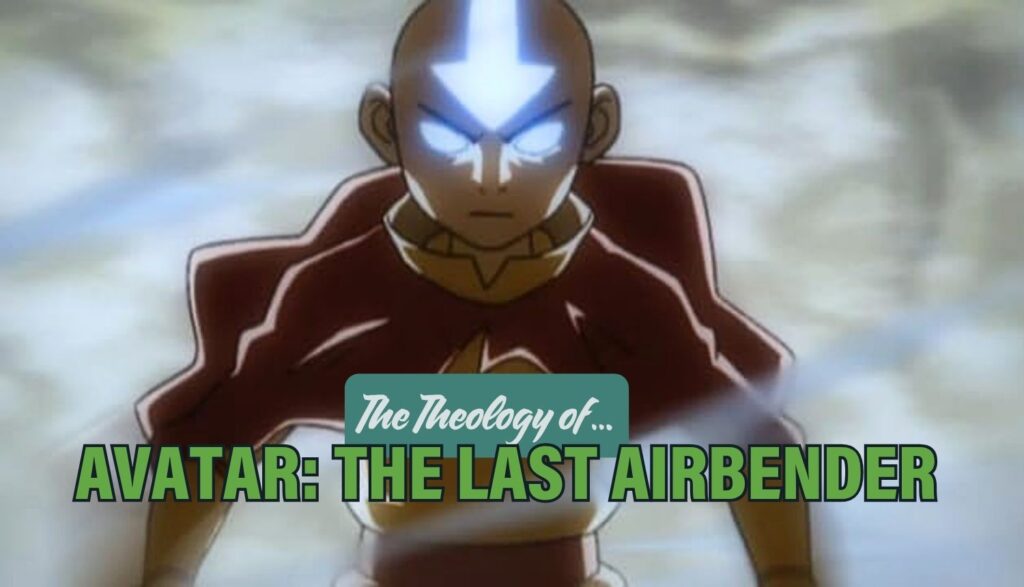
That Avatar spirit is found in Aang, a 12-year-old boy who has become the youngest airbending master in history. Hearing rumors of war, the other Airbenders decide to expedite Aang’s Avatar training, though Aang—who just wants to live a fun, normal life with his friends—becomes overwhelmed by the challenge. He flies away on his sky bison, Appa, and the two become lost in a great storm. At risk of drowning, Aang enters into the Avatar State (a defensive superpowered state that allows him to access the memories and abilities of every Avatar before but also takes control of him), freezing himself and Appa in a giant ball of ice to save their lives.
And this is when Fire Lord Sozin, who had long desired to expand the territory of the Fire Nation but was kept at bay by Avatar Roku, enacts his plan: the power of a passing comet briefly enhances the power of Firebenders, and he declares war on the rest of the world. Knowing the Avatar Spirit has been reborn somewhere among the Airbenders, he targets the Air Nomads first, slaughtering them all in a terrible genocide and leaving Aang as the last Airbender alive. Because Aang is frozen in ice, Sozin fails to find the Avatar, and everyone comes to believe the Avatar fled and went into hiding.
A hundred years later, the Fire Nation still wages its war, though it nears victory under Fire Lord Ozai. The Water Tribes are crumbling, and it will not be long before the Fire Nation breaks through the massive walls of the Earth Kingdom’s greatest city. But that’s when Katara and Sokka, a sister and brother from the Water Tribes, discover Aang, frozen in the ice. The ice breaks open, and Aang and Appa emerge, unaware that a century has passed.
But Aang’s mission is the same as all previous Avatars’: Master all four elements and restore balance to the world—even if he is just a 12-year-old boy.
Glossary of Important Characters/Topics
Aang – Aang is the Avatar of his day, who, during the events of the series, is a 12-year-old Airbender. He’s a goofy kid with a lot of responsibility on his shoulders. Following the custom of his fellow Airbenders (who are sometimes called monks), he has blue arrow tattooed on his body, and he shaves his head. Aang is prone to uncertainty, knowing that he must fight Fire Lord Ozai at some point but not feeling fully prepared. Though other incarnations of the Avatar have killed people, Aang refuses to kill his enemies because the Air Nomads taught him that all life is sacred. This conviction becomes the central moral struggle of the series: whether Aang can stop Ozai without abandoning his pacifist principles. He eventually masters all four elements, defeats Ozai and ends the war. Later, he marries Katara.
Katara – Katara is the only remaining Waterbender in the Southern Water Tribe, as the Fire Nation killed or took prisoner all other Waterbenders from their hemisphere of the world. She, along with her brother, Sokka, discovers Aang, and the siblings journey with Aang on his world-saving adventure. Katara becomes a very powerful Waterbender, and she learns to use her bending to heal others as well. Katara becomes Aang’s waterbending master.
Sokka – Sokka is Katara’s brother, and though he has no bending ability, he becomes Team Avatar’s primary strategist. He is also proficient with a boomerang and a club.
Toph – Toph arrives in the show’s second season, acting as Aang’s earthbending master. She comes from nobility, though she rejects her heritage to journey with Aang instead. She is blind, but she can use her earthbending to “see” via vibrations through the ground. Later, she becomes the first person to master metalbending, a subcategory of earthbending.
Zuko – Zuko’s story is one of repentance and redemption. Zuko is the estranged prince of the Fire Nation, banished from the land because his father, Fire Lord Ozai, felt disrespected by him. Ozai sends Zuko, along with Zuko’s uncle, Iroh, on a fool’s errand to capture the Avatar, telling Zuko that he may never return home until he does. Through this, Zuko eventually becomes the first Firebender to discover the Avatar’s existence, and he spends much of the series chasing Aang. Over the course of the show, Uncle Iroh teaches Zuko a more peaceful way, and Zuko eventually forsakes his father’s wicked ways and joins Team Avatar, becoming Aang’s firebending master.
Avatar – The Avatar is a human who stands as the bridge between the spirit world and the material world. The Avatar should not be thought of as a prophet empowered by God, but rather as a reincarnating soul permanently united with a cosmic spirit. This is the only person who can master all four elements because they are imbued with the spirit Raava, who gives them that power. The Avatar (who has been reincarnated as both men and women) works to keep and restore the world’s balance, usually by opposing those who would threaten to undo it. The current Avatar can commune with each of his or her past lives for guidance. When an Avatar enters the Avatar State, he or she becomes empowered with the skills and knowledge of all prior Avatars. However, were an Avatar to be killed while in the Avatar State, it would break the Avatar cycle forever, for doing this would kill Raava, too, preventing the next reincarnation.
Chi – Much of the explanation for the Avatar’s unique abilities and bending as a whole comes down to the concept of Chi. This concept comes from Chinese thought and describes an impersonal life energy believed in many East Asian philosophical and religious traditions to flow through all living things. A bender may lose their ability to bend if their chi is blocked.
Chakras – A spiritual brother to Aang’s people, Guru Pathik, teaches Aang to gain control of the Avatar State by first gaining balance in himself—by opening his chakras. The chakra system presented here is adapted from Hindu and Buddhist traditions, which teach that spiritual energy flows through “centers” within the body. In pursuit of this, Pathik describes chakras as seven connected pools of water, where if one is blocked, the energy cannot freely flow into another. These, Pathik says, can be blocked by “emotional muck.” He thoroughly explains each of the seven chakras—what they deal with and what emotions block them. The show presents opening one’s chakras as a path to spiritual enlightenment, emotional healing and mastery of the Avatar State. Significantly, Aang fails to open up the final chakra, called the Thought Chakra, since it requires him to remove all earthly attachments—and because he loves Katara and senses her in danger, he chooses instead to abandon the process, which Pathik says “locks” that chakra.
Spirits – Spirits inhabit the Spirit World and embody many aspects of nature, reality or emotions. These are morally varied, with some being benevolent to humanity, some being destructive and some being neutral. The Spirit World is not heaven, nor are spirits divided into angels and demons. Rather, the setting draws heavily from animist, Taoist, Buddhist and East Asian folk traditions. Some Spirits are connected to different bending abilities. For instance, the Northern Water Tribe pseudo-worships the Moon Spirit since the moon affects the tides and, therefore, their waterbending powers.
The Four Nations – The four groups of people in The Last Airbender are built around specific cultures. The Fire Nation reflects expansionist Imperial Japan (and an ancient firebending civilation, the Sun Warriors, reflect ancient Mesoamerican cultures). The Earth Kingdom is based on Imperial China. The Water Tribes take heavy inspiration from Inuit cultures. The Air Nomads find inspiration from Tibetan monks.
Bending – The ability to bend comes from a mix of genetics, spirituality and cultural fighting styles. Throughout the series, there are four main types of elemental bending (though a fifth type, energybending, shows up at the end):
- Waterbending: The movements in waterbending mimic the movements of the Chinese martial art Tai chi, taking form in smooth, flowing gestures. Waterbenders have the unique ability to heal others’ injuries with their water by redirecting the body’s energy to damaged portions and helping to unlock chi. Waterbenders can freeze and heat water at will and, through practice, can also bend other things that contain water, such as plants and blood. We are told that Waterbenders first learned how to waterbend by watching the moon’s influence over the tides.
- Airbending: Airbenders imitate the movements found in the Chinese martial art Baguazhang, which focuses on deflection, redirection and open-palm strikes. Airbenders can sustain themselves in flight by manipulating wind gusts, though most Airbenders require some sort of sail to help themselves stay airborne. Some Airbenders can bend sound, and a couple can even project their spirits. Airbenders learned their craft through observing sky bison, a species of animal that can fly.
- Earthbending: Earthbending is based on the Chinese martial art of Hung Gar, taking low, grounded stances and delivering powerful strikes. Toph, though blind, is able to use her earthbending to sense movement and “see” via vibrations. Certain Earthbenders can also learn specialized forms of the ability, such as sandbending, metalbending and lavabending. Earthbenders were taught how to do so by watching blind badger moles first bend earth.
- Firebending: Firebenders fight in the style of Northern Shaolin Kung Fu, which showcases explosive kicks and jumps. During their militaristic invasions, the Fire Nation powers their fiery attacks via anger—but earlier traditions embraced the life-giving properties of fire instead. The strongest Firebenders can bend lightning, and some can “combustionbend,” which generates massive explosions rather than pure fire. Some can use their firebending to fly. Firebenders were taught the skill by dragons.
- Energybending: Energybending predates the four bending styles, and it is through energybending that the lion turtles of old would grant and take away a person’s bending ability. This skill was lost to time until Aang met a lion turtle who passed the knowledge on to him. Energybending allows one to manipulate the spiritual energy within living beings. Through it, a person may grant or remove bending abilities and, in rare cases, influence the spiritual nature of others.
Connecting, and Contrasting, the Gospel
- Mercy and Justice – As Aang’s battle with Fire Lord Ozai draws near, Aang faces an internal struggle. He was raised in the Air Nomad culture and was taught that all life is valuable, even someone like Ozai. Despite Ozai’s evil, Aang cannot bring himself to kill the man. Nevertheless, Aang knows that, to save others, Ozai must be dealt with. Aang eventually finds a solution: He’s able to learn and use energybending to take away Ozai’s firebending abilities. After he’s neutralized, Ozai serves a life sentence in prison. Christians can see the fulfillment of both mercy and justice in this act, one that reflects how God saves us through the cross. Though we deserve to die for our sins (Romans 3:23), God grants us mercy instead (Romans 5:10). But justice is still dealt, paid for in the sacrifice of Christ (Isaiah 53:8-12, Galatians 3:13).
- Complete Redemption – Zuko spends the majority of the series hunting down Aang and his companions, occasionally trying to kill them. Eventually, Zuko repents of his actions, and he even works to make things right by joining Team Avatar and fighting alongside them. Zuko receives forgiveness from Team Avatar, and he is eventually treated as one of their own. Zuko reflects the Christian testimony—that we, like sheep, have gone astray (Isaiah 53:6), doing evil in pursuit of our own glory. But in our repentance and belief in Christ (Romans 10:9), the Lord forgives us and washes us clean of the stain of sin (Isaiah 53:11).
- Finished or Flux – Raava—and, by extension, the Avatar—engages in a constant battle against the chaotic unbalancing that Vaatu brings. Every 10,000 years, there is a chance that Raava will lose the battle and Vaatu will wipe out humanity. Likewise, the Avatar can be defeated. But this dualistic view heavily contrasts with Christianity, where we are told that Satan shall not triumph but will find his judgment in the lake of fire and sulfur (Revelation 20:10). Christians need not fear that their Lord and Savior will fail in His plan, for He is sovereign, and the victory He has decreed will come to pass (Lamentations 3:37, Isaiah 46:10).
Conclusion
We hope that this blog serves as a helpful primer for parents looking to understand the spirituality in Avatar: The Last Airbender, so that you can be equipped with the knowledge you need to either lead a gospel conversation or to decide whether the franchise is right for you.
And be sure to check out our other Theology Of guides!
- The Theology of Lost
- The Theology of The Legend of Zelda
- The Theology of The Lord of the Rings
- The Theology of Pokémon
- The Theology of Star Wars
- The Theology of The Chronicles of Narnia
- The Theology of Halo
- The Theology of Fire Emblem
- The Theology of Final Destination
- The Theology of Warhammer 40K
- The Theology of Doom

One Response
Great writeup! I watched Avatar The Last Airbender for the first time last year with my sister, just for my own interest. It was a great show, but boy howdy there’s a lot of Eastern religion in there. If I had kids, they wouldn’t be watching it until they were old enough to have plenty of spiritual discernment.
I did really like Zuko’s redemption arc. I also thought the analogies that could be drawn between the fictitious nations and real world powers are fascinating. The Fire Nation gives some Roman Empire vibes, for instance.