




Drama
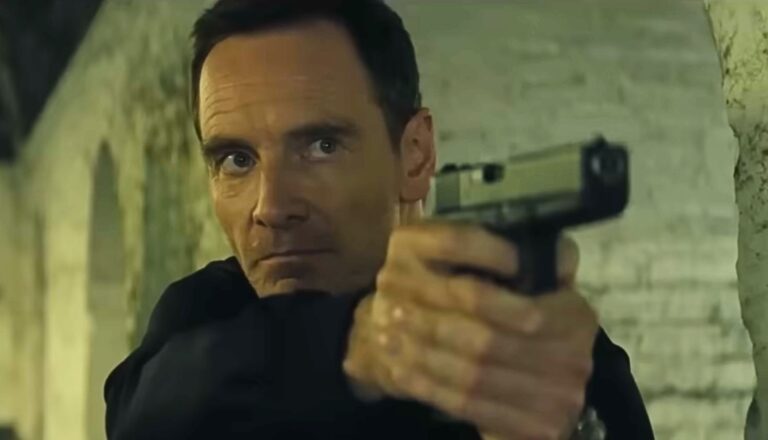
The Agency
Given the violence, sexual content and foul language, navigating this spy thriller is nearly as dangerous as life in the CIA.
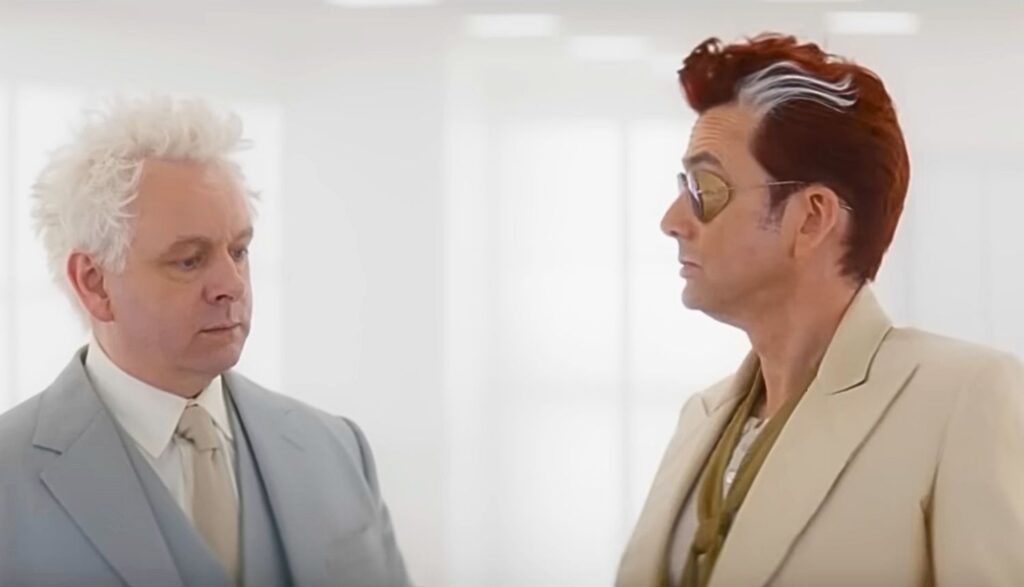
The Bible is full of signs and portents regarding the end of the world (as we know it): Four Horsemen, seven seals, the falling star called Wormwood, etc.
But to my knowledge, it never mentions a handbasket.
Perhaps it’s only fitting that the Antichrist would be delivered via handbasket, what with the infernal cliché and all. But given the cargo, you’d think some precautions would’ve been in order to, y’know, make sure the diabolical baby made it to the right set of parents.
That’s exactly what didn’t happen in Season 1, when the demon Crowley (the same dude who tempted Eve into plucking a certain fruit off a certain tree) dropped the child off at an abbey filled with satanic nuns. Tasked with slipping the baby to an unsuspecting U.S. ambassador and his wife, the infant Antichrist was instead shuffled off to a middle-class pair of Brits without anyone knowing it.
That was a problem for all concerned, really. For the agents of heaven and hell, it meant they’d lost the kid meant to kickstart the events of Revelation, giving them the war they’d all been dreaming of for millennia. But for Crowley and his angelic counterpart, Aziraphale, it meant their bosses might discover their conspiring to stop Armageddon.
Well, long story short, Crowley and Aziraphale succeeded. They stopped the apocalypse, saved their own skins from the lethal fires of hell and holy waters of heaven, and settled back down on Earth to continue their comfortable existences on the planet they both love so dearly.
Seasons 2 and 3 of Good Omens continue on in much the same vein. The angels of heaven and demons of hell try to bring about Armageddon and the Second Coming of Christ. Whereas Crowley and Aziraphale conspire, lie and set out to save the universe together.
Prime Video’s Good Omens pulled its original story from a 1990 novel of the same name by Terry Pratchett and Neil Gaiman (and some elements derive from an unwritten sequel). Pratchett, who died in 2015, was famous for his comic fantasies, so of course it’s funny. Neil Gaiman is the man behind such imaginative novels as Coraline and American Gods, so of course it’s creative. And, given its subject matter, of course it’s blasphemous, too.
At its core, the show’s spiritual problems stem from a simple, serious, theological error: The concept that there’s good, there’s evil, and then there’s the muddled middle where most of us live.
Angels here are strict and stuffy fun-haters. Demons are wicked, but (at least in Crowley’s case) kind of a kick to be around. And both sides are playing a rather evenly matched game—with human pawns in play. In Season 3, we’re finally introduced to God (personified as a woman here), and Crowley and Aziraphale finally get to the bottom of why God created a universe if she only planned to destroy it.
Clearly, Good Omens departs significantly from Christian doctrine. But given that Good Omens is at least superficially filled with Christian images, ideas and themes, it’s important to remember what that doctrine is: We can either submit to Christ’s authority and follow Him … or not. And God’s ultimate plan has nothing to do with pettiness or boredom.
For all of its wit, Good Omens feeds into a very wishful, very contemporary and, I think, very humanistic understanding of who we are and why we’re here. The series could certainly foster a bevy of fascinating theological discussions. But it’s a most unreliable narration, especially since it seems to revel in the aforementioned blasphemy, and thus potentially corruptive at its core.
It has superficial problems as well, the most notable being that nearly every character is a member of the LGBT community. Indeed, its two main characters share a same-sex kiss at the end of Season 2, and their romantic fate serves as a subplot of Season 3. Additionally, sporadic nudity flashes onscreen. Characters utter occasional profanities (though sometimes bad words come in streams rather than trickles). And remember, the show is predicated on a climactic war between heaven and hell, which some characters don’t survive to see. While the violence here is treated in a rather lighthearted manner, that doesn’t stop the occasional witch from being burned at the stake (and, incidentally, exploding to kill all of the onlookers as well).
Good Omens is thought by many to be a good show. But spiritually, this Prime Video series seems like it needs to be carted away in its own handbasket.
(Editor’s Note: Plugged In is rarely able to watch every episode of a given series for review. As such, there’s always a chance that you might see a problem that we didn’t. If you notice content that you feel should be included in our review, send us an email at letters@pluggedin.com, or contact us via Facebook or Instagram, and be sure to let us know the episode number, title and season so that we can check it out.)
In this series finale, Aziraphale, having chosen a heavenly promotion over Crowley, is forced to team back up with the former demon (since Crowley has been excommunicated from hell after assisting Aziraphale so much) after heaven loses the Book of Life and Jesus himself.
Aziraphale and the angels of heaven begin to set in motion the Second Coming of Jesus. But rather than a destructive Armageddon, Aziraphale believes they can simply plop Jesus back on Earth to bring about “universal happiness,” “unbounding joy,” “peace on Earth,” etc.
Jesus is made incarnate by the angels, though he’s very, very confused as to what’s happening. He only remembers bits and pieces of his previous time on Earth (he asks what has happened to his 12 “friends,” for instance), and he has no recollection at all of the last 2,000 years that he’s spent as part of the “triune godhead.” Still, Jesus sets out to fulfill the angels’ order to bring about peace on Earth. He figures out how to spread joy and happiness through his words. (He seems to have some clairvoyance.) And he even manages to perform the miracle of multiplying food for the masses.
However, Jesus, as characterized here, is little more than a good version of Season 1’s Antichrist figure. (Many of the things he says, while meant to be funny, could be seen as mocking the Bible.) When someone steals the Book of Life from heaven, that character is able to destroy the page about Jesus, erasing him from existence. That same character burns away every other page in the Book, causing entire continents to vanish, by using the “Eternal Fire”—the only substance in the universe powerful enough to destroy the Book and which heaven and hell originally battled over for control. (That same character pays a price, though, slowly going insane as the people murdered speak in her head.)
Speaking of that battle, we catch a glimpse of its end. There, Crowley and Aziraphale confront each other. Crowley threatens Aziraphale, but the former demon is unarmed and injured. Instead of killing Crowley, Aziraphale renders him aid. We see these two characters use their powers (called “miracles” in the show) to make a car fly into space, solve a ridiculously difficult crossword puzzle, teleport and more.
Crowley and Aziraphale speak with God (a female here) and Satan. Crowley asks why God created a universe—and humans—only to destroy it. Satan learns he’s been little more than a pawn in God’s “Great Plan.” And God tells Aziraphale how much she has enjoyed watching his and Crowley’s relationship grow throughout the millennia.
This episode recognizes two different creation stories in equal measure: In one, Earth was created about 6,000 years ago and follows the events of the Bible (and the show, up to this point). In the other, the Big Bang brings about a godless universe where humans eventually pop up after billions of years of evolution.
Both angels and demons seem to have mixed motivations. Some want the “End Times” to begin. Others appear to be more selfishly minded. Aziraphale claims that he only wants to do the right thing, but his reasoning is sometimes flawed. So the show promotes Crowley as the true hero here—the only character who truly seems to act for the good of someone else (never mind that his motivations could also be perceived as selfish).
Crowley, being a former demon, is able to say the name Jesus, whereas other demons are not. When they hear Jesus’ name, it causes them pain. One angel calls Aziraphale “your infinite holiness” and curtsies to him. Most of the angels are quite arrogant and rude. The devil is called “Lord Satan” by a demon. Two people play a heaven-and-hell themed version of Monopoly.
Aziraphale and Crowley all but confess their love for each other. They hold hands a couple of times. In one scene, Aziraphale kisses two of his fingers and then presses them to Crowley’s mouth. In an alternate universe, we see the pair grow old together as a married couple. A trans character appears in several scenes. We also see a male demon wearing makeup and women’s clothing. A woman reaches into her shirt and pulls out money, presumably storing the dough in her brassiere.
Everyone in the universe—besides God, Satan, Aziraphale and Crowley—dies when their pages are burned from the Book of Life. When these characters go, they dissolve into sparkling dust. A man experiences a heart attack (but he survives). Many threats are issued. A man holds a gun to Aziraphale’s chest, but the angel turns the weapon into a plastic squirt gun. A woman pushes dishes off a table and orders her goon to hurt Crowley and Aziraphale. (He doesn’t comply.) There’s a single reference to an accidental overdose.
Characters drink different forms of alcohol at different points in the episode. Crowley gets drunk on a few occasions. Characters gamble. We hear uses of the s-word, “h—” and the British expletives “bloody” and “b–locks.”
When Gabriel, a powerful archangel, loses all his memories and disappears from heaven, Aziraphale and Crowley team up to find out what happened to him.
In a flashback, Crowley (who at this point is still an angel of heaven) helps create the universe. He’s excited by the potential of the growing universe. But when Aziraphale informs him that God is planning to destroy the whole thing in just a few thousand years (before, in Crowley’s opinion, the whole place even has a chance to hit its stride), Crowley decides he’s going to take it upon himself to ask God if He’s really thought that through. Thus setting in motion his eventual fall from heaven.
Job 41:19 is written out on a matchbox. We see some stereotypical angels with white robes and wings. A prince of hell sports a very demonic appearance with open sores on its face, rotten teeth and the constant presence of flies. This same demon uses the flies to teleport Crowley from Earth to hell. Crowley uses his powers to change a traffic light and restore electricity to a building. He and Aziraphale each perform a “half miracle” simultaneously to hide Gabriel from the agents of heaven and hell.
Gabriel walks down a busy street with no clothes (we see his bare rear and a box he carries hides critical anatomy) while people gawk and film the incident. He hugs Aziraphale, who is clearly disturbed by the lack of clothing (though Gabriel remains unaware) and two women joke that the man might be an exotic dancer. A woman is disappointed to learn that her female crush is already in a relationship with another woman. There are some hints that Aziraphale and Crowley are attracted to each other. Angels talk about “breeding” humans.
The angels threaten to erase the name of anyone involved in Gabriel’s disappearance from the Book of Life—meaning they wouldn’t just die but would never have existed. We hear that Gabriel once tried to kill Aziraphale with hellfire. When Crowley gets angry, he begins emanating smoke before causing electric shocks to take out power on a whole street. Crowley drives recklessly.
A woman drinks wine when she’s stressed. A demon notes that creating misery is quite easy since every time she comes up with a diabolical plan, humans seem to enact an even worse scenario all on their own. Crowley criticizes some humans for feeding bread to ducks (since it’s very unhealthy for them). A woman’s romantic partner sends many volatile texts to her during a power outage. Characters lie and manipulate each other. Some people are rude to others. Archangels compete pettily for Gabriel’s job as “supreme archangel.”
We hear two uses of the s-word. “H—,” is used as a swear in a text message. An angel utters, “Good lord.”
Aziraphale says that forgiveness is one of his favorite things, and he forgives quite generously. An angel uses one of his wings to shield a fellow angel from a meteor shower.
Arizaphale and Crowley’s plan to prevent Armageddon has hit a snag or two. Arizaphale’s bookstore has burned down, for one thing, and his body has de-incorporated—necessitating a quick semi-possession of another body (after a quick, dispiriting visit to Heaven). Meanwhile, the Four Horsemen, the witch Anathema Device, her new boyfriend (Newton Pulsifer) and the boy Adam—aka the Antichrist—head to England’s Tadfield Airbase, where the end of the world is scheduled.
Adam glories in his newfound evil power at first, hovering above his childhood pals (with glowing red eyes), freezing them in place and wiping away their mouths so they can’t contradict him. But after he lets them loose and they tell Adam that he’s being a real jerk, he seems to reconsider—opting to try to fix things rather than destroy the world.
Meanwhile, Arizaphale’s possessed body belongs to the medium Madame Tracy, who’s holding a séance when she’s taken over. Arizaphale allows one of Tracy’s clients to talk with her dead husband (who tells her to just “shut up”) as lightning flashes outside. He/she then teams up with Shadwell, the last member of the Witchfinder Army, who brags about his index finger (which he says has the ability to exorcise demons). Shadwell detects Arizaphale in Tracy’s body and calls him a “Southern pansy.” (He makes several dated, crude remarks about women elsewhere as well.) A demon pours through a call center speakerphone as an avalanche of maggots, skeletonizing all the call-center employees. (That demon is later immolated himself in the burning M-25 freeway.)
We learn that the M-25 around London actually was designed by Crowley as a diabolical prayer that translates into “Hail the Great Beast devourer of worlds.” The low-grade anger expressed on the freeway is said to be like “water on a prayer wheel.” That freeway later bursts into flames (apparently killing everyone stuck in traffic there). Anathema and Newton get dressed after their sexual dalliance in the previous episode. (We don’t see anything critical here, though Newton does mention that it was his “first time.”) The Four Horsemen (one has been switched from “conquest” to “pollution”) take over Tadfield and prepare to launch automatic missiles and weapons all over the world.
Crowley gets drunk via a couple of bottles of liquor. Characters say “b–tard,” “d–n,” “h—” and the British profanities of “b-gger” and “bloody.” God’s name is misused once.
Crowley is charged with delivering the infant Antichrist to the Chattering Order of St. Beryl, where evil nuns (their sanctuary festooned with an upside-down cross) will give the baby to an unsuspecting ambassador and his wife. But when another expectant couple arrives as well, the babies get switched and the Antichrist (now named Adam) spends 11 years with the wrong family. Meanwhile, Crowley and Aziraphale seek out the real Antichrist and plot how to keep the world from ending.
In flashback, we see Crowley (in the guise of a serpent) tempt Eve into biting a forbidden apple in the Garden of Eden several days after creation (which, we’re told, occurred at exactly 9:13 a.m. on Oct. 21, 4004 B.C.) We see a fully nude Eve from behind and, later, both she and Adam are clothed in a smattering of leaves (still exposing quite a bit of their bodies). After the humans are kicked out of Eden, Aziraphale gives them his flaming sword to help protect them. While Aziraphale frets about whether he did the right thing, Crowley (now in humanish form) wonders what’s so bad about knowing the difference between good and evil. “A demon can get into a lot of trouble for doing the right thing,” he says. “Be funny if we both got it wrong, eh?”
It’s really just the beginning of a whole host of spiritually dubious plot points and themes—so many of them, in fact, that we can’t even dig into them all here. Here’s just one example: Crowley points out that hell has all the best composers (name-checking “all of the Bachs,” despite that classical musician’s reported piety), and he says that heaven’s not “big on wine” (never mind that Paul suggests a little wine can be good for one’s digestion). Heaven gets only The Sound of Music, which God allegedly loves and the angels quote frequently. One more example: Oscar-winner Frances McDormand is listed as “God” in the credits (though early on, she seems to act as more of a Hitchhikers’ Guide to the Galaxy-style narrator), and she describes existence as “like playing poker in a pitch-dark room for infinite stakes with a dealer who won’t tell you the rules and who smiles all the time.”
Crowley and Aziraphale get wildly drunk. Once they decide to sober up, Crowley strains and somehow psychically expels the wine back into its bottles. Later, one of them drinks a glass of brandy.
Crowley disguises himself as a Mary Poppins-like nanny (complete with dress and falsetto voice) to teach the boy whom he thinks is the Antichrist a lot of nefarious lessons. (Aziraphale disguises himself as a gardener to feed the boy countering lessons.) Crowley suggests to Aziraphale that if their plans to normalize the boy go awry, Aziraphale should just kill him. (Aziraphale is very uncomfortable with that notion and is noncommittal.) A demon kills a nun and burns/explodes an abbey to the ground. A “hellhound” devours either a minor demon or wandering soul in hell before bounding off to Earth to watch over the Antichrist.
Demons brag about tempting a priest into lust (with a “girl”) as well as tempting a politician into accepting a bribe. There’s a suggestion that a “spare baby” was dispatched, though the voice of God suggests that maybe the nuns found a good home for the baby and that he “probably wins prizes for his tropical fish.” Children throw food at a magician who’s attempting to entertain them.
We see a sculpture of a nude Hercules wrestling with snakes though it’s meant to have a more Scriptural, metaphorical connotation in context. We hear a reference to the Earth’s horoscope. (It’s a Libra, apparently.) Crowley lets loose a string of nearly 10 consecutive s-words. We also hear “b–tard,” “d–n,” “h—”, “p-ss” and the British vulgarity “bugger.” God’s name is used with the word “d–n” twice. A boy scrawls a crass word on a plaque.

Paul Asay has been part of the Plugged In staff since 2007, watching and reviewing roughly 15 quintillion movies and television shows. He’s written for a number of other publications, too, including Time, The Washington Post and Christianity Today. The author of several books, Paul loves to find spirituality in unexpected places, including popular entertainment, and he loves all things superhero. His vices include James Bond films, Mountain Dew and terrible B-grade movies. He’s married, has two children and a neurotic dog, runs marathons on occasion and hopes to someday own his own tuxedo. Feel free to follow him on Twitter @AsayPaul.

Emily studied film and writing when she was in college. And when she isn’t being way too competitive while playing board games, she enjoys food, sleep, and geeking out with her husband indulging in their “nerdoms,” which is the collective fan cultures of everything they love, such as Star Wars, Star Trek, Stargate and Lord of the Rings.
Given the violence, sexual content and foul language, navigating this spy thriller is nearly as dangerous as life in the CIA.

The latest TV series in the sprawling Pokémon franchise comes with familiar charms—and familiar issues.
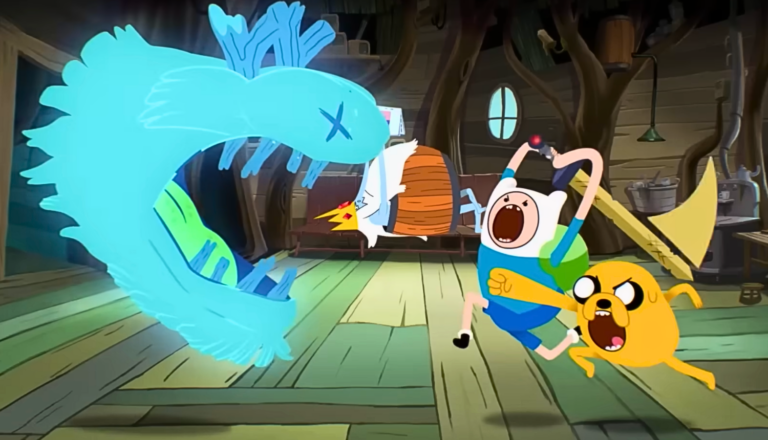
‘Adventure Time: Side Quests’ on Disney+ takes us back to the land of Ooo. But even though the place is made partly of candy, it’s not always so sweet.
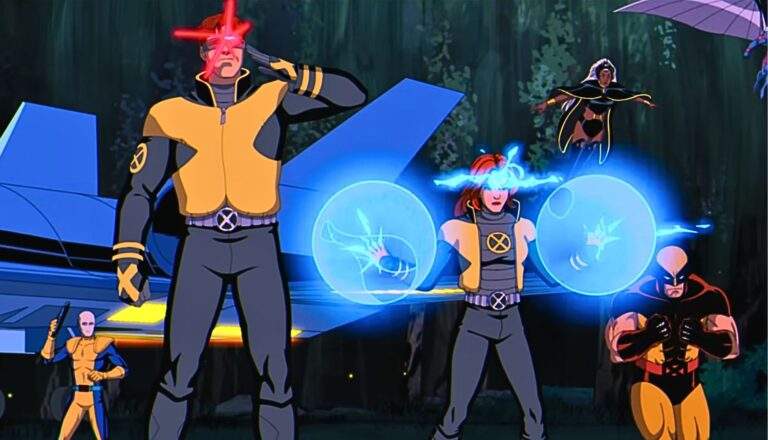
The mutants are back in Disney’s retro iteration of the X-Men—as are the violence and superhuman abilities that typically accompany this franchise.