


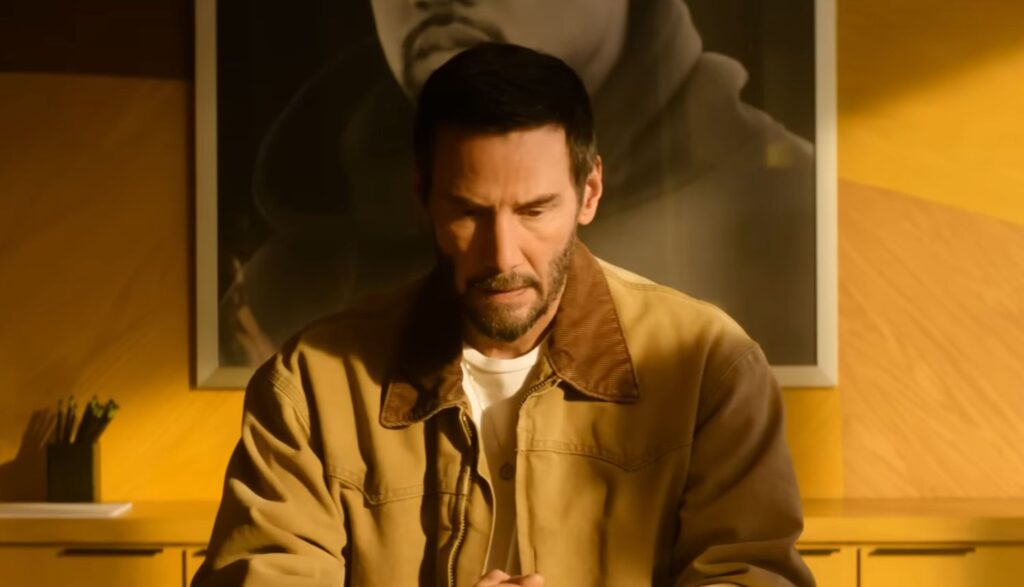
Reef Hawk is America’s favorite movie star. He’s a critical and commercial powerhouse, starring in some of the biggest film franchises of all time and nabbing two Oscars in the process. There’s nary a negative comment about him online.
And yet, Reef has spent the past five years away from the spotlight.
Why the break? Well, after spending his whole life working in showbiz, Reef needed to “find himself” away from all the fortune and fame.
At least, that’s what he’s telling people.
In reality, Reef’s hiatus was necessitated by a destructive heroin addiction that he battled for years. But his close friends, not to mention his high-powered lawyer, helped him cover it all up so the wider world would be none the wiser.
But now Reef is sober and ready to resume his life as the center of attention. That is, until his lawyer, Ira, calls him.
There’s a problem. A big one.
There’s a video of Reef. No one knows what the video contains, but the mystery person in possession of the video assures them that it’s not the type of thing that a world-famous actor would like to get out to the public.
Reef is panicked. If the video gets out, whatever it is, it could destroy his whole career. He hasn’t exactly lived the cleanest life away from the public eye. He might get … gulp … canceled.
But who would hate Reef enough to blackmail him? Reef is surprised to learn that there’s no shortage of options. Turns out, his sparkling public persona didn’t extend to those closest to him.
So, with the incriminating video looming and his career seemingly hanging by a thread, Reef embarks on an apology tour to try to make amends—and hopefully, discover the identity of his blackmailer in the process.

A running theme found in Outcome is the idea that family is what brings true happiness, even more than fame or fortune. Reef, at times, seems to regret choosing his career over having a family. The film also communicates that we should care more about what our family and friends think about us than what people online do.
Reef’s round of apologies, while starting from a place of selfish self-preservation rather than any true remorse, does result in some sincere interactions and introspection. The actor is forced to reckon with how his past actions harmed those around him. And though Reef could easily play the victim due to his circumstances, he chooses not to do so and accepts some responsibility for his choices.
Kyle and Xander, Reef’s closest friends, helped him get sober. While they’re often more sycophantic than true friends probably should be, they do eventually tell Reef some hard truths that he needs to hear. We are told that, when Xander came out as gay when Reef and Xander were in high school, Reef was one of the few people who remained Xander’s friend—showing the grace and kindness that Jesus asks us all to share.
A man who appears to be totally obsessed with his work is revealed to spend a lot of quality time with his wife and son.
Ira assembles a crack team of public relations experts to help Reef in case the incriminating video gets out. One member of this team is a Jesse Jackson-esque figure that Ira calls the “rabbi of race relations” who has been “preaching since the age of 3 and, boy, is his soul tired.” At one point, this man clutches a cross hanging around his neck and says he “prays to God” that Reef didn’t use the n-word in his video.
A person says, “Thank God.” Someone references the Big Bang.
Ira imitates the beginning of Prince’s “Let’s Go Crazy” with a preacher’s cadence (“dearly beloved, we are gathered here today …”).
Someone talks about a “cosmic tax” that must be paid.
Outcome is awash with vulgar, sleazy dialogue. One scene contains an extended conversation about semen. Another mentions necrophilia. Characters constantly refer to sexual situations.
Xander is gay and is said to be “romantically intertwined” with an “unhoused man.” He uses an obscene term to describe a man’s perceived romantic interest.
Reef treated his former on-again, off-again girlfriend, Savannah, poorly. We hear that his mother sacrificed her marriage so a prepubescent Reef could pursue a career in entertainment.
Reference is made to a 1980s movie in which a young Reef acted: Both the movie’s title and his character’s name contain crude sexual terms. We’re told that, in the film, Reef’s character dressed as a geisha to gain access to a sorority so he could steal women’s undergarments.
A child actor says he landed a role in a commercial about “genital herpes.” A man laments that he got his partner pregnant. Reef claims he’s never filmed himself having sex. Someone describes herself as “sex positive.” People talk about pregnancy and contraceptive use. A young woman tells Reef that he “dated [her] grandma.” A man calls himself a “Malibu teen dad,” since he’s having his first child before the age of 60.
Some women wear revealing clothing. During one scene, Ira consults Reef while using a toilet (we see the side of Ira’s bare leg while he sits). A person’s shirt displays a racy statement.
[Spoiler Warning] The blackmail video is sexual in nature. We see Reef on a video call with a woman who begins to remove her clothes. We don’t see any nudity or Reef’s responding sexual actions, but we do hear what’s happening.
Ira questions Reef on the possible nature of the incriminating video, asking if Reef has either killed someone, watched someone get killed or paid to have someone killed. (Reef answers these questions with an unequivocal “no.”) Ira mentions that a monkey belonging to one of his clients “ripped someone’s face off.”
Kyle says she walked in on Reef after he had overdosed on heroin, and she initially thought he was dead. We are told that Reef’s father hung himself.
The f-word is used more than 90 times—at times in conjunction with Jesus’ name or preceded by “mother.” There are 20 uses of the s-word. Jesus’ name is abused an additional seven times, and God’s name is misused eight times, sometimes paired with “d–n.”
Additionally, the cavalcade of cursing includes “d–n,” “a–,” “a–hole,” “b–ch,” “p—y,” “d–k” and “c–ks–ker.” Crude references are made to male and female anatomy. Reef’s name is mistakenly heard as a rude term for a bodily function. We hear someone use “gay” and “f-gg-t” as derogatory terms.
As noted above, Reef had a crippling heroin addiction that nearly claimed his life. At his lowest point in the film, he considers returning to his drug habit. (Thankfully, he does not.)
There are offhand mentions of ecstasy, marijuana and “poppers” (another recreational drug). People talk about vaping. Kyle totes around a few cigarettes so she can pretend that she smokes. A situation is described as a “freak-o acid trip.”
A woman asks how many cigarettes she can smoke while pregnant. Someone says he recently quit smoking. A man is asked if he is sober.
We hear someone say, “Don’t do alcohol, and say ‘no’ to crack.”
Ira is a “crisis lawyer” who specializes in making his clients’ difficult situations go away. Besides Reef, his clientele seemingly includes Kanye West, Bill and Hilary Clinton, Kim Kardashian, Jussie Smollett and Kevin Spacey. He bemoans that the internet has made his job more difficult, claiming that a “briefcase of cash” used to be all that was needed to keep things quiet.
Early on, Ira tells Reef to offer apologies to those he’s wronged—or, at least, go through the motions of an apology. He tells Reef, “You don’t have to mean it.”
It doesn’t seem that Ira would blanch at anything that might be found in Reef’s blackmail video, up to and including murder. The public relations team he assembles includes figures who can help Reef navigate a litany of issues, including sexual misconduct and racism: It’s clear that, as long as they are getting paid, they’re willing to help Reef no matter what kind of guy he really is.
This team eventually tries to flip the narrative on Reef’s incriminating video, portraying Reef as a victim. Ira and others explain the idea of “victim capitalism,” i.e., that being a victim is the “best thing you can be,” since will make the “victim” richer and more famous.
Reef has a rocky relationship with his mother, who is now a reality TV star. He feels like she used and exploited him when he was young, while she feels like he abandoned her. (Both seem to be true.) When Reef tries to apologize to her, she forces him to do so on her show, saying, “Isn’t an apology just show also?”
Reef is conceited and obsesses over his public image. His ex-girlfriend tells him that he’s “not a good person.”
Someone awkwardly compares her parents’ divorce to the Holocaust. Xander and Kyle joke about how they would bully a person who vapes. A bumper sticker reads, “Honk if you can separate art from the artist.”
With Outcome, director Jonah Hill skewers the vapid, self-absorbed attention economy of the entertainment industry and its parasitic affiliates.
It’s no surprise that Hill tapped Keanu Reeves to play protagonist Reef Hawk, given that Reeves might be the most universally beloved celebrity working today: The New Yorker once ran an article titled “Keanu Reeves Is Too Good for This World.” Reeves’ stoic, surfer-dude charm does most of the heavy lifting in keeping us invested in Reef’s journey. But even Neo can’t keep this pic afloat.
While Outcome has something to say—you don’t make a satiric film unless that’s the case—it can’t survive its own deluge of profane and vulgar content.
That’s a shame, because there are some good messages to be found here: The movie presents loving familial relationships as preferential to fame and fortune. It encourages us to seek affirmation from our loved ones rather than from the faceless droves found online. And it suggests that taking responsibility for our actions is a better course than finding a way to “play the victim.”
At times, those positives manage to break through, gasping for air. But all too soon they sink back beneath the foul slog—vulgar sexual content, harsh profanities, drug references—that consumes much of this movie’s 83-minute runtime.

Bret loves a good story—be it a movie, show, or video game—and enjoys geeking out about things like plot and story structure. He has a blast reading and writing fiction and has penned several short stories and screenplays. He and his wife love to kayak the many beautiful Colorado lakes with their dog.