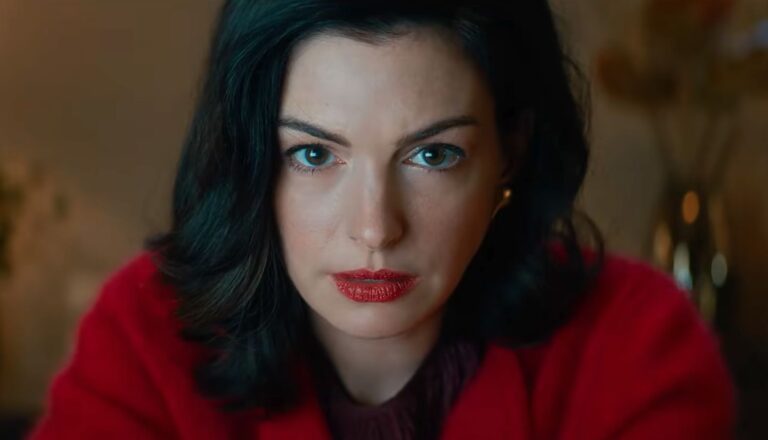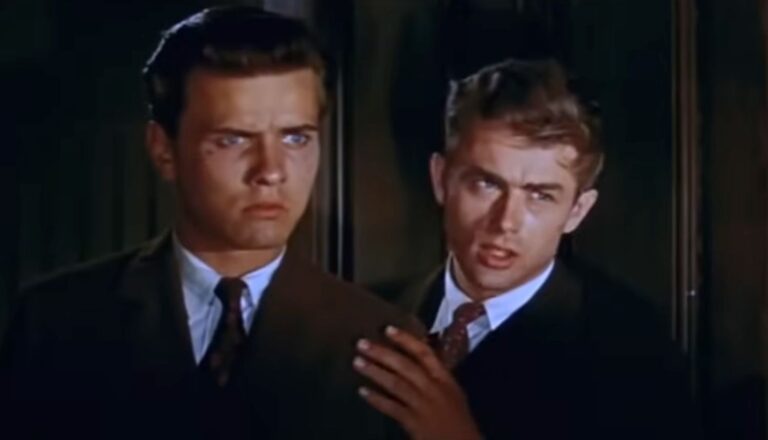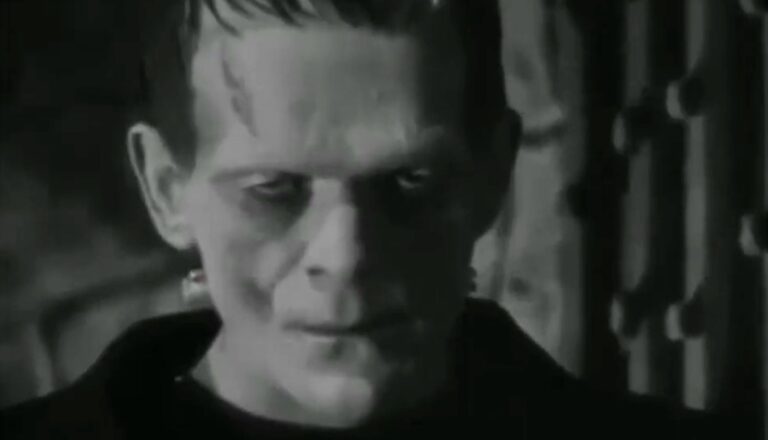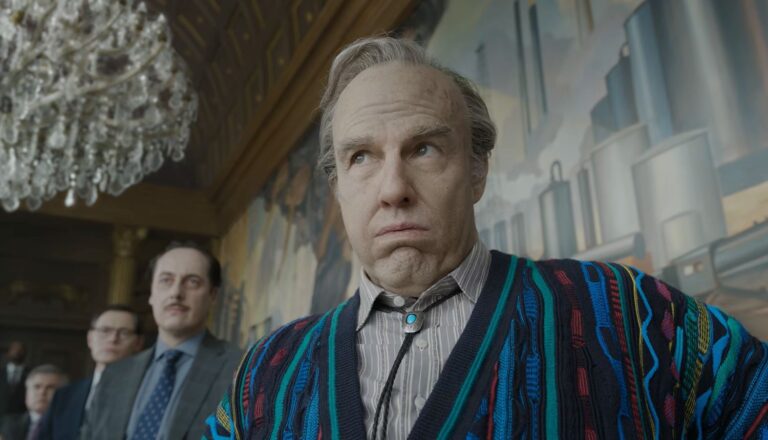


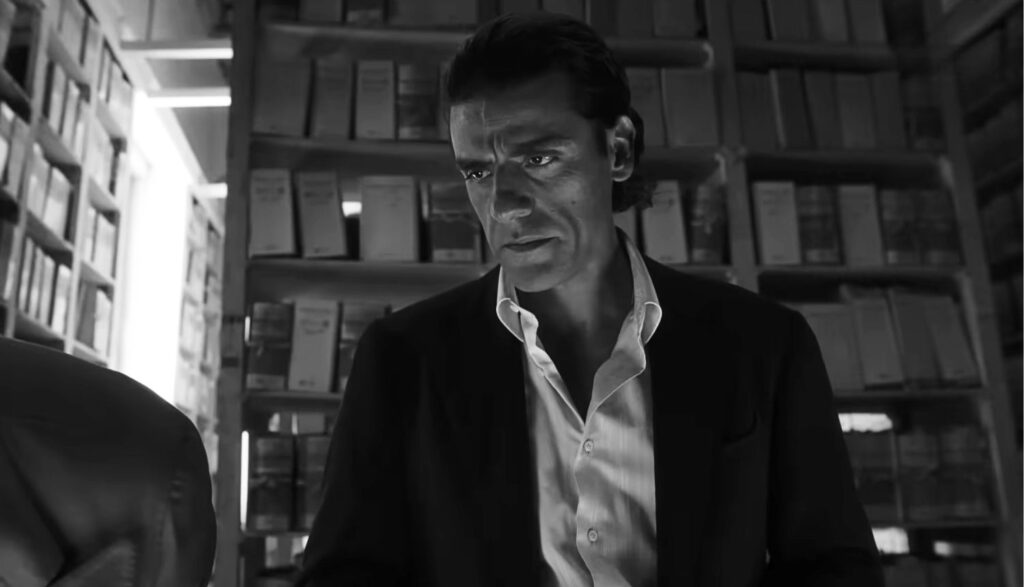
In the Hand of Dante is split into two timelines. In one, Dante struggles for new, transcendent understanding. In another, a crew of Mafia thugs try to steal and sell Dante’s original manuscript. Put them together? A profane, horrifically violent and spiritually bankrupt disaster.
In the 14th century, in what we now call Italy, a writer fella by the name of Dante Alighieri penned Comedia, what we know as the Divine Comedy. The poem, split into three parts, was a massive literary journey through hell, purgatory and heaven and is considered one of the greatest works in Western literature.
In the 21st century, in what we now call New Jersey, a writer fella by the name of Nick Tosches fell in with a clutch of gangsters to find, retrieve and sell Dante’s original manuscript of the Divine Comedy. Level of difficulty: extreme.
Sure, the finding and retrieving part is relatively simple. A quick trip to Sicily, a few well-placed bullets and poof! Dante’s handwritten epic is in their hands.
But selling it? That requires documentation. And that requires letting a few folks in on the secret that Dante’s original manuscript didn’t just vanish into history, as previously believed.
But if it can be verified, that manuscript’s value would be beyond measure. Though, of course, that wouldn’t stop people from trying to measure that value—or from killing to get their hands on it.
In the Hand of Dante takes viewers on two parallel journeys: One follows Dante himself (played by Oscar Isaac) after he was exiled from his beloved city of Florence as he sought meaning through some rather eclectic sources. The other features Nick (also played by Isaac) as he and his cohorts carve a bloody swathe in Italy and the U.S. to find, keep and sell a 700-year-old work.
[The following sections contain spoilers.]
In Dante’s timeline, we’re introduced to Gemma, Dante’s not-so-beloved wife (played by Gal Gadot). Never mind that Gemma bore Dante four children, the Florence writer never wrote a word about her—while spilling barrels of ink for his beloved Beatrice, a girl who (according to the movie) Dante never even talked to. (In reality, they had met, albeit infrequently, before Beatrice’s death at age 24.)
In the Hand of Dante allows the great poet to make amends. We see that he came to regret his infatuation with Beatrice and to love and cherish Gemma, his loyal, steadfast and beautiful wife.
That relationship is mirrored in the story’s more contemporary timeline. Nick, a gruff and grouchy writer, falls for Giulietta (also played by Gadot), who starts the story as Nick’s skilled assistant and morphs into his lover. Giulietta shows her love is real: When given a choice between exchanging Dante’s manuscript for Nick’s life, she chooses the latter—and it doesn’t seem to have been a particularly difficult choice. (Given how big a jerk Nick is throughout much of the movie, one might question Giulietta’s romantic discernment, but not her sacrificial loyalty.)
The real Dante obviously wrote extensively about heaven and hell, sin and judgment and grace. And in reading his works, most would gather that he was a devoted and knowledgeable Catholic—even if he did send a handful of popes to his literary hell.
In the Hand of Dante, meanwhile, seems to damn Christianity itself.
We might as well begin with the movie’s title, which would seem to be, at least in part, a play on the phrase “the hand of God.” Sure, we are talking about a manuscript written in Dante’s own hand, but the movie continually suggests that Dante himself might as well be … God. Just as (the movie posits) we all are. “Everything that breathes is God,” an ancient rabbi tells Dante at one point. “God is man.”
Still, Dante is given special insight to the divine here. On a voyage to a mystical “Island of the Damned,” Dante reassures someone during a terrifying storm. “Find your solace in the sky,” he says. “God is outside and inside of you. He is you.” When a rat starts chewing on the frightened man’s leg, Dante grabs the rat, squeezes it and then uses its blood to mark a cross on a set of stairs to the ship’s deck: Immediately the sea grows calm and sunlight starts streaming down. A Dante-caused miracle, apparently.
Meanwhile, in the 21st-century timeline, writer Nick falls into the ocean and literally curses God (using the f-word). Later, in narration mode, Nick tells us that “the pathology of religion [has] made man the most unnatural and ungodly and self-slaughtering of species.” In the same speech, he calls monotheism the “root of all evil.” (Nick also wrote a book earlier based on some interviews with a convicted crime boss; those interviews connected what Nick calls the “three beasts of international finance, the Mafia and the Vatican together.”)
Eventually, Nick and Giulietta go to visit a guy who goes by the name Mephistopheles—the name of the famous wheeling-dealing demon from the Faust legend. It’s no mere nickname, apparently. When asked, “Who do you work for?” the enigmatic figure offers this: “Only the very foolish or the very arrogant say they work for themselves. I will say, though, I work for the lord of the world. Or, let’s just say, lords.” This could be a possible reference to John 12:31, where Satan is called “the ruler of this world,” with a more modern suggestion that the world holds a great many false gods before it. That said, Mephistopheles is one of the few non-malignant forces we see here, underlining the movie’s rejection of a traditional Christian ethos.
Oh, and the movie seems to preach a gospel of reincarnation, too. As the movie careens to a close, it tells us that Nick is indeed Dante reincarnated, while Giulietta is Dante’s wife, Gemma. In narration mode, Dante/Nick references Gemma/Giulietta when he says, “A god that is hidden from man, I have found her.”
In a flashback, young Nick kills someone in self-defense. He tells his uncle about it and asks whether he’ll need to tell the priest during confession. “Unc” says that since God is everywhere, and since Nick confessed the deed out loud to him, God heard the confession loud and clear. And Unc adds that these sorts of things should never be told to a priest. “What goes on between us and God, those things are special,” Unc says (suggesting that Unc may be shoulder-deep in the Mafia himself). “You can’t tell nobody about these things. That’s a sin. That’s a bad sin.”
“That’s it?” Nick asks. “My sin is gone?” Unc tells Nick that killing the kid wasn’t a sin; the other kid was the guilty party, and “God punished him through you.”
In Dante’s timeline, Dante is exiled from Florence by Pope Boniface VIII, passing it off as mercy. “Turn from [Florence] as Lot did,” Boniface advises, “for death awaits thy homecoming.” He calls the exile “mark of Cain” upon Dante. Perhaps seeking revelations outside the church, Dante consults an ancient rabbi who warns him that his visit could get them both killed. “For a Christian to be in communion with a Jew, with the seeking of what the Church may see as magic most heretical, unholy and black, it could mean anathema and death.” Later, perhaps thanks to the rabbi’s guidance, Dante has some mystical revelations.
During Nick’s poetical narrations, Nick talks about the “nine skies” that Dante referred to in his Paradiso section of the Divine Comedy. While most believe that Dante was referring to Dante’s imagined nine heavens, Nick rejects the notion of a Christian heaven and insists that Dante was talking about actual skies. Nick also talks about a tribal civilization that embraced human sacrifice and cannibalism, and we see some skulls and skeletons to emphasize the tribe’s beliefs.
People talk about mortal sins, hell and damnation. We see a classic representation of Venus. An ancient priest at the Vatican uncovers Dante’s manuscript in a secret chamber and turns it over to his Mafia-tied benefactor. A character seems to equate wisdom with a form of divinity, and he says that “under every name wisdom is feminine.” A scientist based at the University of Arizona and skilled in carbon-dating technologies says that the university proved without question that “the Shroud of Turin is a fabrication of the Middle Ages.” A gangster, Louie, makes a reference to Buddhism and the “eight-fold path.” We see a number of religious paintings and statues. Several characters wear crucifixes around their necks. We hear how someone “only wanted to serve God” and received a job at the Vatican as a reward. We hear references to Moses and the “Golden Rule.” The movie concludes with Nick Cave and the Bad Seeds’ song “Into My Arms,” which begins with the lyric, “I don’t believe in an interventionist God.”
In Nick’s timeline, Nick imagines Giulietta as a naked Venus standing in a shell—referencing, of course, Sandro Botticelli’s famous painting “The Birth of Venus.” As in the painting, Giulietta’s hands cover her breasts, and her long hair obscures her genital area.
Nick and Giulietta sleep together, though we only see this intimate encounter the morning after. We see Giulietta’s bare shoulders, but the rest of her is covered. Nick spends a scene walking around in his underwear and an open bathrobe. Dante winds up in a fountain; Gemma gently strips off Dante’s soaked top (revealing Dante’s bare torso and Medieval underwear), washes the garment and hangs it out to dry.
We hear references to masturbation and necrophilia. A male gangster lounges on his bed wearing a bra. A man and his mistress are caught in a compromising position by the man’s son.
Louie goes into a bar and spends a great deal of time insulting the bartender. Mostly, Louie demeans the man’s masculinity, beginning with the barkeep’s mustache. (“Now, these days, I see a mustache, I figure he’s either a cop or a f-gg-t,” he says.)
The insults keep coming. When the barkeep says that he’s married, Louie marvels, “How’d you get a broad to marry you?” When Louie sees a picture of the man’s wife, he insults both the man and woman—and adds an insult to the 10-year-old daughter in the picture. …
… When Louie learns the girl’s age, Louie makes another threat. “The older you get, the younger you like your meat,” he says. He makes incredibly crude, sexually charged comments about the bartender’s mother and father. Louie seems about to force the barkeep to perform oral sex on him. Turns out, though, it was just one last act of ritual humiliation before Louie shoots the man in the head.
It’s one of several instances of shocking violence in In the Hand of Dante. Louie and Nick—who, in tandem, go out to track down and take back Dante’s manuscript—are at the center of most of this violence. Louie guns down several people as Nick watches; he’s shocked, but not horrified. (He seems most appalled when Lou shoots a dog, and Lou wonders why that’s where Nick draws the line.) Later, as Nick tries to get the manuscript authenticated, he learns that Lou’s been following and killing Nick’s carefully vetted experts. Other people are shot and killed, too—sometimes in the stomach, sometimes in the head, and often leaving gaping, gory wounds.
A character is tortured by having a fingernail ripped from his hand. (The torturer ends up pulling it off with his teeth.) Electrical shocks also are instruments of torture. Someone gets thrown from a ledge and lands with a lethal thud on the rocky surface below. A character gets shot in the shoulder. Nick deals with an unexplained but bloody wound on his leg, and we see blood drool beneath the white bandage. A character gets injected with an incapacitating substance.
In flashback, we see how a local Sicilian mobster got his start: He barges in on his father having sex with his mistress. Furious that the man shamed his mother, the man shoots his father in the gut (splashing the screaming mistress with blood) and drags him outside. There, he keeps watch, and anytime someone tries to retrieve the body for burial, he shoots and kills them, too. Soon the courtyard and the surrounding area are strewn with putrid, bloated, fly-infested corpses, which moviegoers will see plenty of.
We see a child stab another child to death (the victim had first threatened to stab his attacker). We learn that Nick’s daughter was murdered by an unknown assailant: We see what we presume would be her body hauled away in a body bag. A body lies in a casket. A man screams in pain when attacked by a rat. Someone begs for someone else to kill him. As if in preparation, a character fires a couple of bullets into a couch.
We hear around 50 f-words, sometimes paired with the word “mother.” Another 25 s-words and a c-word mar the dialog as well. Also uttered: “a–,” “d–n,” “h—,” “f-g” (and variations thereof), “p-ssed” and “c–ks–ker.” God’s name is misused three times.
Nick never met an intoxicating substance he didn’t like. We see him swill down pills (perhaps his own ill-used prescription drugs) with wine and whiskey. He’s often intoxicated and sometimes fall-down drunk. Characters quaff beer, champagne and a bevy of other alcoholic beverages. Nick and others smoke cigarettes.
Nick vomits messily after consuming way too much alcohol and far too many pills. Someone else throws up during a rough sea voyage.
A number of people lie and steal. Nick, for instance, swipes 14th-century documents from libraries and museums in order to test what he believes to be Dante’s manuscript.
We hear some horrifically abusive language and insults.
When I was in college, I was very impressed with myself. I thought big thoughts and wrote long poems and was sure I had insight that few others had. And then, years later, when I read some of those long poems and deep thoughts, a more mature me thought to myself, “Man, what a load of tripe.”
I had the same sort of reaction watching In the Hand of Dante.
Now, I don’t want to demean anyone attached to this movie. The originating book was written by the real Nick Tosches, basing the central character on a deeply fictionalized version of himself. While Tosches died in 2019, his resume is impressive: He never went to college but started writing for national magazines at the age of 19. He wrote for Rolling Stone, Vanity Fair and Esquire, among plenty of others—and, of course, he authored several books. So I’m sure Tosches must’ve been a talented writer.
But you couldn’t tell from this film. Netflix’s In the Hand of Dante feels like a pretentious, smirkingly shocking, absolutely vacuous puddle of goo.
“What do I know of love?” Dante moans at one point. “My heart is but counterfeit.” The same could be said of this movie. In the Hand of Dante is 155 minutes of sneering nothingness that pushes its poetry on its viewers like counterfeit Rolexes sold on the street corner.
Listen, the history of Christianity isn’t perfect. Smart people have leveled accusations at the Church for millennia, and sometimes those accusations sting. But this film is the equivalent of vandalizing Notre Dame with fingerpainted swear words and expecting to be taken seriously. In the Hand of Dante is profane, obscene, shockingly violent and, above all, ludicrous.

Paul Asay has been part of the Plugged In staff since 2007, watching and reviewing roughly 15 quintillion movies and television shows. He’s written for a number of other publications, too, including Time, The Washington Post and Christianity Today. The author of several books, Paul loves to find spirituality in unexpected places, including popular entertainment, and he loves all things superhero. His vices include James Bond films, Mountain Dew and terrible B-grade movies. He’s married, has two children and a neurotic dog, runs marathons on occasion and hopes to someday own his own tuxedo. Feel free to follow him on Twitter @AsayPaul.