TV Series Review
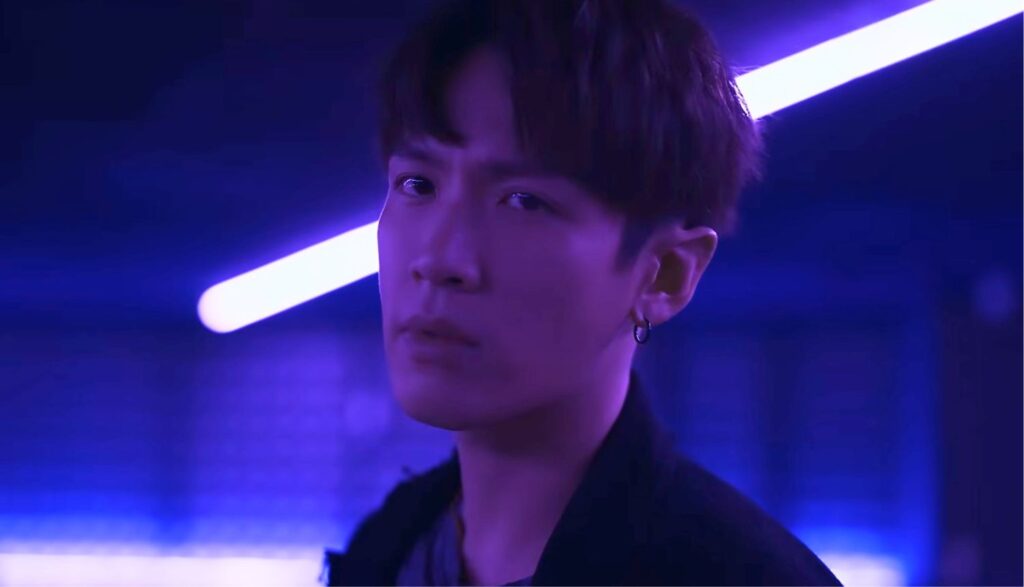
When gods and demons wage war, woe to the regular people who get caught in the middle. In this case, those regular people are Han Chieh and Yeh Tzu.
Years ago, Han made a terrible mistake, and it got his parents killed. Devastated, Han attempted to take his own life—only to find that the Crown Prince, a deity from the Celestial Realm, didn’t plan on letting him off that easy. To atone for his sins and save his parents from eternal damnation, Han is forced to serve as the Crown Prince’s warrior in the human world. If he can slay enough demons and ghosts, his parents will be reincarnated.
It’s this task that leads Han to Yeh Tzu, a young woman battling leukemia. Yeh is convinced that her house is haunted, and while Han initially blows her off, it doesn’t take him long to realize she’s no ordinary client. Most people can’t see the spirits that Han is dedicated to eliminating. Yeh, however, can see them just as well as he can.
Over the years, Han has resigned himself to working alone. But if he’s ever going to pay off his debt and save his parents, he may have to change his tune. There are a lot of ghosts out there, after all. Yeh may be exactly who he needs to set things right.
ANGELS AND DEMONS (SORT OF)
As you can probably guess, Agent From Above deals heavily with the supernatural, and not exactly in the biblical sense. The religious elements may be fantastical—no one’s suggesting that the Crown Prince exists or you should go worship him—but they’re clearly inspired by Buddhism and Chinese folklore. Characters worship small, Buddha-like statues and burn incense in reverence, and it’s not hard to guess where the promise of reincarnation comes from.
The show even spends some time in hell, which is shown as a barren land of fire and brimstone. Those unfortunate enough to end up there are subjected to endless torture; what we see isn’t necessarily violent, but it’s certainly disturbing. (Han’s parents, for example, are forced to eat hot coals for eternity.)
Since the plot focuses on the supernatural, you can expect ghosts and spirits at every turn. Characters also frequently refer to the spirits as “demons,” but they’re closer to your standard ghosts than biblical demons. Some aren’t very threatening, such as the ghost of a young man who becomes a sidekick to Han and Yeh, but others are more frightening. The spirit of a woman veiled in white causes a few jump scares, and she takes control of humans in a way that’s reminiscent of demonic possession.
Even setting the supernatural aside, though, Agent From Above is riddled with issues. Violence is frequent; Han uses both magical weapons and martial arts to dispatch spirits, though confrontations are not particularly bloody. Suicide is also a common theme, as several ghostly characters—not to mention Han himself—died by taking their own lives. Characters watch pornography and make suggestive references, and language occasionally pops up as well.
Agent From Above takes a fantastical spin on Chinese folklore, and in the process, it includes dicey themes such as reincarnation and demonic possession. Tread carefully or, like Han, you may realize too late that you’ve wandered in too deep.
(Editor’s Note: Plugged In is rarely able to watch every episode of a given series for review. As such, there’s always a chance that you might see a problem that we didn’t. If you notice content that you feel should be included in our review, send us an email at letters@pluggedin.com, or contact us via Facebook or Instagram, and be sure to let us know the episode number, title and season so that we can check it out. )