YouTube Channel Review
When I reviewed Ridley Scott’s Napoleon, I went in with only moderate knowledge about General Bonaparte, so I wasn’t able to say one way or another how accurate the movie was to the man’s life.
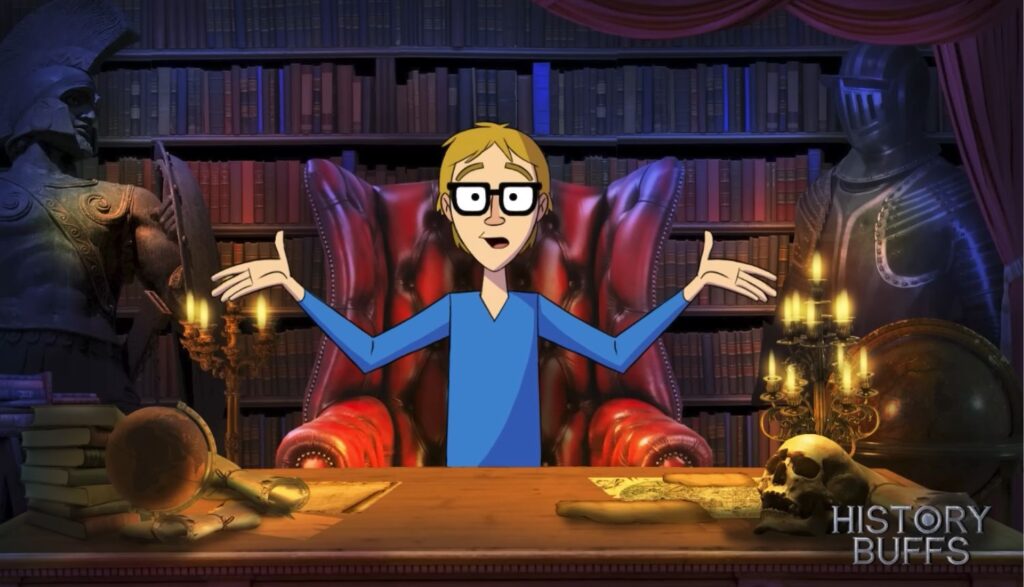
And that’s something Nick Hodges, through his YouTube channel History Buffs, hopes to rectify. (Suffice to say, Hodges really hated the movie.)
Hodges’ channel is all about diving into movies based in history to determine how accurate they are to the events they’re seeking to portray—whether the stories are from antiquity or from less than 100 years ago. Referencing official documents and scholars, Hodges praises or criticizes movies depending on their accuracy—and he educates on the historical events, too.
But many events in history (not to mention the films based on them) are filled with scandalous content. So, what can viewers of History Buffs expect content-wise?
POSITIVE CONTENT
Hodges brings plenty of context to the events of each film, often spanning decades or even centuries to explain what led up to the movie’s plot. He’ll often reference documents from those time periods, and we’ll sometimes hear audio from people directly involved in the actual events upon which each movie is based. Sometimes, Hodges will even mention lines in the film that are direct quotes from the real people the actors are portraying.
Hodges isn’t afraid to call out a movie when it stretches the truth or flat-out gets things wrong, whether done intentionally or not. He’ll back up his claims with dates, times and other historical accounts that help bolster his criticisms. He’s not too stringent, however; he’ll occasionally acknowledge that some events needed to be condensed or altered slightly to play well on a screen.
CONTENT CONCERNS
Hodges reviews movies that involve sex and nudity. In one video, he shows a movie clip of somewhat hidden oral sex. In other film scenes, we essentially see naked rears. When necessary, Hodges blurs exposed breasts. However, the blurring is light, making the censorship only partially effective. We also see women in unblurred revealing lingerie.
Movies dealing with war can show some graphic content, too. In Saving Private Ryan, for instance, we see the gory opening of the movie’s Normandy landings—wherein soldiers get shot and killed, walk around limbless or lose their entrails. In Hodges’ critique of Apocalypto, we see people die in sacrifice. And Hodges shows clips of parents who force their children to die by ingesting cyanide pills in Downfall. Other videos showcase similarly graphic deaths from other movies, too.
In one movie review, Hodges discusses a man’s drug addiction and abuse.
He covers films dealing with religion, too, including Christian, Islamic and Incan beliefs.
We hear heavy crudities from movie clips and Hodges alike, including the f-word, s-word, c-word and more. God’s name is used in vain (including pairings with “d–n”), and Jesus’ name is likewise used in vain.
Somewhat ironically, some fans have pointed out that while Hodges does get many things right, a few of the statements he makes are inaccurate or missing the proper nuance regarding the historical event. On a similar note, in one video, Hodges seems to support the myth that early Christians were against intellectual thought—and were therefore one of the major reasons why the world is not more advanced today.
CHANNEL SUMMARY
Plugged In occasionally comments on the historical accuracy of the movies we review—though we’re far more focused on the content in each film. But History Buffs takes the opposite approach: dealing with the history but not caring much about content. Because of that—while Hodges may provide plenty of basic information for viewers—the crude language, nudity and violence in the films he critiques will be present, too.