TV Series Review
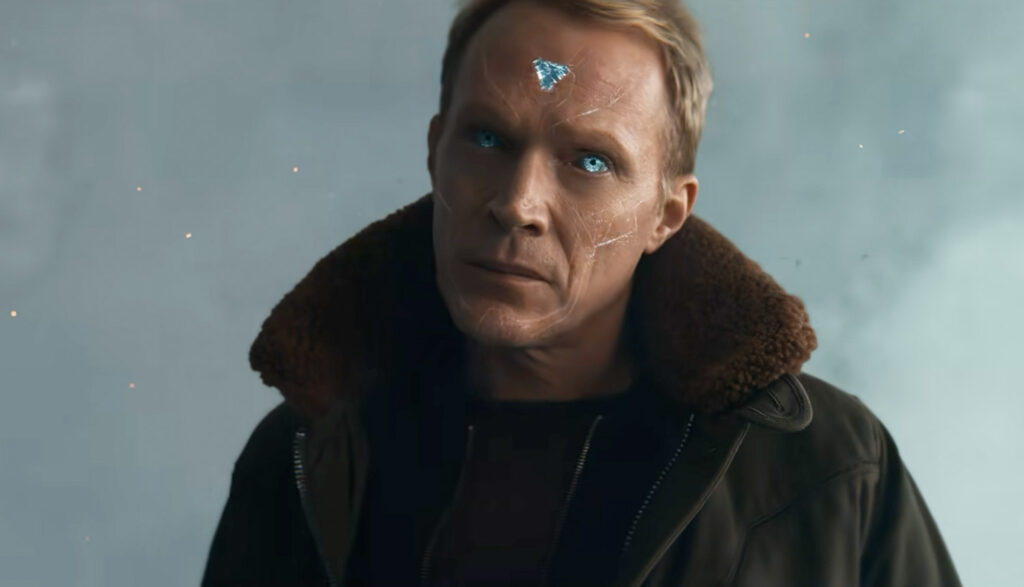
For a guy who doesn’t actually draw breath, Vision has had quite an interesting life. Or should we say lives.
He started his story as a superhero AI in Avengers: Age of Ultron. He found love soon after with Wanda Maximoff (aka Scarlet Witch) and suffered a hero’s death at the hands of Thanos in Avengers: Infinity War. A grieving Wanda creepily resurrected a version of him to fill her self-made TV sitcom world in WandaVision, while the covert governmental programmers at S.W.O.R.D. got to work rebuilding his physical body.
Now that second version of Vision—stripped of all the life and emotion his relationship with Wanda had provided him—is on his own, doing his best to recover his humanity. Or, at least, act human enough to not draw too many side-eyes.
But he’ll need to work quickly, because he’s got a son who needs him.
Wait … a Son?
Yep, that’s pretty much Vision’s reaction, too. The idea that this walking, talking computer somehow fathered a child is just plain impossible. Oh, sure, the synthetic superhero knows that Wanda populated their shared little sitcom world with twin boys, Billy and Tommy, but Wanda made that world up. And no matter how powerful a witch she was, Ms. Maximoff couldn’t conjure up a truly new being, right?
The experiences of Thomas Shepherd beg to differ. When the kid was 12, he nearly drowned. But somehow, the fantastical spirit of Tommy Maximoff found its way into Thomas Shepherd’s dying body, creating one very confused, occasionally superpowered, tween. And now that Thomas is in his 20s, he’s not any less puzzled by these strange memories (or his mysterious love for old TV shows with laugh tracks).
That said, Wanda isn’t the only one who can throw together a whole new reality. Vision has managed to create a nice little virtual home for himself—a digital mansion filled with comfy couches, rolls of vibranium cooking foil and a bevy of helpful AI servants to help him cope. Oh, and he’s locked a far less helpful AI synth in his digital home’s digital attic: Titanic bad guy Ultron—or at least the last vestiges of what Ultron once was—is there, too, watching television, painting portraits and occasionally still mulling how to obliterate the human race.
Keeping Ultron around would feel, to some, like an unnecessary risk. Most of Vision’s AI servants would seem to say so.
And that may be especially true now, given that Vision’s attracting new risks of his own. First among them: a bounty hunter known as the Paladin. He’s been contracted to find Vision and reel him in—alive if possible, in pieces if necessary. And the man/woman/thing that contracted the Paladin doesn’t seem like the sort of guy/gal/entity that takes failure lightly.
For Lack of Vision …
VisionQuest is the final chapter in Disney+’s WandaVision trilogy of shows. The first was, of course, WandaVision—an Emmy-nominated creative triumph for the Marvel Cinematic Universe. The second, Agatha All Along, was … less so. Certainly, the latter show’s occultic trappings and LGBT content was a big turnoff to plenty of would-be fans and families.
VisionQuest is, aesthetically, a return to WandaVision form. Its quirky, creative setting add a dusting of whimsy to this latest MCU chapter. And it comes with some strong, poignant themes, too.
Almost from the outset, we’re introduced to a handful of characters who don’t know who they are and are desperate to find out. Vision (played ever so well by Paul Bettany) has no concept of the love and living vitality that the first Vision (the one killed by Thanos) found in his own brief “life.”
“I have his memories but not his feelings,” the new Vision bemoans. “I have his face but not his virtue.”
Thomas also feels incomplete—unsure, at first, whether his WandaVision memories are real or just signs that he’s going insane. In a nice echo of Vision’s own existence, Thomas spends his days pretending to be someone, anyone, else (often to grift some money from an easy mark or two). Better to pretend to be someone else than try to make sense of who he actually is.
More peripheral characters deal with their own questions of consciousness and identity, which makes the show interesting. What makes the show heartening is its focus on family.
Vision cannot love as the show opens. He has no yen for a family. And yet, he finds one. And you just know that, as the show goes on, Vision’s own receptacles for love and fatherhood will grow. We see some other familial dynamics in action, too, even from Vision’s own AI companions. (One makes a sacrificial act near the end of the second episode, saying that he’s doing it for his family.)
All that cannot excuse VisionQuest’s unfortunate outlay of content concerns, however.
As is the case in most superhero stories, violence is a frequent cohabitant on the screen, be it big or small. The fact that this Vision comes into the story without a conscience increases the body count measurably, and the Paladin’s own methods of dealing with conflict are bloody indeed. (Add to that a serial killer who enters into the story some episodes later and is known for plucking out her victims’ eyeballs … well, there’s another issue for you.)
The language can be problematic as well, with s-words peppering just about every episode. The moral grid that even our heroes work from can be shaky at best—and Ultron’s looming influence moves the needle into ever-darkening shades of grey. And, of course, we hear plenty about Wanda and her exploits, all of which lean into her occultic, witchy nature.
VisionQuest isn’t the best MCU television offering, either aesthetically or ethically. But Vision’s titular quest—that for humanity and heroism and family—gives would-be viewers something nice to cling to, even as the bullets fly and the lasers cut.
(Editor’s Note: Plugged In is rarely able to watch every episode of a given series for review. As such, there’s always a chance that you might see a problem that we didn’t. If you notice content that you feel should be included in our review, send us an email at letters@pluggedin.com, or contact us via Facebook or Instagram, and be sure to let us know the episode number, title and season so that we can check it out.)