




Comedy
Big Mistakes
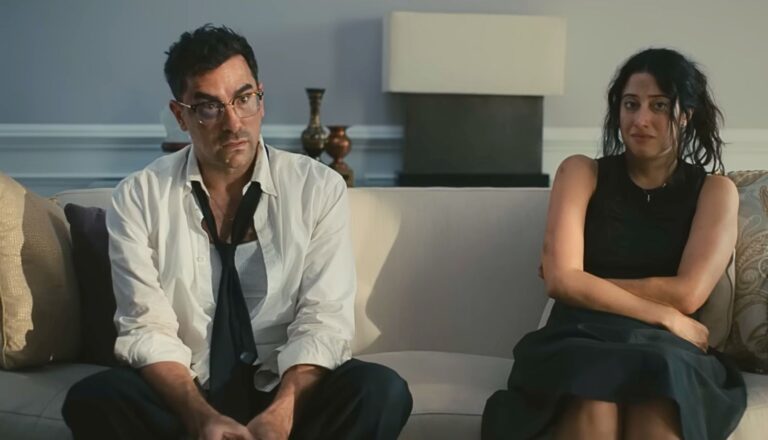
‘Big Mistakes’ starts with a small mistake, ironically. But it’ll certainly lead to some big mistakes and content issues alike.
Heroes can fail us. Even superheroes. Especially superheroes.
Hughie Campbell knows this better than most. One afternoon, he and his girlfriend were talking about moving in together and the next—well, his girlfriend had become a pair of disembodied hands and a bunch of blood spattered on the street. That’s what happens, apparently, when a super-fast hero like A-Train plows into a flesh-and-blood person. And while A-Train said he was sorry and all, Hughie understandably still harbors some ill will … and a well-founded suspicion or two about just how super these superheroes really are.
He’s not alone. Hughie hangs out with The Boys, a rough-hewn squad of vigilantes dedicated to exposing society’s most hypocritical heroes: Do-gooders fighting other do-gooders, if you will. Only the latter are do-badders and the former do bad things to make good on their …
Never mind. Let’s just get on with the review.
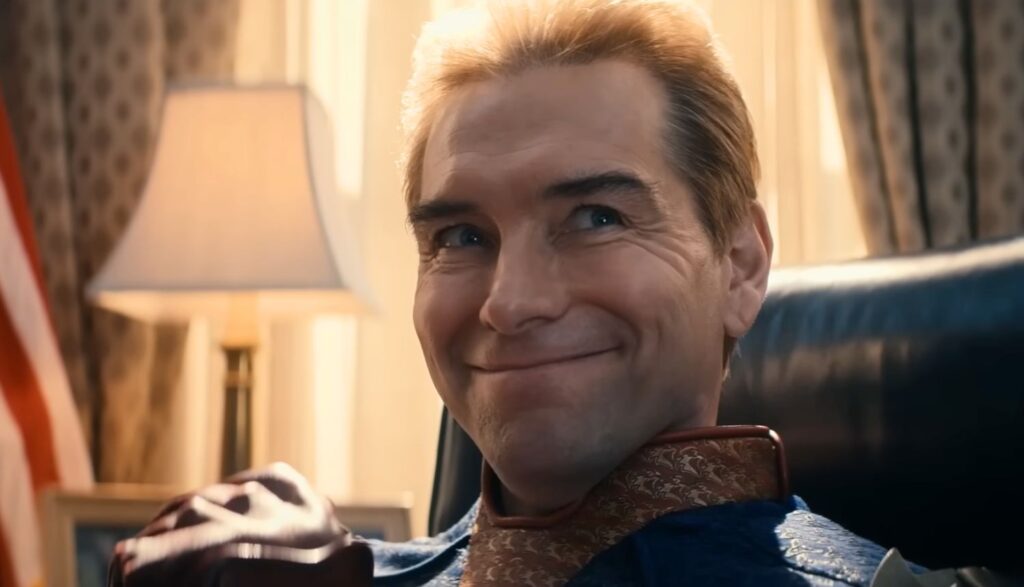
Hughie and The Boys don’t have a lot of advantages in this fight. Led by the mysterious Billy Butcher, The Boys are up against Homelander—a Superman-esque hero in a star-spangled cape who can fly, knock down buildings without breaking a sweat and zap anyone he’d like with his heat-ray vision. And it seems that he’d like to do that to everyone who so much as looks at him sideways.
As Season 5 opens, Homelander runs just about everything—from the U.S. government to his own batch of uber-cowed superheroes: The Deep, an Aquaman equivalent who once had a romance with an octopus; Black Noir—or, rather, a new imposter for Black Noir, after Homelander murdered the original; Sister Sage, the so-called smartest person on the planet; and Firecracker, a suped-up podcaster with the ability to spark (and lactate, much to the thrill of the fetish-ridden Homelander).
Another key ally, Ashley Barrett, gave herself superpowers and can now read minds—a handy skill for the U.S. Vice President. She’s hitched her career wagon to Homelander, but she’s also gotten literally hitched to Oh-Father, a super-powered Christian preacher who can scream really, really loud—and believes that God is, most assuredly, on his side.
But the Boys have a few cards of their own to play.
First up: Starlight, a one-time idealistic superhero who switched sides after learning that Homelander et al. weren’t quite what they seemed. (The fact that The Deep sexually assaulted her was a big clue.) Billy now has superpowers of his own, thanks to a dose of the super serum “Permanent V.” But while the tentacles that can shoot out of Billy’s chest can be helpful and all, the brain cancer Billy developed as a side effect is definitely a downer. He’s got less than a year to live, which gives the whole enterprise a ticking clock.
For years, Kimiko Miyashiro was known as “The Female,” in part because she never told anyone her name. She never told anyone anything, in fact: She was mute for years. Her actions, however, were a different story. Kimiko is a super-strong, super-lethal and super-resilient part of the team, able to regenerate from injury like Marvel’s Wolverine or Deadpool. As of Season 5, she’s quite chatty—thanks to TikTok.
A trio of regular ol’ humans round out the crew. Mother’s Milk is plenty strong, but not in a superhuman sort of way. Frenchie, thanks to his work with a mysterious, superhero-killing virus, may be the key to taking down Homelander for good. And then there’s Hughie, whose basic decency helps keep the team from becoming what it hates.
Oh, and let’s not forget about the x-factor floating in a container in Homelander’s office: Soldier Boy, technically Homelander’s father (it’s complicated), but also just about the only guy on the planet who can take Homelander down. Not that Soldier Boy is doing much as the Season 5 begins. But c’mon: The writers aren’t keeping him on ice just as a nice bit of set decoration.
Will all that be enough? Well, four seasons in, it hasn’t been enough so far. But fifth time’s a charm, right? And with Season 5 set to be The Boys’ last, the metaphorical chickens may, finally, come home(lander) to roost.
Based on a 2006-08 comic series of the same name, Amazon’s The Boys is all about deconstructing the American superhero myth and, by extension, satirizing America itself. Or, at least, the America its creators see.
It’s a natural impulse to flip superheroes upside-down—and, perhaps, a necessary reminder of the corrupting nature of power. After all, not every person with superpowers necessarily has super-great character to go along with them. As The Boys imagines it, depressed superheroes aren’t that different from nihilistic dictators—always just one Nietzsche quote away from pressing the “end world” button. And as for the good heroes? Well, even if a hero starts out with the best of intentions, how can we be sure that he or she will follow through on them?
This is not exactly unexplored territory.
DC’s Watchmen is perhaps the most famous example, but there have been others. Even legitimate superhero narratives in Marvel and DC have poked around the dangers of unchecked superhuman beings. Captain America: Civil War explored the theme of how a world would deal with, essentially, god-like vigilantes (well-meaning tho’ they might be).
But The Boys feels bleeding-edge relevant, too—an exploration of hypocrisy and dubious authority that contains everything from police brutality and the #MeToo movement to corporate oligarchy and, increasingly, Christian nationalism. And in more recent seasons, The Boys’ political commentary comes with about as much subtlety as a rocket launch being broadcast through the world’s loudest amplifier. Power corrupts people, The Boys will tell you, be they superheroes or business syndicates. And it’s an uphill battle to bring the corrupt to justice.
But The Boys itself may corrupt in a different sort of way.
The Amazon show is billed as a dark comedy. And it is indeed as bleak, cynical and brutal as they come. The superheroes here engage in the worst acts you can imagine, from sexual assault to murder, and we see most of those crimes onscreen. Bodies explode before our eyes. Sex, nudity, LGBT content and even bestiality oozes across the screen. Even many of the less heinous “heroes” come across as rather vile human beings. And the language—well, let’s just say we’re a long way from Robin shouting, “Holy hand grenades, Batman!”
And if these so-called superheroes don’t deserve their title, the show’s actual heroes aren’t always a lot better. In the very first episode, they kill a supe and then spend much of the next two episodes trying to dispose of the body. When your protagonists are led by a guy called The Butcher, you know you’re in some pretty murky territory.
The show’s more serious social commentary comes with plenty of issues, too. The Boys critiques everything quintessentially American, if you will—or, at least, the idyllic vision of America pushed in the 1950s. As such, religion becomes a critical focus of this deeply cynical show. Perhaps the best illustration comes from Starlight, whose real name is Annie: She starts Season 1 as an innocent Christian—a one-time member of the so-called Capes for Christ movement—who has some legitimate questions about the faith she was raised in. By later seasons, she sees her former faith as bankrupt as the rest of America’s institutions.
“I should’ve done a lot more stuff [when I was younger],” Annie confesses to a fellow supe, “because there is nothing up there. There’s nobody in the sky watching over us. Not God, not Homelander, not anybody. It’s all just … lies.”
The Boys offers a lively, grotesque, culture-current take on the misuse of power. But ultimately, the power is yours. And perhaps the best use of that power would be to avoid this streaming show like kryptonite.
(Editor’s Note: Plugged In is rarely able to watch every episode of a given series for review. As such, there’s always a chance that you might see a problem that we didn’t. If you notice content that you feel should be included in our review, send us an email at letters@pluggedin.com, or contact us via Facebook or Instagram, and be sure to let us know the episode number, title and season so that we can check it out.)
Hughie, Mother’s Milk and Frenchie are all in a Homelander-backed prison camp (the gate of which proclaims, in mimicry to Auschwitz, “Freedom will make you free!”). After Starlight manages to release an incriminating video of Homelander, the supe decides to execute the trio to lure Starlight, Billy Butcher and others into the open—where he plans to put an end to their effrontery for good.
Wow, where to begin.
Homelander’s vision of America is, superficially, filled with God, flags and an unwavering devotion to—well, Homelander himself. At a rally populated with Vought’s shareholders (Vought is the company that created superhero-causing serums), Homelander says that he’ll create a “safer, more God-fearing nation” as the audience (including at least one member in a red baseball cap) cheers. Oh-Father—a superhero preacher, Homelander ally and CEO of something called “Samaritan’s Embrace Ministries” says during an interview that he and his new wife share “the belief in the dream of a Christian nation.” We hear a reference to a prayer breakfast.
After the interview, Oh-Father greets Sister Sage as his “Sister in Christ.” Sage rejects the characterization, saying she doesn’t believe in “Your magic sky ghost or his baby sky ghost.” She also asks Oh-Father’s wife, U.S. Vice President Ashley Barrett, whether Christ compels her to have sex with Oh-Father. We hear a reference to “God U,” and Billy Butcher tells his father that their family’s misfortunes prove that there is no God. (He also tells his abusive dad that he has no right to be buried next to Billy’s mother. “People like you and me don’t get to spend eternity with the likes of them.”)
A supe sports a tentacle-like penis that he uses to beat and strangle his opponents. (It’s completely visible every time the character is on screen.) Someone else crudely compares Billy’s chest tentacles to male anatomical parts. We hear explicit references to other body parts, too, and female characters sometimes display a great deal of skin due to their costumes. Hughie recalls a previous episode where he sat “naked on a chocolate cake.” Characters kiss.
The Deep professes on a podcast that he’s celibate now. “No love, no sex, no problems,” he tells his podcast mate, Black Noir. “And literally, Bro, I’ve never felt manlier.” He adds that kissing and cuddling is “super gay.” Firecracker tells a disappointed Homelander that she can’t produce breast milk like she once did, due to the pills she’s been taking. (Homelander expresses his attraction to lactation elsewhere.) Billy accuses his father of calling his little brother a “poof” for earning a magic trophy.
A superpowered prison guard causes inmates to explode (several times). Homelander sits beside the corpse of someone he just murdered—the top of the body’s head sheared off via Homelander’s laser vision. Someone kills an opponent via strangulation (and stabs his obscene superpowered penis as well). A character’s neck is broken. Someone is cut in half but survives. Billy uses his tentacle powers to kill a couple of people. Blades stab and occasionally kill people. Homelander shoots a hole through someone’s forehead via laser eye, killing her. He kills several people in a prison dorm: While the murders themselves take place offscreen, the dead, bleeding bodies are very much on screen. We see a video wherein Homelander and another supe threaten civilians and leave them to die. Preparing to kill someone, Billy says that it’ll be fun to hear his victim scream.
Characters drink beer. One smokes. Homelander can hear people’s hearts beating, and he tells one of his cohorts that hers smells like it’s “made of ham and cigarettes.” Someone drinks some homemade liquor: When a friend asks if he’s been eating any veggies, the drinker says, “Moonshine’s got corn in it.”
Characters use the f-word 80 times in this hour-long premiere (a few of which are paired with the word “mother”). The s-word is used five times and the c-word is used three. We also hear “a–,” “b–ch,” “h—,” “p-ss” and a few other profanities. God’s name is misused twice, once with the word “d–n.” Jesus’ name is abused three times.
A minor supe called The Worm agrees to dig a tunnel for Billy, Starlight and company. To do so, he strips off his pants, revealing a genital-free area up front and an exposed backside. To dig, he eats the earth and then sprays dirt and dung out his rear like a woodchipper.
Under the authority of the CIA, the Boys try to assassinate Victoria Neuman. Meanwhile, Homelander awaits the verdict of his murder trial.
We see a recap of all the disgusting things that occurred beforehand, including many gory deaths that leave more red than flesh. We likewise see a couple sexual things, including the Seven’s equivalent of Aquaman receiving oral sex from an octopus, another man’s naked rear and a man covered in semen.
When his teen son walks away with a girl, Homelander jokes that nobody should come back pregnant. When he tries to walk it back, he clarifies that he thinks his son could produce semen if he wanted to. Homelander claims the person he murdered was a pedophile. Others perpetuate the baseless rumor against Starlight, too, claiming kids are at risk of “being groomed and thrown into Starlight’s LGBTerror dungeon.” We’re told that one man performed oral sex on a dog. Homelander demands one male member of the Seven perform oral sex on another male member against both of their wills (though the situation stops before it happens). A man reveals that he’s in a romantic relationship with an octopus.
We see a photo of a man’s rectum. We hear a reference to masturbation and sex. We briefly see someone’s clothed crotch being rubbed. A couple women display their cleavage. Two men kiss. We see one man’s naked rear. People discuss the size of a man’s penis.
A girl with snake-like protrusions from her mouth shreds the heads of two men into goop. She does the same with one woman’s arm. Someone jumps from the eighth floor of a building and slams into the concrete below. Homelander forces other Supes to beat three people to death with baseball bats. Rival protesting groups erupt into violence, and men kick a helpless woman on the ground unconscious. We’re told of a Supe who kills migrants on the border.
A parody depicting an über right-wing commentator claims “An eye for an eye might be in the Jew section of the Bible, but it is still in the Bible.”
The CIA covers up the deaths of two agents by claiming they died due to overdosing on “fentanyl-lased cocaine.” Butcher vomits, likely a combination of his intoxication and sickness. Homelander urinates.
The f-word is used around 70 times, including some instances preceded by “mother.” The s-word is used 15 times. The c-word (for both male and female genitalia) is likewise heard, as are plenty of other milder swears like “a–,” “h—” and “b–ch.” God’s name is used in vain seven times, including twice in the form of “g-dd–n.” Jesus’ name is likewise used in vain five times.
Billy and The Boys work for the FBSA, taking down corrupt Supes and reporting to Hughie, who has a strict no-kill policy. Meanwhile Starlight is promoted to co-captain of the Seven, much to Homelander’s chagrin.
We see full-frontal male nudity (and an extreme close-up of male genitals). Characters of both genders engage in sexual activity (including same-sex pairings), and we see lots of skin (though most critical bits are hidden by camera angles). A man shrunken in size has sex with a doll while people cheer him on. A man puts his genitals in a woman’s hand so she can perform a sexual act (his genitals are kept off-camera, but we see everything else). We hear a woman reported a superhero for a sexual offense. People talk and joke about sex, masturbation and sexually transmitted diseases. A couple kisses. A man is uncomfortable that his girlfriend is flirting with her ex-boyfriend (whom she lost her virginity to). A man who wants to fix things with his ex-wife is unable to since she is now dating someone else.
A superhero known as Termite (who can shrink his size down to millimeters) kills his boyfriend during a sexual act. (In miniature, he enters the man’s urethra then accidentally sneezes, returning to normal size and exploding the man’s body.) When a member of The Boys catches him dripping in the man’s organs, Termite shrinks down again and tries to kill the man in a similar manner by entering the man’s rectum (though this is prevented). In another violent sexual act, a man rips out his female lover’s hair (by her request) while they have sex.
Supes use their powers to beat up each other and non-powered government agents. In one fight, a woman uses her powers to blow up her opponent’s hand, then head, then whole body. A movie shows the Seven taking down Stormfront with their powers after learning she’s a Nazi. (Buildings in the background burn and topple.) Homelander is physically aggressive towards many people. Someone makes a murder-suicide joke. A young boy says he has nightmares about his own father (a superhero) killing him. Someone mentions burying dead prostitutes. We see video footage of two superheroes abandoning a crashing plane, allowing the people onboard to die.
People snort cocaine. While in miniature form, Termite is thrown into a bag full of cocaine, which he accidentally ingests. Upon release, he vomits and nearly dies of an overdose. Starlight’s ex says she snuck into a cantina when she was 19 and got drunk (and then puked onstage in front of a crowd of people afterwards). We learn Billy has remained sober the past year in order to care for his dead wife’s son.
We hear lots of racist commentary from Stormfront (both the scandalous superhero and a woman playing her in a film). Homelander says humanity doesn’t need a “master race” because he is the master race. A man is shamed for his recent weight gain. We hear that a woman sent her opponent a box of cat feces. The FBSA makes deals to release convicted superheroes in exchange for money and other heroes being placed behind bars instead.
A superhero claims he escaped a religious cult. Superheroes talk about leaving the Christian faith and make jokes about their religious upbringings. A Vaught executive admits the company shouldn’t have made superheroes objects of worship since it corrupted them.
We hear multiple uses of the f-word, s-word and c-word. We also hear multiple uses of “a–,” “a–hole,” “b–ch,” “b–locks,” “c–k,” “d–k,” “p-ss,” “tw-t” and “w–ker.” God’s and Christ’s names are abused (the former sometimes paired with “d–n” and the latter sometimes paired with the f-word).
Hughie and the rest of The Boys try to regroup from the events of the Season 1 finale, especially the absence of their leader, Billy Butcher. Hughie and Annie plot to swipe some Compound V from Vought’s labs. Meanwhile, Homelander—fresh off of his murder of Vought Vice President Madelyn Stillwell—tries to make himself not just leader of The Seven, but the all-powerful dictator over Vought as well. But he finds unexpected resistance in the form of Vought’s steely, ruthless CEO, Stan Edgar.
Hughie and Annie’s conduit to the compound is a superpowered lab tech nicknamed Gecko—a former friend of Annie’s from their Capes for Christ days. He’s fallen far from the faith, though, and is now working part-time as a supercharged S&M male prostitute: He brings a “customer” into a hotel and allows the man to hack off his arm. (Blood flies as the guy lustily chops at the meat with a machete, and we see the severed arm lying on a nightstand.) Gecko’s arm rapidly (and grotesquely) grows back: Gecko tells his customer that, for another $1,000, he’ll allow him to cut off his penis.
“Where’s the closest ATM?” The guy says.
And that’s arguably not the grossest scene in the episode, by the way. That might be when a woman’s head literally explodes, spraying others with blood and gore. Several throats are sliced open (with more blood gushing everywhere), and a man is beheaded: A hero totes around the severed cranium like a prize. Someone is stabbed through the chest with a sword. Another guy gets mauled by a flying boat, apparently. (We only see the “attack” in grainy surveillance footage, but the nearly destroyed arm is on full, bloody display.) A blind man is punched in both ears: The man screams in pain and falls to the ground as blood pools around the writhing body. A superpowered terrorist causes a massive explosion with his overheated body. We see Edgar negotiate a contract that promises a superhero will make “best efforts to avoid collateral damage.” The language is intentionally soft, and Edgar admits that they build in a “34% casualty allowance.”
Annie/Starlight tells Gecko that she’s lost her faith, and they both make some disparaging remarks about the conservative Christian belief system they were raised in. They reminisce about a passion play they were both in. (“You were the best Jesus,” she tells him. “No one can take a nail through the palm like I can,” says the regenerative Gecko.) Annie sings at a church-based funeral for a fellow superhero. Another supe—who’s down on his luck—is recruited to join something called the Church of the Collective, promising that the church will help him get back on his feet and return to prominence.
The Boys are staying with a really unsavory gang that is involved with, among other things, human trafficking. “They promised me they would only smuggle in guns,” Frenchie, a member of the Boys, whines. “And cocaine and Fentanyl.”
Homelander, satisfying a curious fetish, drinks a bottle of breastmilk that came from Stillwell—the woman whom he murdered. A superhero gets seriously drunk and causes a disturbance that lands him in jail. Homelander calls a talented blind superhero a “cripple.”
We see Annie in a bra and panties. She and other female superheroes wear provocative costumes, and Vought is clearly sexualizing Annie’s public persona. There’s a graphic reference to bodily fluids. Someone is blackmailed. We learn the founder of Vought used to be a Nazi doctor.
Characters say the f-word 45 times (and we may hear others in some background music), the c-word twice and the s-word another 17 times. We also hear “a–,” “h—” and “p-ss,” along with the British profanity “b–locks.” God’s name is misused five times (three with the word “d–n”), and Jesus’ name is abused four times.
The public loves its superheroes, especially members of The Seven—an Avengers/Justice League-style squad with very posh facilities at Vought’s corporate headquarters. But most of its members—and, apparently, most superheroes in general—aren’t the virtuous paragons they pretend to be.
One hero, A-Train, races through a woman, completely obliterating her. Her boyfriend, Hughie, is left holding her hands—the only thing left intact—while the rest is a spray of blood and bone. (We see part of her spine fly around in slow-motion.) Later, A-Train jokes with another supe that he swallowed one of her molars “like a bug on the f—ing freeway.”
Another member of The Seven, The Deep, drops his drawers (we see his rear end) and blackmails the newest member (Annie, aka Starlight) into giving him oral sex. She apparently does so, and we see her crying in the bathroom later. (“I just heard my mom’s voice in my head,” she confesses to a near-stranger still later. “’Keep smiling. The show must go on.’”) Another hero takes down a private plane containing, among others, an American mayor and his son, who just that day was given a treasured, autographed picture of that self-same hero.
One hero uses his powers of invisibility to spy on women in the bathroom. His clothes don’t disappear, so he has to work naked; we see him materialize and show his full-frontal attributes. Hughie and Billy Butcher, head of The Boys, sneak into a superhero nightclub. There they see two naked superheroes have sex while hovering above the room. (We see a woman’s breasts.) Another mouse-sized hero takes a running start and apparently dives into a woman’s anatomy. Another hero—a stretchy, snake-like guy, passionately kisses two other guys. Another hypocritical wrinkle to his brief character: His name is Ezekiel, and he’s apparently the leader of a group called “Capes for Christ” that believes in “praying away the gay.”
A man and a hero get into a brutal fistfight. Lots of blood is spattered about, and the hero is eventually killed via a live electrical wire to the man’s buttocks (which we indistinctly see). We hear a few graphic double entendres. The Superman-like hero Homelander is compared to Jesus. Someone vomits all over a street. We hear a great deal of lying, and corporate superhero lawyers try to cover up their clients’ terrible behavior.
We see alcoholic drinks and hear passing references to drug use. Characters use the f-word more than 40 times. The s-word is used nearly a dozen times, too, and the c-word is uttered thrice. Other profanities include “a–,” “b–ch,” “b–tard,” “h—,” “p-ss,” “pr–k,” “p—y” and “b-llocks.” God’s name is misused four times, once with the word “d–n.” Jesus’ name is abused twice.

Kennedy Unthank studied journalism at the University of Missouri. He knew he wanted to write for a living when he won a contest for “best fantasy story” while in the 4th grade. What he didn’t know at the time, however, was that he was the only person to submit a story. Regardless, the seed was planted. Kennedy collects and plays board games in his free time, and he loves to talk about biblical apologetics. He’s also an avid cook. He thinks the ending of Lost “wasn’t that bad.”

Paul Asay has been part of the Plugged In staff since 2007, watching and reviewing roughly 15 quintillion movies and television shows. He’s written for a number of other publications, too, including Time, The Washington Post and Christianity Today. The author of several books, Paul loves to find spirituality in unexpected places, including popular entertainment, and he loves all things superhero. His vices include James Bond films, Mountain Dew and terrible B-grade movies. He’s married, has two children and a neurotic dog, runs marathons on occasion and hopes to someday own his own tuxedo. Feel free to follow him on Twitter @AsayPaul.

Emily studied film and writing when she was in college. And when she isn’t being way too competitive while playing board games, she enjoys food, sleep, and geeking out with her husband indulging in their “nerdoms,” which is the collective fan cultures of everything they love, such as Star Wars, Star Trek, Stargate and Lord of the Rings.
‘Big Mistakes’ starts with a small mistake, ironically. But it’ll certainly lead to some big mistakes and content issues alike.
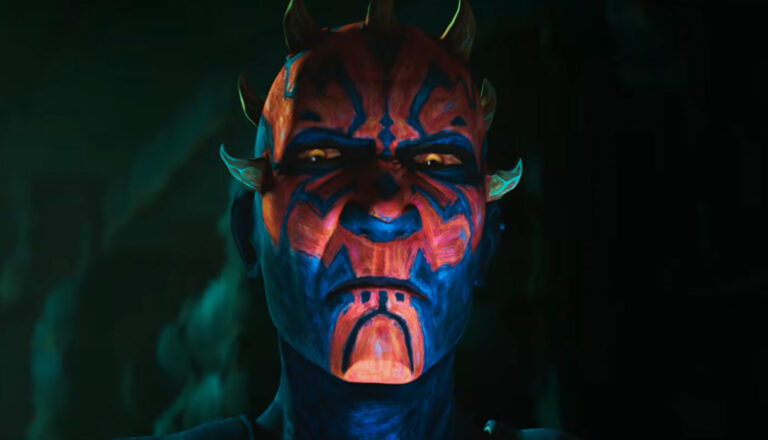
‘Maul – Shadow Lord’ is darker than previous animated Star Wars fare. It’s still clean, but it may be best suited for older viewers.
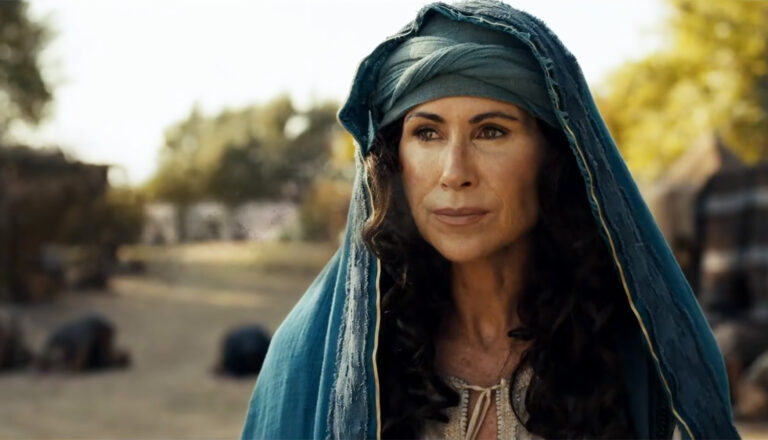
Fox’s ‘The Faithful’ explores stories from the Bible through the eyes of biblical matriarchs, highlighting these women’s incredible faith.

Despite a new protagonist, this ‘To All the Boys’ spinoff continues many of the sensual elements its previous entries contained.