




Crime
Last Seen
Apple TV’s ‘Last Seen’ is a mature, dark crime drama with a lot on its mind. The contemplative series unearths trauma and harsh profanities in equal measure.
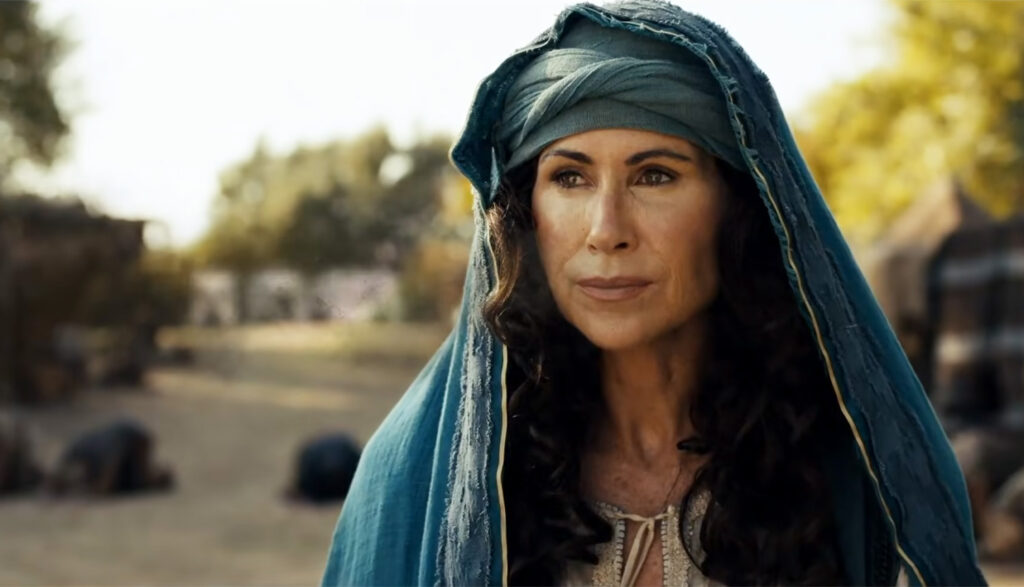
When you consider faithful women in the Bible, you probably think about Mary, the mother of Jesus. Esther or Ruth might come to mind, too. Or perhaps Sarah, the wife of Abraham.
As you might remember, God promised that He’d make “a great nation” of Abraham (Genesis 12:2), that Abraham would be “the father of a multitude of nations” (Genesis 17:4). But it was hard for Sarah to believe those promises. She struggled with infertility for years. In fact, she became so desperate for a child that she ordered her husband to lay with Hagar, her servant: “It may be that I shall obtain children by her” (Genesis 16:2).
Still, God kept promising Abraham that Sarah would bear a son of her own. But as Sarah aged well past her child-bearing years, it became more and more difficult for her to have faith in God’s promises. In fact, it made her laugh (Genesis 18:9-15).
But as we know, God doesn’t break His promises. Not to Abraham, not to Sarah and not even to Hagar, the Egyptian servant.
But the faith walks of Sarah and Hagar probably looked a lot different from Abraham’s. The same could be said for all the women we meet in Scripture. And that’s what Fox’s The Faithful: Women of the Bible aims to explore.
What was the relationship between Sarah and Hagar like? Was it simply that of master and servant, or could these two women have been friends? Even though Sarah eventually told Abraham to send Hagar and Ishmael (the son Hagar bore to Abraham) away, could she have had more profound feelings for her adopted son and the surrogate who carried him?
The first episodes of The Faithful explore all of that, diving into the innermost thoughts of both Sarah and Hagar as they faithfully followed Abraham. And along the way, both women come to have a deeper understanding of the God Abraham follows, too.
And the series doesn’t stop with Sarah and Hagar. The Faithful casts its eyes on Rebekah, Isaac’s wife, and closes out its season by dramatizing the lives and relationships of Leah and Rachel, Jacob’s spouses.
Much like Angel’s The Chosen, not everything here is strictly biblical. The writers did lot of guesswork to fill in the blanks. A couple of plot points were altered for dramatic impact. And some were left out entirely to keep the story moving along. For instance, The Faithful makes no mention of the fact that Sarah and Abraham were half-siblings. That’s because the producers of the show said in an interview that they wanted to make this biblical story accessible to a wider audience—and explaining the nuances of historical, biblical families to non-Christians isn’t really something you can do well within the context of this show.
However, on balance, The Faithful is pretty, ahem, faithful to the Bible. The show gives us an interesting glimpse at what things may have looked like from the perspectives of these important—and faithful—biblical women.
(Editor’s Note: Plugged In is rarely able to watch every episode of a given series for review. As such, there’s always a chance that you might see a problem that we didn’t. If you notice content that you feel should be included in our review, send us an email at letters@pluggedin.com, or contact us via Facebook or Instagram, and be sure to let us know the episode number, title and season so that we can check it out.)
We’re shown events from the book of Genesis, from the time Abraham and Sarah (then called Abram and Sarai) were told to leave their homeland to the time of Sarah’s death many, many years later.
Two different men court Sarah, demanding that she bow before them, but she refuses, stating she bows to “no man.” (It should be noted that both of these men had other wives already.) Sarah’s father, embarrassed by Sarah’s “spirited nature” apologizes to one potential suitor. When Abraham proposes, offering Sarah love rather than money, she accepts and kisses him on the lips.
Even though Sarah is barren, Abraham remains devoted to her and only her, refusing to take another wife even though it would be culturally acceptable. When Sarah later asks him to have a child with Hagar, he is reluctant, only participating because Sarah tells him to. Even though it’s her idea, Sarah still struggles with jealousy over the situation, but she tells Abraham to continue lying with Hagar. And once Hagar conceives, they all seemed relieved to return to normal.
As depicted here, Hagar was given to Sarah as a wedding present by a potential suitor. She tells Sarah that she sold herself into slavery to provide for her family and hopes to return to them someday. She is devoted to Sarah and willingly agrees to be a surrogate. However, once the baby is born, even though she wants to return to her family, Hagar decides to stay so she can be a part of her son’s life.
We don’t see their marital relations onscreen, but Sarah and Abraham try many times to conceive a child. Hagar uses Sarah’s urine to test for pregnancy each morning (the same test is performed while Hagar is trying to conceive). She gives Sarah a mandrake tea to serve Abraham so he’ll be more virile. In one scene, Abraham talks to Hagar after having sex with her (she’s still in bed, covered by a sheet), telling her she’s beautiful before leaving the tent.
A husband and wife sleep in bed together. They kiss a few times. Servant women put a robe on Pharaoh as he steps out of a tub (the robe covers him entirely in this shot). Many of Hagar’s garments (and the garments of Egyptian women) show cleavage.
When Abraham first tells Sarah that God spoke to him, she asks, “What god?” “God,” he responds, indicating that he believes this is the one true God. Sarah is still suspicious, thinking Abraham may have simply been dreaming. And she continues to express doubts about God and His promises throughout the episode. But she also decides to trust her husband, and through the years, she eventually begins to have faith in God herself after watching Him work in their lives. Hagar also seems to develop a faith in God after witnessing Him perform miracles.
People pray on several occasions. Sometimes we hear God whisper back. We hear about God’s promises to Abraham, Sarah and Hagar. Three men have dinner with Abraham, and one says that Sarah will have a son. Sarah laughs when she hears this, but sure enough, she becomes pregnant.
Abraham’s household wakes one night to sounds of thunder. They walk outside to see fire raining down on Sodom and Gomorrah. Abraham tells the stories of Noah and the Tower of Babel to some children.
When Abraham and Sarah leave their homeland, Sarah’s father tries to give her household idols to protect her, but she declines, saying that Abraham will protect her. Pharaoh, the king of Egypt, is called a “living god,” and many people prostrate themselves before him. Hagar tells Sarah that her village was razed by Pharaoh because they worshipped the “wrong god.” Hagar wears an ankh.
A woman tries to stab a man with a hairpin after he tries to force himself upon her. God intervenes, causing the man to bleed from the eyes and nose in immense pain. Believing that Sarah is causing his affliction, the man calls her a witch. Elsewhere, a man says that God threatened to kill him and his family if he didn’t obey God’s commands.
We see the bloody corpses of a few animals sacrificed on an altar to God. A few women are manhandled by guards. Abraham punches a man in the face. Someone throws an object in anger. A woman screams in pain as she delivers her baby. We see a corpse wrapped in a shroud for burial.
Sarah plies Abraham with wine before asking him to sleep with Hagar.
We see how jealousy impacts Sarah and Hagar’s relationship and the relationship of their respective sons, Isaac and Ishmael. Sarah compares Ishmael’s hatred for Isaac to the story of Cain and Abel. Sarah never told Ishmael that Hagar was his mother, and there are consequences for that lie. Even though circumstances drive them apart, Sarah and Hagar truly care for each other. And Sarah also cares deeply for Ishmael, even though she’s eventually forced to send him away for Isaac’s sake. (Young Isaac is devastated to see his brother go.)
Sarah and Abraham are generous to the servants in their household, treating them more like friends or family than servants.
Throughout the episode, parents make sacrifices for their children.
Someone exclaims, “My god!”
These episodes cover events from the book of Genesis involving Rebekah, Isaac’s wife.
We see a scene from Rebekah’s childhood (which is not described in the Bible), wherein her father prepares to slaughter a sick lamb. Rebekah asks him if she can care for the animal instead, and she nurses it back to health only for the creature to flee during a powerful storm.
Years later, Isaac recounts to Rebekah how, as a child, God had asked his father for a sacrifice—and how Isaac was determined to be that sacrifice. A flashback shows Abraham holding his son down on an altar while raising a knife to kill him. However, he pauses when the Lord speaks to him (internally). Isaac tells Rebekah that a ram seemingly appeared out of nowhere—the same ram that had fled during the storm—sparing his life. Isaac and Abraham, we’re told, have been estranged since that incident.
Before she marries Isaac, Rebekah says that she believes it may be her destiny to leave her home in Haran just as her great aunt, Sarah, once did with Abraham. Her grandmother expresses trust in the God of Abraham because He changed Abraham for the better.
When Eliezer, the servant of Abraham, arrives in Haran to search for a bride for Isaac, Rebekah offers him and his camels some water. She notices a hazy figure standing among the camels, but Eliezer does not see this person. Later, after learning that Rebekah may be the woman he was sent to find (finding her at the well is a literal answered prayer), Eliezer tells her family that he asked the Lord to send an angel to accompany him on his journey (and Rebekah says she believes it was the angel she saw with the camels). Both Eliezer and Rebekah believe that God led him to her so she could fulfill her purpose and become Isaac’s wife.
Isaac gets angry when he learns that Abraham sent Eliezer to find a wife for him, since he’s still angry at Abraham’s blind obedience to God. However, after realizing that the ram that saved his life is the same one that Rebekah nursed to health, he changes his mind, realizing that God has been working for his good since before he was born.
That said, Isaac isn’t as trusting of God as Abraham was. God never speaks directly to Isaac. Instead, God speaks to Rebekah (though we only hear Him say her name). When Rebekah is pregnant, she calls out to God, asking him to protect her child. During this prayer, she learns she’s actually carrying twins—and that just like Isaac usurped his older brother, the younger twin will usurp the elder. Rebekah tells Isaac what God said, but Isaac never heeds the words.
This theme continues throughout the lives of their sons, Esau and Jacob. Because Isaac favors Esau, their firstborn, he cannot bring himself to believe Rebekah’s testimony regarding God’s path for the twins. He wants to pass the covenant that Abraham made with God onto Esau. He wants Esau to lead their people and become the father of nations.
Unfortunately, Esau doesn’t seem fit to lead. He’s a good provider and enjoys hunting game. But he also enjoys drinking to excess (which we see a few times). He doesn’t like participating in council—where, as the future leader, he is supposed to help pass judgment on disputes among their people. Rebekah tells Isaac that she spotted a servant leaving Esau’s tent “barely dressed” one night. And Esau nearly starts a war with the neighboring Hittites after “defiling” the daughter of their king and getting her pregnant.
Still, Isaac refuses to take away Esau’s birthright (which, unbeknownst to his parents, Esau actually sells to Jacob for a pot of stew in their youth) because he doesn’t want his sons to share the same animosity that he and his older brother, Ishmael, did. But before his death, Abraham confirms to Rebekah what God has ordained for the twins, so Rebekah intervenes. She goes against her husband’s wishes, informing Jacob that he is meant to carry God’s covenant and lead their people, not Esau. And when Isaac gets struck blind by a sudden illness, she helps Jacob trick Isaac into giving his blessing to Jacob rather than Esau.
Although Esau is initially forced to marry the Hittite woman he impregnated, they do seem to love each other, and we see them kiss affectionately. We learn that Esau eventually takes more wives. We sometimes see Isaac and Rebekah sleeping in bed together. During council, a woman complains that her neighbor is having noisy sex with a man she’s not married to, lamenting that her children can hear the couple carrying on. We see a shirtless man hunting.
Esau returns home from what is supposed to be a land negotiation wounded and bleeding. He claims he was attacked without provocation, but it’s later revealed he’s lying. After Jacob steals his blessing, Esau prepares to kill his brother. But Esau’s wife, fearing what will happen to her husband if he commits murder, warns Rebekah to send Jacob away. Elsewhere, Esau angrily grabs his mother by the face and screams at her. Several men get into a blood-filled brawl, though nobody dies. We see people equipped with bows and arrows for hunting (and we see the carcass of one felled beast). Someone tells children a story about a beast with its eyes gouged out.
Early on, Rebekah says that she won’t accept a marriage proposal out of fear of being alone—and she certainly won’t allow herself to be traded for livestock. Elsewhere, her father and brother are given a dowry in exchange for her hand in marriage.
We hear people praise God. Someone exclaims, “my gods.” Esau allows the Hittites living among his people to worship and display hand-carved idols. People pray to God. Jacob and Esau pray together when their father falls ill. Jacob appears to have honest faith in God.
A woman’s legs are partially revealed as she’s giving birth. We hear her pregnancy and delivery were both painful, but she says it was worth it.
Esau frequently mocks Jacob. Jacob is sometimes deceptive, but he seems hesitant to outright betray his brother. Rebekah frequently deceives the people she loves. And though she claims to only want to obey God, her methods seem flawed, and she even puts one of her sons in mortal danger. (She later asks God to forgive her if she has transgressed, understanding that He is the One who will judge her in the end.)
People drink wine, sometimes to excess.
Isaac and Rebekah urge their people to settle their differences peacefully. Jacob similarly encourages peace over violence. He later risks his life for his people to prevent a war. Isaac and Abraham reconcile just before Abraham’s death.
Although Rebekah’s actions defy Isaac’s wishes for their sons, it’s clear that she fears defying God’s commands more. Knowing that God’s will goes against the traditional order of things clearly weighs heavily on her. But even after going behind Isaac and Esau’s backs, she never stops demonstrating her love for them, imploring them to understand what God has divined. Isaac eventually forgives her, and they reconcile. And though it takes Esau longer, when Jacob finally takes the mantle of leadership from his shoulders, he admits he feels free.
This two-episode arc covers the stories of Leah and Rachel, the wives of Jacob (and whose narratives run through Genesis chapters 29-through-35).
In this retelling, Rachel is the de facto head of her father’s flock: Her two brothers are good-for-nothing lay-abouts who’ve done nothing to increase the family’s wealth, so she takes over. Rachel is presented as a savvy steward of her resources and mighty handy with a bow and arrow. Leah, meanwhile, is content to care for her father, Laban, and the rest of the family. While she realizes that she’s getting older and may never find a husband, and she’s made peace with that.
And then along comes the handsome vagabond, Jacob. “What a man!” Leah exclaims. “Do you think he’s come in search of a wife?”
From there, the story, at times somewhat imaginatively, chronicles the next 20 years of this biblical love triangle.
Leah’s heartbroken when she learns that Jacob is in love with Rachel—and feels mighty betrayed when she learns that Rachel returns that love. Laban tells Jacob that he can marry his daughter in exchange for seven years’ hard labor.
But on Jacob and Rachel’s wedding night, Leah conspires with her father to send Rachel away to protect the family’s sheep (she’s the only one who’s any good with a bow, it seems), and Leah sneaks into the wedding tent to sleep with a drunken Jacob. (The next morning, we see the two wake up, under the covers but shoulders bare.) Just like that, they’re “married.” But Laban tells Jacob that he can still marry Rachel, too. In fact, he’ll allow the marriage to take place right away—but only in exchange for another seven years of work.
Jacob feels terribly about the whole sleeping-with-Rachel’s-sister thing—but he’s thrilled when Leah winds up pregnant. He professes his true love belongs only to Rachel, though: Jacob has always wanted 12 kids (a “magical” number, he says), and he tells Rachel that “we do need to move faster if you’re to bear my next 11 children.”
And while Jacob and Rachel make a pact to freeze Leah out (Jacob is, under no circumstances, supposed to sleep with her anymore), Jacob develops a growing affection for the mother of his son. That leads to another one-night stand when Rachel’s away … and another pregnancy. Afterward, Jacob tells Rachel that he can’t deny Leah’s rights as his wife.
Rachel tries to put on a brave face. But as Leah continues to crank out babies, Rachel gets more and more jealous. “You can’t stop sleeping with my sister, who seems to become pregnant whenever you cast an eye on her!” she tells Jacob. After that, Leah’s kicked out of the sexual rotation again—but Leah trades one more night with Jacob for some Mandrake roots (rumored to foster fertility, and Rachel desperately wants to be fertile). Naturally, Leah gets pregnant. Rachel does not.
But Rachel’s womb is opened when Leah—who began worshipping God early in her relationship with Jacob—takes Rachel to an altar to pray. “Dear Lord,” she begins, “I pray for my sister that you remember her … That you give her and her faithful servant what they have so long desired.” That act of sacrifice and prayer patches up the sisters’ often fractious relationship and, of course, leads to the birth of Joseph.
Obviously, most of the story revolves around procreation, and we see and hear a lot about it over the course of the two episodes. We do not, however, see or hear anything about Jacob sleeping with Rachel and Leah’s handmaids (Zilpah and Bilhah): If you don’t know your Bible, the show suggests that all Jacob’s sons were the progeny of his two wives. Jacob and his wives kiss and embrace occasionally.
The story also talks about idols, too.
Laban’s a big fan of them, and we see him hold and treasure his own household idols. After Reuben (Jacob and Leah’s firstborn son) comes along, Laban hands an idol to the happy couple “to place upon your hearth.” Jacob and Leah—a new convert to Jacob’s God—aren’t having it, though. Leah tries to assuage any offense, and she certainly doesn’t attempt to convert Laban. But both she and Jacob do tell Laban that idols have no place in their homes.
The series chronicles the time when Rachel stole her father’s idols as she and her (now very large family) escaped from Laban’s camp. In this retelling, Rachel takes those idols to trigger family strife: She keeps them hidden (using her period as an excuse to keep her family from searching her—true to the biblical narrative), then stuffs the idols in one of her brother’s pockets. When the idols are discovered, the brothers confront each other (with knives) and Laban’s whole band leaves Jacob’s company in disarray.
We see plenty of Bible-accurate sneakiness during the story: Laban tries to cheat Jacob and his family out of their promised share of Laban’s flock. Jacob uses his own tricks to claim perhaps more than his fair share six years later. We also see some drunkenness, from Jacob and from Laban’s sons. Jacob lies with some regularity, especially early on. He also recounts the time he wrestled with an angel of the Lord.
Rachel shoots a wolf with an arrow. She stabs (and kills) another when it attacks her. Another of Rachel’s arrows wounds one of her brothers (who’s masquerading as a wolf). And when she goes to market (shortly after Jacob comes to call), she gambles on her own skills with a bow in a contest with a group of men. (When Rachel naturally wins, the men accuse her of being a witch, and Jacob “rescues” her by pretending that she’s his wife—and giving the angry gamblers some coin for drink.)
Rachel dies in childbirth.

Paul Asay has been part of the Plugged In staff since 2007, watching and reviewing roughly 15 quintillion movies and television shows. He’s written for a number of other publications, too, including Time, The Washington Post and Christianity Today. The author of several books, Paul loves to find spirituality in unexpected places, including popular entertainment, and he loves all things superhero. His vices include James Bond films, Mountain Dew and terrible B-grade movies. He’s married, has two children and a neurotic dog, runs marathons on occasion and hopes to someday own his own tuxedo. Feel free to follow him on Twitter @AsayPaul.

Emily studied film and writing when she was in college. And when she isn’t being way too competitive while playing board games, she enjoys food, sleep, and geeking out with her husband indulging in their “nerdoms,” which is the collective fan cultures of everything they love, such as Star Wars, Star Trek, Stargate and Lord of the Rings.
Apple TV’s ‘Last Seen’ is a mature, dark crime drama with a lot on its mind. The contemplative series unearths trauma and harsh profanities in equal measure.

Netflix’s ‘Crew Girl’ is yet another teen love triangle drama filled with coarse language, underage drinking and way too many underdressed teenagers.

‘Dang!’ is Netflix’s newest in a long line of raunchy comedies—a series that, once again, forgets the punchline as it’s telling the joke.

This sequel to The Office features the same setup, crisp writing and cringe-worthy jokes of its forbear. But The Paper’s content issues can be significantly worse.