

With romantic comedies often turning to R-rated content to get attention, it’s nice to see a PG-13 romcom like Voicemails for Isabelle land on a streaming service. But don’t let the rating fool you. While often sweet and sometimes funny, this Netflix movie is filled with sexualized content and conversation.
Jill calls her sister, Isabelle, all the time.
Sure, it’s a little sad and awkward, given that Isabelle’s dead. But Jill still calls.
It makes sense, really. The two shared everything—every story, every secret—from the time they both learned to speak. It’s more than habit for Jill; it’s a necessity. And honestly, with Jill out on her own now—away from her childhood home in Austin, Texas, living in San Francisco and doing her best to become an honest-to-goodness chef—she needs Izzy more than ever.
So she calls Izzy’s voicemail, just like she always has. She’ll unpack her latest date. She’ll complain about her tyrannical boss (the celebrity baker Chef Bastien). She’ll crack a few jokes and wish that Izzy was still with her. Hope that Izzy is still, somehow, listening.
Well, someone sure is.
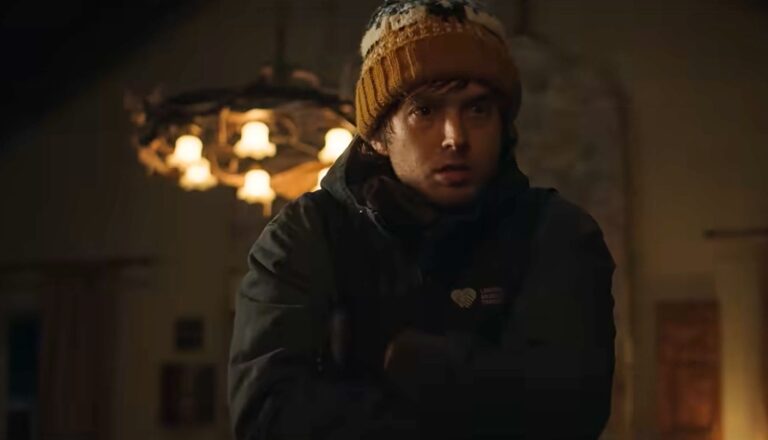
After Izzy died due to complications from cystic fibrosis, her phone number was reassigned to another cell—one currently in the pocket of a young, hotshot, Austin-based real estate agent named Wes. He listened to Jill’s quirky, clever first voicemail and laughed. He listened to the second. He thought about telling Jill that she had the “wrong number;” in fact, he even started to type out the text. But he never actually sent it. And after a while, he didn’t want to.
For Wes, Jill’s messages have become must-hear entertainment. Jill’s unfiltered hilarity is more compelling than any podcast. And almost before Wes knows it’s happening, he falls for this mysterious woman with the dead sister.
So when an opportunity crops up to spend a couple of weeks working in San Fran, Wes jumps at the chance. Thanks to Jill’s messages, Wes knows her favorite place to sit, her favorite food, her favorite, well, everything.
Now, if he could become one of Jill’s favorite things, that’d be just great, wouldn’t it? As long as Izzy would approve.
Romcoms live or die by their protagonists, and Voicemails for Isabelle has a couple of good ones.
Let’s start with Wes. Not every decision he makes here is a good one: It’d hardly be a romcom if he didn’t mess up, right? But Wes shows himself to be a decent enough chap. One night, for instance, when Jill falls asleep as the two watch TV, Wes carries her into her bedroom, tucks her into her bed and then returns to the living room couch to sleep chastely alone. As their relationship develops (and falters), he goes to significant lengths to make sure Jill is happy—with or without him in the picture.
Jill is funny, relatable and principled. “You’re the most lovable person I’ve never known,” Izzy tells her, and there’s truth in that. Jill shows courage in a few situations. She still has a great relationship with her parents, who support her in every way they can.
But Jill’s strong, and continuing, bond with her sister might be one of the movie’s sweetest, strongest elements.
Throughout their shared lives, Jill and Izzy supported each other through the typical dramas of growing up and the atypical drama of Izzy’s sickness. And when Izzy dies, Jill does her best to be grateful for all the many ways that Izzy enriched her life—not the hole that Izzy leaves behind.
“How lucky are we?” she tells the mourners at Izzy’s funeral. She goes on to say how blessed she was to have been able to share so much of her life with Izzy. “We got to be sisters,” Jill says, and we can see her deep gratitude for that simple fact.
We don’t get a chance to know Izzy that well before her passing. But we know how supportive she was. And Jill says that, throughout Izzy’s travails, Izzy never complained or felt sorry for herself.
Jill, Wes and others seem to have a generic, sort of universalist belief in the afterlife. Jill’s voice messages may be the most obvious bit of evidence for that, but it comes elsewhere, too. For instance, Jill’s parents tell Jill that Izzy is proud of her and all she’s done (rather than that Izzy would be proud of her if Izzy was still alive). Wes asks Izzy for her “blessing” when considering making a significant step forward in his and Jill’s relationship. (It seems that she gives it.) And in one scene, we see what appears to be Izzy dancing in a euphoric crowd. Jill often speculates how Izzy is spending time in the afterlife: sipping margaritas with Elvis, perhaps, or “slurping face with Heath Ledger.”
Izzy’s memorial service takes place in a church, where Jill says that Izzy believed “in angels and fate, in an order of things,” which I take to mean that everything has a purpose. While alive, Izzy offers this greeting on one of her own voicemails: “My brother in Christ, we miss you on whore island.” Jill jokingly refers to her body as a “sacred temple.” Someone admits to being a fan of the “Magic: The Gathering” card game.
While Voicemails for Isabelle technically sticks to its PG-13 rating in this category, it does push the content to the very edge.
Both Jill and Wes are sexually active before they meet, as we see in several sexually charged scenes. While these scenes are played for laughs, they can feel salacious, too. A couple of men apparently climax on screen, and one of Wes’s sexual partners engages in some BDSM behavior.
We don’t see explicit nudity in these scenes; the participants are either wearing underwear or strategically covered. But in one scene, Wes’s girlfriend walks in on Wes in the bathroom when he’s fully naked. He’s filmed from the side and covering his privates.
When Wes and Jill begin dating, intimate scenes swing away from pure comedy into more romantic, erotic territory. The two make out in Jill’s kitchen, and she puts her legs around his waist and begins unbuckling his belt before Wes puts a stop to it. (It kills the mood for the rest of the evening, it seems.) The two kiss frequently, and Jill sometimes wears low-cut tops.
We hear references to masturbation, private body parts, states of arousal, sex toys and pedophilia. We see some drag queens dancing in a park for a second or two. Jill ogles someone’s biceps. A few times, Jill tells potential suitors that she’s currently “boy sober” (often expressing her sexual hiatus in more graphic terms). It never seems to last too terribly long, though.
In a flashback to Jill and Izzy’s childhood, Jill kisses a male classmate. The next day, the two trade very public insults about what their lips tasted like and how awful an experience it was.
[Spoiler Warning:] The movie does not end with a wedding or even an engagement. No, the question that Wes wants to pop is whether they should move in together.
Wes’s girlfriend (before he starts dating Jill) essentially beats him up during sex—including punching his face with a closed fist. Wes is nearly hit by a car. Jill removes a dead rat from a food truck. A few people bump into each other, spilling various dishes. There’s a joking reference to murder. As a child, Jill pummels a male schoolmate for cracking a distasteful joke about her sister: We see both of them in the principal’s office later, the boy holding an icepack on his eye and whimpering slightly in pain.
The f-word is uttered three times (and we see a middle finger flipped at least two times). The s-word is used nearly a dozen times. We also hear “a–,” “b–ch,” “d–n” and “h—.” Jill and Izzy use the f-word abbreviation “mofo” a couple of times. God’s name is misused about 20 times, three of those with the word “d–n.” We hear a few other crudities, including “douchecaster.”
Jill and a coworker drink down several alcoholic shots—a catalyst, we presume, for their following unwise sexual encounter. Jill and other characters drink wine, beer and champagne.
A San Francisco park called “Hippie Hill” hosts what would seem to be a mass of marijuana-using revelers. We see signs and flags that have marijuana leaves and “CBD” emblazoned on them, and one man holds a massive blunt in his hand.
Wes once dated an influencer and knew her social media handle, but not her actual name. And he never does get around to telling Jill that he’s been listening to her private voicemails for months. (When two of Wes’s friends hear about the voicemails, they tell him to at least stop listening to the messages like a “creeper.”)
Jill dates a guy who admits to having pinkeye. When Jill says that pinkeye is supposed to be pretty contagious, the guy says that it’s just a myth: “Fake news made up by big pharma.”
During sex, Jill’s partner begs her to tell him that “everything will be OK.” “Between climate change and the unraveling of democracy, I don’t think—” Jill begins, but her partner cuts off her refusals.
Jill and Izzy express their deep appreciation for Michelle Obama.
Chef Bastien is a comically abusive boss. A bit of hair—suggested to be pubic hair—is discovered in one of Bastien’s cupcakes.
The traditional romantic comedy has fallen on hard times as of late. Take a look at the box-office receipts from the last couple of years, and you’ll be hard pressed to find many among the slew of actioners and horror flicks out there. And while streaming services (such as Netflix) have provided a refuge for the original romcom, many of those efforts push well into R-rated territory. All you need to do is take a look at Netflix’s recently released Office Romance for a data point on that count.
So in a way, it’s great to see a film like Voicemails for Isabelle land on Netflix—a sweet, PG-13 comedic respite, where our protagonists learn each other’s names before hopping in bed together.
Voicemails for Isabelle is funny, sincere and restrained—at least compared to its R-rated romcom compatriots—but that restraint goes only so far.
The film pushes right up to that R rating in its use of language. Its sexual content is pretty salacious, as well. While much of the on-screen dalliances are played for laughs, they’re still played, and that’s hardly an encouraging step. And while this film gives us some really positive, even heartwarming messages, it does so within a framework that normalizes premarital sex and cohabitation.
Sure, you can argue that both of those things have already been normalized in the culture, and you’d have a point. But I do think about those young men and women who are trying to hold to a higher standard, despite the culture’s pressures. Who want to think of sex as more than an easily forgotten evening pastime, but an inherent commitment made with somber intention.
Tabulate the movie’s content concerns, and you’ll find that Voicemails for Isabelle feels sweeter than it actually is. Underneath its fluffy, souffle-like crust, this film feels underdone and just a bit slimy.

Paul Asay has been part of the Plugged In staff since 2007, watching and reviewing roughly 15 quintillion movies and television shows. He’s written for a number of other publications, too, including Time, The Washington Post and Christianity Today. The author of several books, Paul loves to find spirituality in unexpected places, including popular entertainment, and he loves all things superhero. His vices include James Bond films, Mountain Dew and terrible B-grade movies. He’s married, has two children and a neurotic dog, runs marathons on occasion and hopes to someday own his own tuxedo. Feel free to follow him on Twitter @AsayPaul.