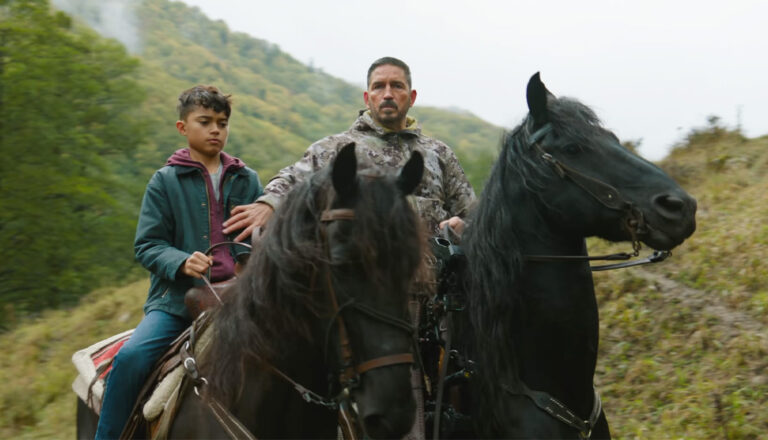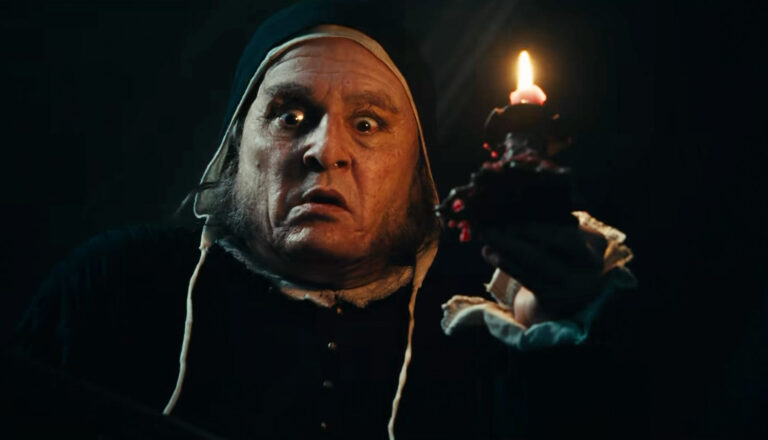

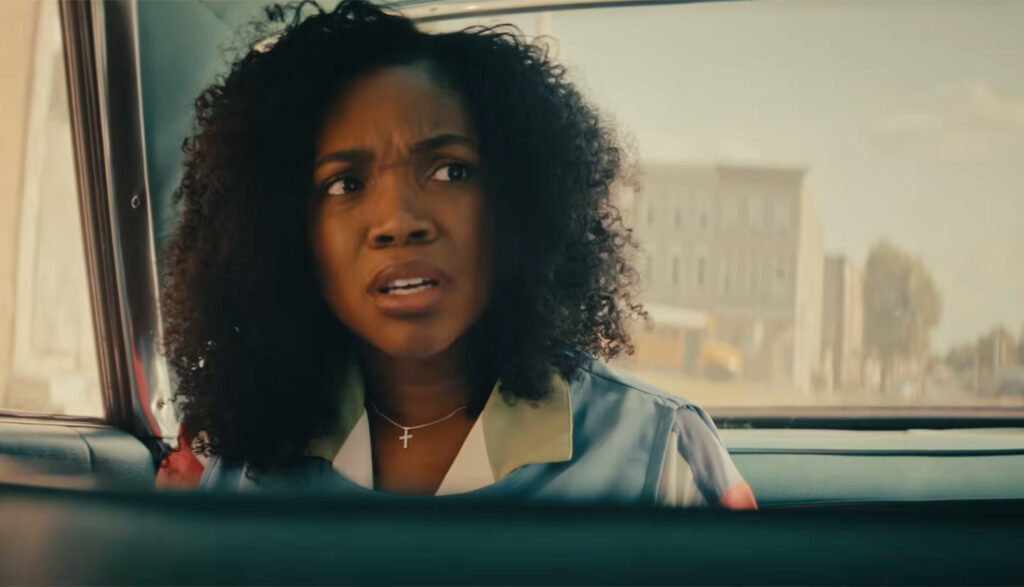
God With Us moves the Christmas story into a modern-day setting. And it brings with it more references to sex, drugs and violence than you might expect from a Christian flick. But it also comes with a lot of heart and some strong messages that just might be worth talking about with your kids.
At Christmastime, we talk about the “reason for the season.”
But what if that reason came a couple thousand years later?
It’s a world without kindergarten Christmas pageants, a world where Ebenezer Scrooge just stayed grouchy, a world where stockings stay snugly buried in drawers. Peace on Earth? Yeah, that’s not happening. And while plenty of folks have still done their best to adhere to the faith of Abraham, Moses and David, plenty of others have lost hope—or lost interest. Where’s this Savior who was supposed to come? Where is this Messiah?
The world is sick. And while Christianity claimed to be the cure, a growing number of Americans think it’s the disease.
A couple of decades ago, activists succeeded in pulling all those references to God and providence out the country’s founding documents. But that’s not enough: Some want to push God Himself out of the country.
Reporter Rosa Lee wants to do an expose on the falsehoods of faith: “Even after the law change, religion is still doing damage,” she tells her editor. That editor thinks a front-page spread is a great idea, and he tells her to run with it.
But some would say that it’s not enough. Take the Stone Angels, a secret group of terrorists led, ironically, by the head of the FBI. The Stone Angels don’t just want to bury Christianity: They want to bury Christians. Shoot a few pastors. Bomb a few churches. That’ll make people think twice about faith, they think.
Yep, the world feels a little adrift. A little desperate. And it’s not just societal existential dread: It filters down to every man and woman, even the least of us.
Take Mary Anne, for instance, a woman who works at the local laundromat and just can’t seem to get into college, no matter how many applications she sends in.
“I never get picked for anything,” she complains to her boyfriend, Junie. “Not in school, not in sports, not in life. Everyone else gets a chance. … And I’m just left here.”
Junie tells her that she’s wrong: “I choose you,” he says. “Every single day. And I made a promise to God that … I would spend the rest of my life taking care of you.” He takes a ring, bends a knee and proposes.
Turns out, though, Someone Else has chosen Mary Anne—and for a very special, very sacred task. He’s had His eye on her from the beginning. And now, this very night, God will transform her into His sacred vessel: one to hold and carry the most precious gift the world could ever receive.
God With Us, a speculative retelling of the Nativity story, begins a couple of decades before the central miracle of Christmas. When we first truly meet Mary Anne and Junie (his real name is Joseph, but he kinda hates it), they’re both in elementary school, living across the street from one another.
Mary, whose mother was a drug addict and who herself was rescued from a dumpster, is routinely mocked by other kids for going to school on the “short bus” (aka kids with learning disabilities). But Juni, a new kid in town, takes a shine to her anyway. And even though Junie knows that befriending Mary could make him a schoolyard pariah, he does so anyway.
That elementary school attraction leads to an adult-age romance—one in which Junie continues to be Mary’s No. 1 cheerleader. He’s utterly devoted to her through better and worse, with one exception: when Mary tells Junie she’s pregnant. That creates an understandable rift, but one that circumstances smooth out with time.
God With Us features a few characters who are openly hostile to faith. But a couple of those characters discover, much to their own surprise, that they’re capable of changing their minds if given enough evidence to change them. And one of them ultimately risks his own life to save those of several others.
When Mary and Junie are about to deliver their little bundle of worldwide joy, they’re predicably turned away from several hotels. But one kindly couple takes them in: They don’t have a lot of room in their house (though their house admittedly looks pretty big), but they do open the doors of their barn to the young couple.
Almost every element in the film comes with a spiritual component, and as such, we won’t be able to detail everything. But let’s run through a few of the film’s spiritual threads.
The movie opens with a slide calling this a “modern parable of the birth of Jesus Christ, set in a world where the promised Savior has yet to come. This is not intended as a prophetic statement or a rewrite of the Bible, as Christ’s work on Earth remains sufficient.”
God With Us largely follows the biblical account of the Nativity, but through a modern-day lens: the virgin birth, the dreams, the trip to Bethlehem (Pennsylvania), the unusual birth, the hurried departure. It includes several visits from the angel Gabriel, too, who often (and correctly) says, “Nothing is impossible with God.”
But here, Gabriel (he likes to be called Gabe) is a bit of a heavenly loser. “Look at him,” another angel sniffs. “He’s a dud.” God With Us intentionally cribs straight from the holiday classic It’s a Wonderful Life in its portrayal of Gabe and the other angels. When in heaven (and sometimes on Earth), they appear on screen as points of light. And like Clarence in It’s a Wonderful Life, Gabe is out to earn his wings. But in addition to Gabriel’s traditional role in the Christmas story, Gabe (played by Lil Rel Howery) is here to add some comic relief. He uses perhaps some underhanded methods to achieve God’s ends, as well. For instance, when agents in league with the Stone Angels try to chase Junie and Mary, Gabe frustrates their plans by masquerading as a county sheriff, pulling them over for speeding. “You could’ve run over an old lady, or a deer, or a rabbit!” he shouts at them.
Both Mary and Junie are devout Christians. Junie holds to his faith in spite of some ribbing from a couple of his rough-around-the-edges friends. And when one of those friends expresses an interest in learning more, Junie encourages him.
“I feel like I gotta clean myself up before God even notices me,” the friend, called Nugget, says.
“You don’t need to clean yourself up for God, man,” Junie tells him. “When we come to Him, He cleans us up.”
Mary and Junie receive plenty of spiritual wisdom from their pastor, Dr. Amos. He serves as the movie’s most conscientious and eloquent spokesman for Christianity, engaging in traditional biblical apologetics with skeptics and atheists. And when Junie and Mary come to Amos and tell him that Mary’s pregnant, he does not doubt: He celebrates.
Amos also patiently listens as skeptics tell him why they’re so skeptical—and the reasons are often deeply personal. Rosa tells Amos about how she grew up in the church and how her pastor would stand up and tell congregants that, if anyone gave a “seed” of $100, that person would receive a special blessing: Rosa’s mother would always hand over that $100, even if it meant that the family would lose their food or electricity for a while. “And meanwhile, the pastor would be riding around in his brand-new Cadillac,” she tells him.
“Don’t let a bad church ruin a good God,” Amos responds. “All I ask is that you give Him another chance.”
It’s not the last such sad story we hear about someone in the church: God With Us acknowledges that the world can feel fallen indeed, and finding God in the midst of it isn’t always easy. But at the same time, the film shows us a handful of miracles not in the original biblical account, such as when the guns of would-be assassins fail to fire or bombs fail to explode.
In flashback, we see angry protesters demand the removal of faith-tinged language from the country’s founding documents. “War. Murder. Drugs. Does that sound like a good God?” a protestor rhetorically asks a news crew. A newspaper from the day semi-quotes Judges 6:13: “If God is with us, why has all this happened to us?” the quote reads in part.
When Junie is a kid, he has a conversation with a couple of his friends when they see a picture of a very European-looking Jesus painted on a brick wall. “Man, he ain’t gonna look like that,” one kid says. “Everybody knows He gonna be Black.” Why? Junie asks. “’Cause He’s gonna be named Howard, and I know a whole bunch of Black people named Howard.” And it turns out the kid has taken that little nugget of information from the Lord’s Prayer, which he mistakenly quotes as “Our Father, who art in heaven, Howard be thy name.”
Mary Anne’s virginity is central to the plot of God With Us, just as it is in the Bible. The fact that she and Junie have not had sex becomes a source of exasperation for Junie’s friends. “How God gonna know you had sex anyway?” one asks. Another suggests that you always take a car for a test drive—to which Junie responds, “Well, good thing [Mary] ain’t no car.”
Naturally, most folks are pretty skeptical when Mary Anne insists that she’s never had sex. Junie is furious when he first hears: “You cheated on me?” he asks. “You think I’m stupid?” But in a dream, Gabe reassures Juni, saying that “God impregnated her.” That impregnation, by the way, involves Gabe and a couple of other angels (which look like blobs of light) spinning over Mary as she sleeps, culminating in a slight glow emanating from the covers where Mary’s womb would be.
When Mary tells her parents that she’s engaged to Junie, the two make some remarks about their own lack of intimacy (and the reasons for that lack). Meanwhile, Junie’s friends complain about how boring it would get with the same “steak and cheese sandwich every day.” Junie’s father says that he’s stayed with Junie’s mother because of the threat of alimony: “It’s cheaper to keep her,” he quips.
Nugget begins talking to Junie about the Bible’s polygamy, mentioning several biblical figures who had multiple wives. “Solomon? Seven hundred wives! Plus 300 side chicks!” We see a poster in Mary Anne’s room featuring a woman wearing a tummy-baring spaghetti-strap top. Someone pronounces Pennsylvania wrong, transforming the first two syllables to sound like a critical part of male anatomy.
A man is shot to death: We don’t see the actual shooting, but we do hear multiple gunshots and watch as the dying man bleeds out on a set of church steps.
Another man is involved in a serious car crash. But the driver of the car that was hit miraculously escapes without so much as a bruise. “You should be dead right now,” a nurse tells him.
An assassin tries to shoot a pastor, but the gun doesn’t fire. A bomb is placed in a church, but it also fails to explode. Junie and Mary are pursued by people who mean to do them harm. We see news footage of a church bombing that killed more than 200 people and hear about how prophets and pastors have been assassinated.
A man talks about why he doesn’t believe in God—pointing to the physical and sexual abuse he suffered at the hands of his foster parents. He notes that those parents also led a church. A baby is left in a trash bin. We hear about a prophecy in which Mary’s coming child “will be born to die.” We learn that someone died from a drug overdose.
We hear several instances of mild profanity.
We hear that Mary Anne’s mother was a drug addict who died from an overdose. That drug use apparently impacted Mary Anne’s mental acuity, and people mock her for being slow—both as a child and as an adult.
Mary Anne’s father resists raising Mary Anne when she’s brought to his doorstep as a baby: “I’m not raising no drug baby!” he tells his wife. But his wife overrules him, and they talk about the father’s own marijuana use. (“I need a hit,” he complains as the conversation ends.)
It’s suggested that Nugget and Gee, two longtime friends of Junie’s, sell drugs. When Gabe is sent to Earth, he lands in an alleyway where a few loiterers seem to be up to no good. Someone smokes something in the background, and when Gabe is given what he feels is an inappropriate, earthly outfit, he complains, “These crackheads are gonna have a field day with me! Come on!”
We hear references to racism, and it sure seems like one of the “innkeepers” who turns away Mary and Junie just doesn’t like the look of the couple. Mary vomits from morning sickness. Characters lie and insult others. Someone has dryer sheets thrown at them. Mary gives birth when the movie’s cameras are present, though nothing critical is seen.
When my kids were growing up, they loved setting up the family Nativity set—but they tended to overdo it a little. They’d stuff every cow, sheep and wise man–and, for good measure, a few Star Wars action figures—into the set’s little stable. It often looked more like a crowded elevator than a gentle Nativity scene.
God With Us can suffer from feeling a little overstuffed, too.
You’ve got Mary and Joseph and the traditional Christmas story thrown into an unconventional setting. You’ve got a wise-cracking angel hoping to earn his wings, à la It’s a Wonderful Life. You’ve got a couple of God’s Not Dead-style skeptics and a nefarious Left Behind-tinged plot to kill Christianity by killing Christians—a plot spearheaded by the head of the FBI. And I can’t help but think that God With Us would’ve worked better had it not had quite so much to work with.
All of that is before we even dive into the movie’s significant content concerns—concerns that peg at a much higher level than you’d expect from your typical Christian film.
But here’s the real funny thing about God With Us: When the film turns away from its tangled plotlines and (often) unnecessary content and moves into the core story’s deeply emotional pull, it does work.
Director Jimmy Jenkins brought together a talented cast, and from that cast blossomed some powerful performances. The movie’s unconventional, modern setting will make some Christians uncomfortable or even angry, but it does remind us how radical the original Christmas story was: Nazareth was just as ignored in its day as the “’hood” is now. Mary’s challenging past and mental difficulties should serve as a great reminder that God’s “foolishness” is still greater than our “wisdom”—and what God values can look very different from what we do. “Always remember, what the world sees as trash, God sees as gold,” Gabriel says, lifting little Mary Anne out of a dumpster. And that’s true.
And when the movie focuses its cameras on the lost, hurting people that Christ came to heal, God With Us finds its most solid footing.
While the movie indeed comes with plenty of solid performances, Gregory Alan Williams, who plays the pastor Dr. Amos, is a particularly strong anchor here. He serves, in some ways, as the film’s moral core, always bringing the viewers’ attention back to God.
“The truth of God is not bound by time or human reasoning,” he says. “It’s written in the nation of creation … in the laws handed down to us. And in the lives it continues to transform.”
The truth of God is not bound by time or human reasoning, the pastor tells us. That fits God With Us, too. It takes the Christmas story and moves it into a different time and place. Perhaps less intentionally, it fills that story with so many plot points that it can feel a bit beyond this human’s reasoning. And yet, you can feel God’s truth move through this familiar, unfamiliar tale. Though that’s a harder ask than you might imagine.

Paul Asay has been part of the Plugged In staff since 2007, watching and reviewing roughly 15 quintillion movies and television shows. He’s written for a number of other publications, too, including Time, The Washington Post and Christianity Today. The author of several books, Paul loves to find spirituality in unexpected places, including popular entertainment, and he loves all things superhero. His vices include James Bond films, Mountain Dew and terrible B-grade movies. He’s married, has two children and a neurotic dog, runs marathons on occasion and hopes to someday own his own tuxedo. Feel free to follow him on Twitter @AsayPaul.