


The Nazis dropped hundreds of thousands of bombs on London during World War II. A tenth of them failed to detonate.
That means that, even today, construction workers may discover live explosives as they dig: bombs with the potential to take out a few city blocks if not treated carefully.
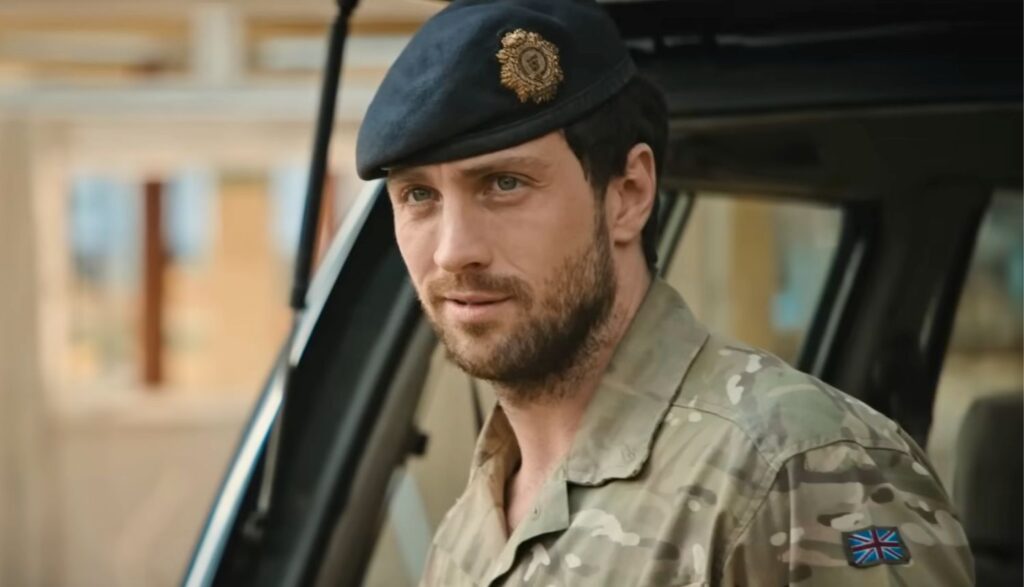
So when workers uncover a bomb in London’s Paddington area, it’s not surprising—but it is unnerving. A square mile of the city is quickly evacuated. The police call in an ordnance disposal unit from the British army, headed by Major Will Tranter. He and his team are familiar with this sort of work, but it’s never routine, never simple. Tranter knows that all too well. But a job’s a job. And the sooner he and his squad can dismantle this wartime relic, the sooner they can all get on with their lives.
But is it a wartime relic?
Another team—this one led by a guy named Karalis—waits in the bowels of a nearby apartment building. When the police make the call to evacuate, they don’t move. They barely breathe. Only when the area is cleared do they get to work.
Wearing the standard orange overalls of city workers, they scurry down to the apartment’s basement and start cutting into one of its brick walls. Past the brick will be concrete. Past the concrete will be steel—a bank vault filled with treasure.
With their section of the city vacated, Karalis and his team slice and bash and dream of the safety-deposit boxes on the other side—boxes filled with cash, jewelry, gold and who knows what else.
Nothing creates a diversion quite like a bomb.

Tranter is a veteran of the war in Afghanistan. In flashback, we see him reassure local Afghans that any unexploded ordnances will be cleared before they leave—a promise that the Afghans are deeply grateful for. He also seems very concerned about the welfare of his team. The movie suggests that he lost some close friends during a mission gone awry.
We see a great deal of London’s police force, too, headed by Chief Superintendent Zuzana Greenfield. She’s professional, conscientious and very aware that keeping civilians safe is her primary mission. When she learns that bank robbers are using the bomb as cover for an actual crime, she swiftly switches gears and pursues her quarry with speed and smarts. All the constables serving under her seem conscientious, too, treating civilians respectfully while doing their utmost to stop the bad guys. One officer helps carry a man in a wheelchair up eight flights of stairs. “Don’t drop him,” the man’s worried wife pleads. (He doesn’t.)
Someone makes a substantial donation to charity.
This particular area of Paddington seems to have a significant Muslim population. We see people in hijabs and kufis.
A man takes a shower, and the camera catches a glimpse of his backside. A male character goes shirtless a couple of times. A woman wears a short skirt and a cleavage-baring top. There’s a reference to prostitutes.
Several people get shot during a roadside shootout, and some die accompanied by sprays of blood. (A character suffers a bullet to the neck. We later see his corpse, hand to his throat as if still trying to staunch the blood.) Another firefight take place, too, leading to a number of presumed fatalities. Another man gets shot in the shoulder and eventually dies from his wounds.
Someone picks up a huge wrench and, as a form of torture, smashes a character’s left hand with it. The attacker seems intent on smashing the guy’s right hand, as well, but he soon thinks better of it. He instead asks his henchmen to stuff the guy in a car trunk and take him to the ominously named “workshop” where they can, presumably, further torture (and likely kill) him.
A bomb explodes, injuring someone. In flashback, several roadside bombs detonate. One gets triggered by an oncoming truck, causing the truck to fly into the air and fling out its occupants.
A man is nearly asphyxiated when someone covers his face with a plastic bag. Cars crash into each other. A vehicle smashes into a barn door. A character leaps out a window, which causes some bumps and bruises.
A woman bears a black eye: Her reaction to one of Karalis’ henchmen suggests that she’s the victim of domestic violence.
About 110 f-words, 10 s-words and one use of the c-word. We also hear “a–,” “h—” and d–khead.” God’s name is misused once.
Before getting to work on the bomb, Tranter fills several shot glasses of rum—a tradition, he tells his newbie corporal, for when the job is finished. “I’m not gonna force you [to drink],” he tells the corporal. Those particular shots of booze are dramatically spilled during the operation. But after the mission is completed, the major pours another round—this one in plastic cups. Will raises his cup: “A little toast to absent friends,” he says, as he and the rest of his team—including the reluctant corporal—drink.
Another group of compadres pour out shots of a clear liquor—perhaps tequila or vodka. A man smokes on a rooftop. Someone suggests that he and his friends go get some beer. We hear a reference to cocaine.
Karalis and a portion of his crew wade through London’s sewers in order to make their escape. When they come through the manhole and climb into a waiting van, their colleagues complain about the smell. But when the van gets stopped by officers, Karalis knows that the stench will help with their disguises. “We’ve been working in the sewer, boys. And we got the stench to prove it,” he says.
After they get past the city limits, Karalis has his crew remove their sewer-stained clothes and put on some new garb. “You want us to strip off here?” one gasps. “Don’t be shy,” Karalis tells him. But the gang members aren’t so much shy as sheepish about what is in their pockets—some stolen material that they weren’t going to put in the collective pot to divvy up.
They’re not the only characters who lie and scheme and steal, of course. Fuze is predicated on robbery, chicanery and double-dealing. Almost everyone here is cheating or being cheated, and some are dealing with both simultaneously.
An immigrant tells the police about some apparent workers who asked him for his family’s storage keys, giving a glimpse into what it’s like to move to a new country: “How was I supposed to know it was anything dodgy?” he protests to the police. “We’re immigrants here. People come with official papers, and we do what they say.”
A civilian tries to retrieve his laptop from the evacuated area in Paddington. When an officer turns him away, the guy runs into the restricted area anyway—followed closely by the policeman. We’re told that Will has a history of insubordination. Someone describes to another guy how he and others smuggled uncut diamonds. When the other guy holds up a diamond and asks if this one was smuggled out of the character’s rectum, the character says, “Not that one.”
Fuze is a fat-free crime caper with everything you’d expect from the genre: ruses and counter-ruses, lies heaped upon more lies, characters with mixed motives and very, very few scruples. It’s a fun little film, but with two big drawbacks.
First, the language. If Fuze had throttled back on this front, the film could’ve likely skated into theaters with a PG-13 rating.
We also can’t forget that this bit of entertainment is predicated on, well, stealing. It gives us a few likable rogues who have no qualms about lying, cheating or robbing folks blind. And while we learn that one thief has, perhaps, a legitimate ax to grind with one of his targets, he’s not just robbing a fellow robber: He’s taking valuables from a bunch of other strangers, too, whose only sin was to put what they treasured in a safety-deposit box.
And the film asks us to ignore the fact that its charismatic ne’er-do-wells feel that killing—or allowing others to be killed—doesn’t mark the failure of a caper. It just means there’s fewer people they’ll need to share the loot with.
If all that sounds a little overly moralizing for a film based on crime, well, guilty as charged. I’m sure that few people who watch Fuze will decide to rob their own neighborhood bank. Still, films like this may be more influential than we think. And Fuze lacks its own version of Robin Hood.

Paul Asay has been part of the Plugged In staff since 2007, watching and reviewing roughly 15 quintillion movies and television shows. He’s written for a number of other publications, too, including Time, The Washington Post and Christianity Today. The author of several books, Paul loves to find spirituality in unexpected places, including popular entertainment, and he loves all things superhero. His vices include James Bond films, Mountain Dew and terrible B-grade movies. He’s married, has two children and a neurotic dog, runs marathons on occasion and hopes to someday own his own tuxedo. Feel free to follow him on Twitter @AsayPaul.