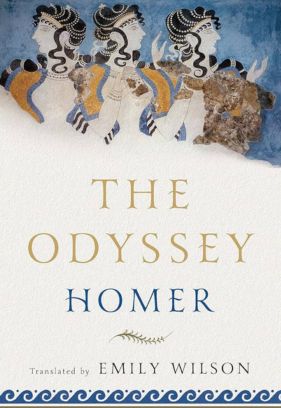
Emily Wilson’s translation of The Odyssey has been stirring up a fair bit of controversy in recent months, as it served as one of the inspirations for director Christopher Nolan’s upcoming epic blockbuster.
While Wilson’s translation has been accused of having a feminist lean, there’s only so much that can be changed in a translation before you’re telling a different story. If you were worried this translation might include Penelope taking up a sword and sailing across the sea to save her husband herself, that doesn’t happen here. Wilson sticks to Homer’s tale, approaching her translation with two particular aims.
First, Wilson wanted to make the story an easy read, replacing ornate or archaic-sounding language in favor of a more flowing, common tongue. It’s a subjective choice, but as a reader, I appreciated it.
Second, she wants us to have greater empathy for the people who populate the fringes of The Odyssey. Wilson wants us to give more thought to the slaves, especially the slave women, who undergirded Greek society at the time. Her translation takes a softer view of the women who betrayed Odysseus and Penelope, seeing them less as accomplices and more as people who may not have had much choice in their circumstances.
Depending on how closely you’d like The Odyssey to adhere to more classical translations, that could be a stumbling block, but as Christians, we can certainly appreciate a greater care being placed on the lowest members of society.
Of course, ultimately, The Odyssey’s problems are not in its translation, but in the content that it has contained since its earliest days. Bloody violence (including rape), adultery and pagan spirituality fill the story. Slavery is a grim reality here as well. And Odysseus is far from what we would consider a noble hero today. He’s both a king and a pirate, a charming guest and an unscrupulous liar, a family man and a merciless killer. A complicated man, indeed.
The Odyssey may be considered a classic, but it’s far from a problem-free read.
You can request a review of a title you can’t find at letters@pluggedin.com.
Book reviews cover the content, themes and worldviews of fiction books, not necessarily their literary merit, and equip parents to decide whether a book is appropriate for their children. The inclusion of a book’s review does not constitute an endorsement by Focus on the Family.