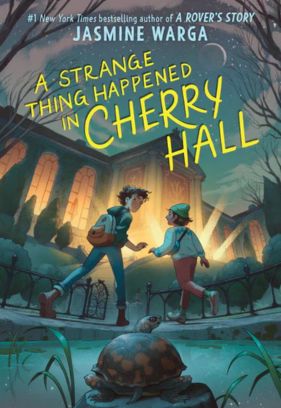
Rami’s single mom works with the cleaning crew at a local museum. And after a painting is stolen, her job is threatened. Rami must figure out the crime and save his mom’s job. Oddly, a ghost-like girl and a turtle might be part of the solution.
Rami Ahmed is waiting on a rather uncomfortable bench in the Penelope L. Brooks art museum.
Sure, there are worse places to wait, I suppose. The museum has some lovely paintings to look at, and it’s a quiet place to read and think. It’s just that most 11-year-olds would probably be allowed to simply stay at home while their mom worked her job.
Rami’s mom, however, is the overprotective sort. So while she finishes up her shift with the museum’s cleaning crew, Rami gets to wait on this bench. And he can’t even wander around, since he’s under the constant, disapproving glare of the museum’s old and generally grouchy security officer.
Rami just sits on the bench and stares at the space where the painting used to be.
I haven’t mentioned the painting yet, have I? Sorry.
A few nights back (when Rami wasn’t there) a painting called “Untitled” was stolen without a single person noticing. The security cameras didn’t record anything. No alarms were triggered. The painting was snatched away without anyone seeing anything.
Well, that’s not exactly true. A turtle named Agatha, who lives in the garden behind where Rami is sitting, saw the whole thing. Of course, turtles can’t speak human. And no one would likely listen to Agatha’s story anyway. I mean, who would believe a talking turtle?
Anyway, while Rami waits quietly, he’s thinking about the painting: what it looks like, why someone might have taken it and how they would do it. Was the security recording system tampered with? Was it an inside job?
Rami is thinking about these things because the authorities have been unable to come up with any answers. So they’ve turned their focus on the museum staff. And Rami’s immigrant single mom is in danger of losing her job—even though she had absolutely nothing to do with the theft. (Hey, Rami would have noticed that painting popping up at home.)
While Rami sits deep in thought about all of that, however, something very odd happens. A small, quiet voice says, “Hello.” Then it asks, “Can you see me?”
No, it’s not Agatha. She’s still out in the garden being typically turtle-like. No, this speaker is actually a girl. She’s pale white with a freckled face and long brown hair that almost reaches her waist. Rami can see her quite well. And he can also see that the girl is barefoot and … floating just off the ground.
The girl notices Rami’s goggled gaze at her levitating feet.
“Oh. Yes. That,” she says.
Rami Ahmed’s evening of waiting on a bench and ruminating on a crime just took a very interesting turn.
And Agatha saw it all.

None.
At first, Rami thinks that the floating girl at the museum is a ghost. But she isn’t. The girl is actually more of a fantastic memory, of sorts. She’s the central figure in the painting that was stolen, and she’s called Blue. The book talks about the “emotional energy” that artists invest in their work. Someone notes her understanding that “Art was a wish you made with your hands.”
Only people who are sensitive to that artistic “energy” are able to see Blue. She talks about trying to communicate with those who can’t see her: “I’ve been trying to talk to them for days.”
Rami’s mom is loving and concerned. She immigrated from Lebanon and makes mention of the dangers in the world. She makes it her objective to protect her son from threats of every stripe.
Rami’s dad, however, is not seen in such a glowing light. He left the family before Rami turned 2. And Rami’s only memory of the man is from an old photo.
Though it’s all a bit fantasy focused, Agatha the turtle is able to be part of the mystery-solving mix. We hear her inner thoughts from time to time and she notes that “It is a singular feeling to be understood. Seen. Connected.” Author Jasmine Warga uses Agatha to help readers connect with people who feel isolated and alone.
Rami joins mystery-solving forces with a young girl named Veda. She’s a fellow student who openly welcomed Rami into her friend group after his former friends rejected him.
Rami and Veda pursue leads in the art theft case and sometimes make choices that could turn dangerous. For instance, they attempt to break into the museum after hours, they get caught sneaking into a retirement community, and they enter a stranger’s apartment late at night.
None.
Blue isn’t a ghost. What do you think she’s supposed to represent in this story? Was the book’s author trying to make a particular point?
At school, Rami feels alone. What parts of middle school seem unfair and unreasonable to him? Do you ever struggle with school and friendships?
Rami and Veda are very different people who sometimes clash. But how do their personalities complement each other while on their mission? How does Rami gain more confidence through Veda?
In the Bible, God is called “the One who sees” (Gen 16: 13). What do you think that means? How does it apply to your life?
A Strange Thing Happened in Cherry Hall is a fun mystery that lauds friendship and challenges readers to think about people who struggle with loneliness and being overlooked in life.
Some elements of this book—Agatha the artistic turtle and the floating girl, Blue—unexpectedly stretch this story into the realm of fantasy. And the central protagonists break their parents’ rules in their quest.
You can request a review of a title you can’t find at letters@pluggedin.com.
Book reviews cover the content, themes and worldviews of fiction books, not necessarily their literary merit, and equip parents to decide whether a book is appropriate for their children. The inclusion of a book’s review does not constitute an endorsement by Focus on the Family.
After spending more than two decades touring, directing, writing and producing for Christian theater and radio (most recently for Adventures in Odyssey, which he still contributes to), Bob joined the Plugged In staff to help us focus more heavily on video games. He is also one of our primary movie reviewers.