Album Review
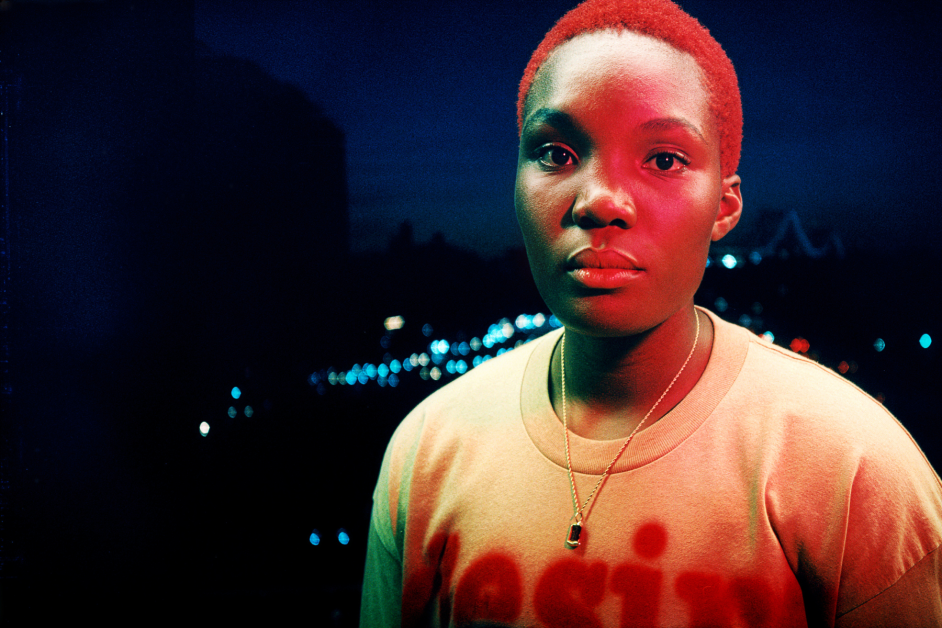
Arlo Parks finds solace in the shadow of a gloomy night–as long as she can find an open dance floor.
Ambiguous Desire arrives at a time when dance music has left the club and turned mainstream (see Harry Styles, Lorde, and even Justin Bieber). Parks fits right in that musical neighborhood—but her persona is far from the “look at me” brand that most musical artists employ.
You’re forgiven if you’ve never heard of Parks before. She prefers it that way. It feels as though she’d rather fade into the background.
But she’s found it difficult to do so after winning the Mercury Prize in 2021 and later performing alongside giants like Lorde and Clairo. She’s also supported Harry Styles and Billie Eilish on tour in her hometown U.K. Her brief yet magnetic career has garnered critical success in an industry that typically rewards attention-seeking effort.
And perhaps Parks’ paradoxical career arc is reflected in her latest album. Throughout, she laments the cost of fame even as she chases it. She longs for the shadows even as she dances in the limelight.
Ambiguous Desire feels like another retreat, though it’s a bit unclear from what. Parks finds herself caught up in late nights and long flights. There are references to breakups and one-night flings.
Her stated desires wilt and swell with unpredictability. It’s in this turbulence that Parks believes desperately she’ll find herself even if she hasn’t yet.
POSITIVE CONTENT
On “Senses,” Parks confesses that she has always “dulled her senses … needed things to reach towards.” But she realizes the futility and admits she “feels bad about it/tryna find the courage.”
“What If I Say It?” features an onslaught of probing questions about how to cope with love and loss. Parks shifts into helpful reflective territory as she admits “I’m getting in my head.”
CONTENT CONCERNS
Parks has cancelled shows in the past citing mental health concerns. Ambiguous Desires carries an undercurrent of references to mental health struggles, and Parks’ apparent coping methods present a troubling template for listeners in similar situations.
“Beams” is an alarming confession. Parks says, “I was suicidal in Brazil” because “it broke my heart when you pulled away.” Parks knows she’s being manipulative to get her ex back but she won’t stop. This destructive cycle mirrors Parks’ resignation at the end of the song when she sings, “I’m scared of what I’ve done.”
Parks, who identifies as bisexual, briefly dated popstar Ashnikko, and the fallout from their swift breakup dots the album as desire fuels her devastating decisions.
“Blue Disco” tells the tale of wasting away a night with “smoking hand rolls” and “just being clumsy.” There’s also a reference to oral sex and someone getting sick outside from too much gin.
“Get Go” sees Parks meet up with a girl on the dance floor because her previous ex has been spotted with another girl. They sympathize with each other before asking, “Could you stay and dance with me?/I don’t ever want to leave.”
“Nightswimming” finds Parks at a low point because of a breakup as she sings, “I just want to leave it all to/Yesterday…I’m alone.” Her desperation rapidly increases despite no apparent relief from her depressive tendencies.
“2SIDED” carries a mention of “sipping beer and guarding a daze” while hoping that a bubbling romantic desire goes both ways.
On “Jetta,” Parks spends the night getting “tipsy on bitters” and “packing a night bag” with cigarettes and cash for a late night out.
There are a few muted references to self-medicating through self-inflicted pain.
ALBUM SUMMARY
The only unambiguous desire across the album is how badly Parks wants to change.
Parks ends with her beginning. On “Floette” she croons, “What does it mean if I don’t change?”
Her question feels rhetorical, as if she’s terrified of the answer she already knows.
Soft-spoken as she may seem, her loudest message is also her most muddled. Despite her realizations of a better life, she resigns herself to flowing with the rhythms of empty nights out and chasing after harmful love.
Circling her longing are references to suicidal thoughts and an apparent reliance on substances to soothe her aching pain. Parks fails to match poignancy with practicality. Following her path will only lead to more destructive desires.