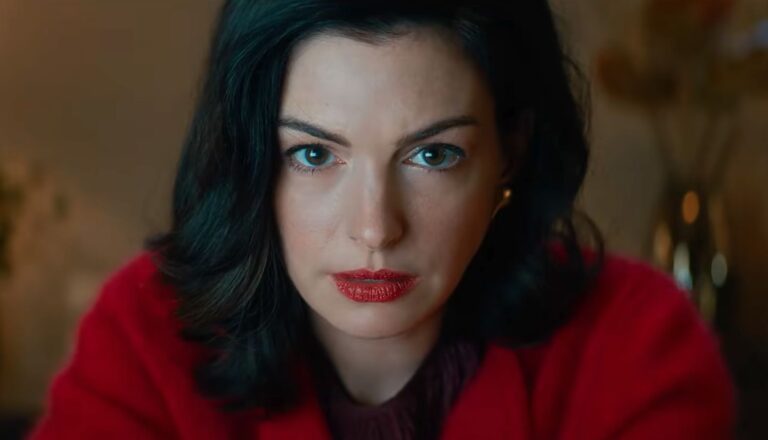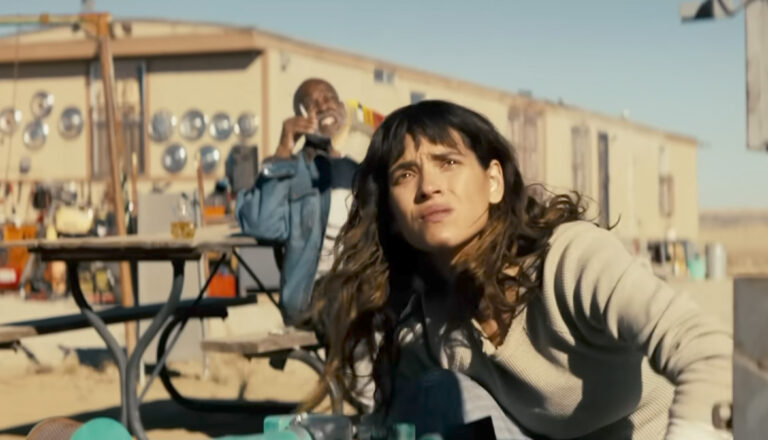



A young woman loses the love of her life. As she struggles with her grief, she tries to reclaim a semblance of her lost happiness. Love of Your Life makes positive statements about marriage and reaching for human connection in the midst of pain. But it also wallows in a moralless worldview. Lots of sexuality and heavy drinking are both on display.
Maya and Charlie were perfect together.
If you ask Maya, she’ll tell you that she didn’t really even intend to go out with Charlie. In fact, not only was she not seeking anything romantic, she didn’t even think she needed something romantic. But after several nice interactions, the two twentysomethings decided to go out on a small, nothing much, date—and something clicked.
They started talking. Then laughing. Then touching. Then touching and laughing. And the next thing you knew, they were a couple. They met Charlie’s parents. They moved in together. Then a bit later, during Charlie’s 30th birthday celebration, they shared an “impromptu” wedding ceremony with their gathered friends and family.
Everybody thought that the wedding was completely sweet, completely them and completely perfect. After that, Maya and Charlie went about living and loving their lives together. They talked about traveling. They talked about the possibility of someday raising a family. And even though Maya found the idea of kids a bit scary—Maya’s family relationships were rather toxic, at best—Charlie made the idea of raising and loving children together seem, well, kinda perfect.
Of course, even perfect couples can run into troubles. For Maya and Charlie, it wasn’t arguments, infidelity or anything like that. Their trouble came in the form of the coronavirus pandemic.
Charlie, you see, had asthma. And when he got sick, there was a lot of fear in the air. The hospitals were overflowing. People were dying. And, especially in light of the fact that Maya was a nurse, Charlie decided to endure his worsening condition at home.
All too quickly, things became much worse. …
Maya is now living a very different life. She has the time to travel—Spain, Portugal, other wonderful places. She’s transitioned from her nursing job to making a living in telehealth. So, she can work from anywhere.
The cities she visits are beautiful. Maya is meeting exotic and appealing people. Her sex life is varied and active. (“It’s amazing how much you can talk about your dead husband and people still want to sleep with you,” Maya notes.) She’s going wherever she wants, whenever she wants. And she is completely and utterly … unhappy.
In fact, Maya is once again completely perfect: perfectly lonely, perfectly devastated and perfectly empty.
Early on, Charlie is the one who seems instantly taken with Maya, though Maya is hesitant. But between Charlie’s earnest interest in her and a cassette tape Maya finds containing a mix of his music, she begins to let down her defenses. Later, during their wedding vows, good friend Jason asks the gathered crowd of people who among them consider Charlie to be their best friend. The majority of the crowd raises their hands. Maya tells Charlie, “You are the dream I didn’t even know I had.”
We find out that Charlie was adopted by a loving family that shaped his worldview and definitely influenced his positive opinion of family. And that leads into Charlie’s gentle questions to Maya about the possibility of having kids. When he asks, Maya replies: “It’s kinda messed up at the end of the world.” But he retorts with a smile, “How do you know it’s the end of the world? What if it’s not?” And years later, Maya opines, “I used to think it was selfish having kids. But now I think it’s hope.”
Right after Charlie’s death, Maya makes some choices that hurt a good number of people who Charlie loved. She later strives to make amends and apologize for her selfishness. While together, Maya and Charlie openly express their love for one another.
A woman who Maya meets tells the younger woman not to choose unhappiness. “It’s lazy and it’s harder,” the woman declares. When Maya reunites with Jason, who used to be thought of as something of an alcoholic, he states that he has stepped away from alcohol. And the change in his life and appearance is evident.
Maya and Charlie are seemingly not interested in faith of any sort. When they marry, it’s in a casual setting without anyone officiating.
The film promotes a very casual, sexual worldview through Maya and the people in her orbit. She and Charlie end up removing clothes and falling into bed after their first date. And after Charlie’s death, we see Maya climbing in and out of bed with several different men. (Some of this group we’re never introduced to.) Many times, Maya remains partially dressed in skimpy underwear during sexual situations, but we also see her in full rear nudity and topless. The camera sticks around for a while during several of Maya’s sexual interactions, including passionate intercourse and one (just off camera) oral sex scene.
We see Maya and Charlie (and Maya and a man named Felix) sitting round in their underwear. Several scenes of Maya showering look at her from various angles. Maya wears some form-fitting, low-cut dresses that reveal cleavage.
A man burns his hand while slapping out a small fire. Maya helps him deal with the wound. We see a hospital setting packed with suffering patients. An older man dies from the coronavirus.
Felix mentions that his brother took his own life. He and Maya talk about the difficulty of mentioning the deaths of loved ones.
The dialogue contains six s-words and a single use each of the words “h—” and “a–hole.” God’s name is misused four times.
Alcohol is imbibed in large quantities during many of the scenes on screen. We see people drinking beer, wine, champagne and a variety of mixed drinks, such as Long Island iced teas and martinis. Some people get drunk enough that it causes them to stagger about and get sick.
Maya smokes cigarettes.
After a long day of work as a nurse, Maya talks about the various body fluids she’s had to deal with. In a flashback scene, Charlie’s mom, Ruth, stands outside Maya’s apartment and blames the young woman for her son’s death. (Ruth later apologizes for that angry reaction.)
After making some poor choices, Maya declares, “They say you can’t run away from your life, but you can: It just makes you a monster.” Some younger people exhibit nihilistic viewpoints.
Love of Your Life tells the somber tale of a young woman who unexpectedly stumbles into a loving and fulfilling relationship and then finds herself completely adrift after her beloved’s untimely death. For Maya, “adrift” equates to traveling to exotic locations, drinking, smoking and jumping in and out of bed with random strangers.
Some find Maya’s “new” life to be tragically romantic. But in her grief, Maya finds it all flavorless and vapid.
Of course, that’s the point that the film is trying to make: that grief can consume you and steal away your joy. And as we watch Maya grapple with her loss for years, the filmmakers attempt to create a weepy, romantic construct that fans of such films can immerse themselves in.
To that effect, actress Margaret Qualley delivers a broodingly authentic portrayal, designed to ensure that audiences will reach for their tissues.
However, Maya’s struggle is more than a simple tug-and-pull with grief. With the right tip of the head, you can see her journey as something of an illustration of the book of Ecclesiastes. Really. That Old Testament book warns young people and the masses at large that life can be oh so meaningless outside of a connection with God.
And without even intending to do so, the filmmakers behind Love of Your Life use their story to kinda prove that point. Maya tries to bury herself in an unmoored world with dissolute values, and she ends up mired in misery. And it’s only through a renewed connection with her past and finding some semblance of forgiveness that she begins to regain her footing once again.
Claiming that insight won’t necessarily make this grief-focused pic more enjoyable to watch. But it’s something to think about if you do.

After spending more than two decades touring, directing, writing and producing for Christian theater and radio (most recently for Adventures in Odyssey, which he still contributes to), Bob joined the Plugged In staff to help us focus more heavily on video games. He is also one of our primary movie reviewers.