TV Series Review
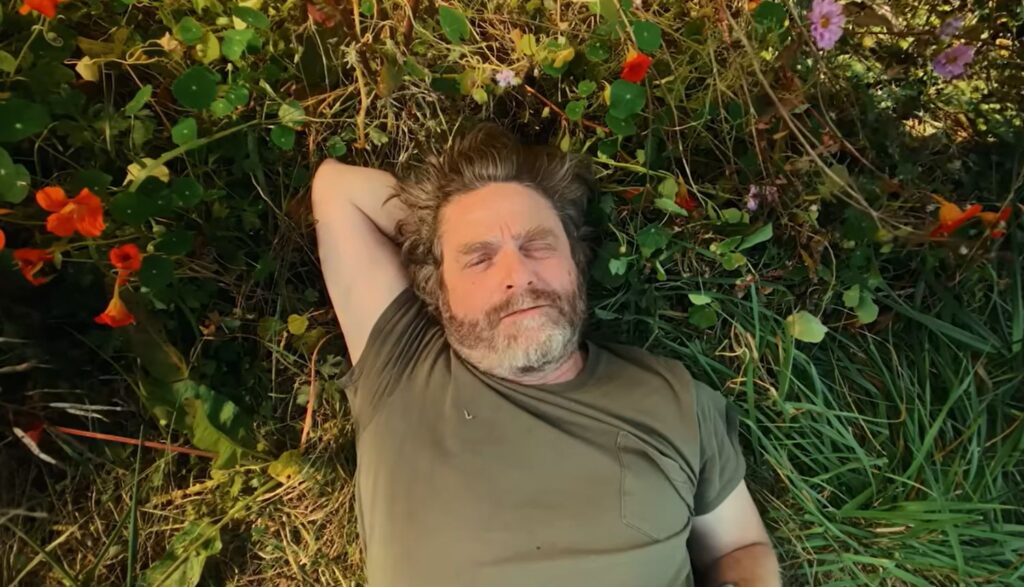
Zack Galifianiakis is tired of technology.
Yes, you read that right — Zack Galifianakis, of The Hangover and Between Two Ferns fame, has grown increasingly frustrated with our increasingly digital world. He’s also concerned about how disconnected we’ve become with how we get our food. If you pulled aside an average third grader and asked them where the apple in their lunchbox came from, would they know the answer? Would their parents even know?
Well, there’s only one way to find out.
Over six episodes, Zach explores apple orchards, wanders through cornfields and forages in forests, chatting with farmers and food historians along the way. And the interviews don’t stop with adults. Zach sits down with elementary school kids too, hoping to give them just a taste (get it?) of what nature has to offer.
And don’t worry — there are plenty of jokes on the menu too.
TWIST AND SPROUT
Despite its very blunt title, this isn’t your average gardening show. It’s certainly packed with rich knowledge, but Galifianakis also brings his trademark deadpan humor to the table (get it again?).
Let’s start with the knowledge. Each 15-minute episode focuses on a specific kind of produce, from apples to root vegetables, and Galifianakis follows along as an expert shows him how it’s grown. There’s some truly fascinating information here, and it’s all wrapped up in a lighthearted, wholesome package.
At least, it’s generally wholesome. Zach generally keeps things PG, but at the end of the day, he’s still the guy that starred in The Hangover. While interviewing the kids, he’ll drop a few crude jokes; it’s mostly toilet humor that you’d hear on any average playground, but that doesn’t make it something to encourage. Even a few kids roll their eyes at his preschool-level jokes.
When the kids aren’t around, Zach gets a tad more mature, bringing a few jokes about drug use into the mix. These stay fairly mild (it’s worth noting that Zach himself has been sober for a decade), but it’s still worth keeping an eye out for if younger ears are in the room.
This is a Gardening Show is one of Netflix’s more unexpected projects—and yet, it might be one of their most encouraging. There’s never been a better time to step back from our technology-centered lives and learn a bit about the world God created for us.
Sure, it’s something of a paradox to connect with nature by watching a screen, but the short-and-sweet series provokes thought long after the credits roll. I can say with certainty that browsing the produce aisle is a much different experience after watching Zach Galifianakis graft an apple tree (which is not a sentence I ever expected to say).
Despite some off-color humor, This is a Gardening Show provides a much-needed escape from a world that can get uncomfortably loud. And while its host may not put it this way, it’s an important reminder that we are stewards of God’s creation, and that creation is a truly beautiful thing.
(Editor’s Note: Plugged In is rarely able to watch every episode of a given series for review. As such, there’s always a chance that you might see a problem that we didn’t. If you notice content that you feel should be included in our review, send us an email at letters@pluggedin.com, or contact us via Facebook or Instagram, and be sure to let us know the episode number, title and season so that we can check it out. )