

Slanted tells the story of a Chinese American teenage girl who undergoes ethnic modification to make herself look white. Though she ultimately realizes her heritage is something to celebrate, not erase, much of the storytelling here—especially in regard to racial prejudice—is satirical. And the film’s foul language, scenes of grotesque body horror and rebellious teenage behaviors sully the messaging for its intended audience.
Joan Huang is new in town.
As the elementary-aged Joan observes this new place her parents have brought her to, she starts to notice some differences: She doesn’t dress the same way as the other kids. She doesn’t eat the same food. She doesn’t even speak the same language.
That’s because Joan is Chinese, and her family just immigrated to the United States.
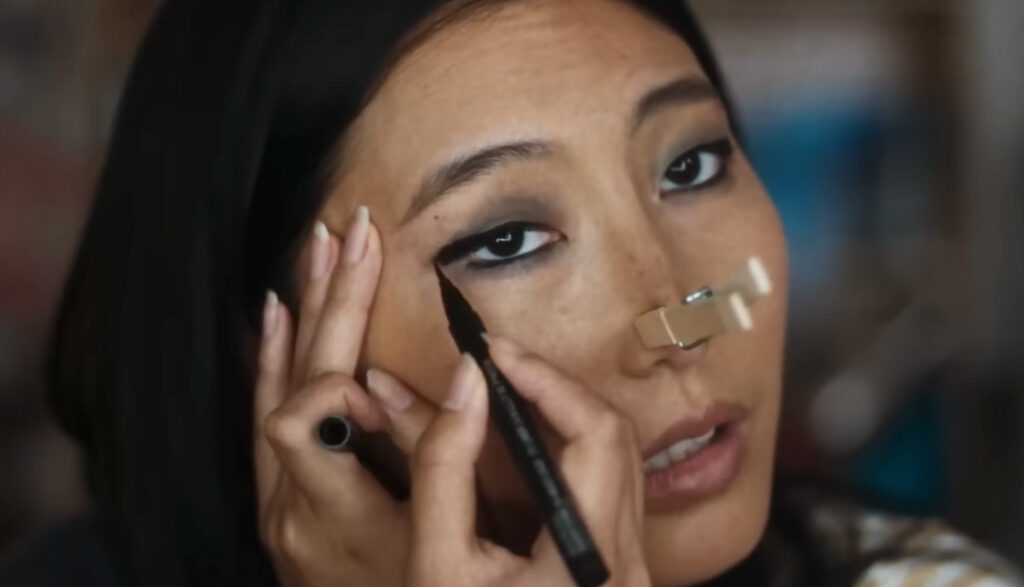
As Joan grows up as an American citizen, she longs to belong. So for the next 10 years, she does everything she can to fit in. She only speaks Mandarin in front of her parents—and sometimes not even then. She trades in her “stinky” homemade lunches for cash. She paints on heavy makeup in an attempt to hide her slanted eyes.
It’s not enough. Joan still feels like an outsider. Unlike the popular girls at her school, Joan doesn’t have blonde hair or blue eyes. Her nose is flat. And she can’t participate in the “Feel the Burn” challenge (wherein her peers protest climate change by willingly giving themselves sunburns) because her skin doesn’t turn red and blotchy as easily as theirs does.
Then, Joan is presented with an incredible, once-in-a-lifetime opportunity.
Ethnos, Inc.—the company behind the social media filter that Joan uses to make herself look Caucasian online—tells Joan it can give her what she’s always wanted. All it takes is one little procedure …
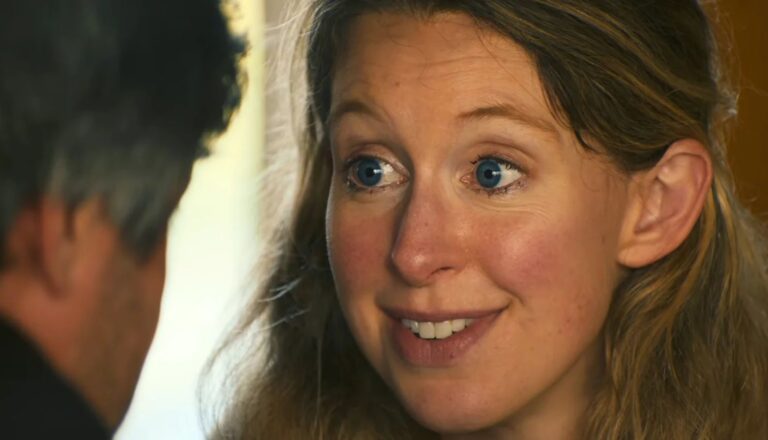
Jo Hunt is new in town. And she has everything Joan ever wanted: the blonde hair and blue eyes, the thin nose and sunburnt skin. But most importantly, she’s no longer Chinese: She’s white.
Joan’s parents love her. And they frequently ask her to participate in cultural and familial traditions, such as learning to cook her grandmother’s dumplings for the Chinese New Year. Joan sometimes rolls her eyes or declines these invitations. But it’s clear she loves her parents, too, even in the throes of her teenage rebellion.
When Joan first comes home after changing her ethnicity, her parents struggle with how different their daughter looks. In fact, they pretty much lose their tempers. But once they all calm down long enough to actually talk, Joan is able to explain how hard the past 10 years have been for her. And her parents, though still deeply disappointed with her decision (a decision made without their knowledge or permission, mind you), forgive her and sympathize.
[Spoiler warning] For what it’s worth, Joan comes to regret her choice and tries to undo it. Conversations with her parents help Joan to realize just how much her heritage meant to her—that it made her unique and should be celebrated, not erased. But the change isn’t fixable: It’s permanent. And it serves as a cautionary tale to teens and parents alike about the importance of talking through these kinds of sensitive issues.
There’s a store called “Prayers & Ammo.” A woman folds her hands and chants to calm herself down. People do yoga and burn sage in a video.
Joan has a crush on a guy at her school, and her best friend, Brindha, tells Joan she should just kiss him. After pointing out that that would essentially be assault, Joan crudely hints that she’s perfectly happy fantasizing about the guy naked. Elsewhere, the teen girls talk about the fact that Joan is a virgin.
After transforming into Jo, Joan catches that guy’s eye, and they begin dating. They dance sensually at a party, and he gropes her a bit. At prom, they make out on the dance floor. They kiss in a few other scenes, too.
Teenagers draw male genitalia and scrawl suggestive comments on pictures. A teenage actress complains that a fellow actor (whom she goes out of her way to call ugly) nearly got her fired when he became aroused on set.
We see many teen girls in bikinis and other revealing outfits throughout the film. There are a few shirtless teen boys swimming, too.
After her transformation, Joan’s skin begins to sag in places and even peel off in flaky bits—sort of like after a bad sunburn. A common side effect, Ethnos tells her. But the sagging continues to get worse. At one point, it looks like Joan’s face has melted, terrifying her and her classmates. And eventually, Joan pulls off chunks, not bits, of her face in a bloody mess.
Prior to her full transformation, Ethnos offers Joan a hair transplant to make her blonde. During the procedure, individual strands of her hair are ripped from her scalp, causing quite a bit of bleeding (though Joan doesn’t experience any pain). When it’s done, there’s no evidence of the carnage that transpired.
Joan’s dad accidentally drops a vase, shattering the pottery and cutting his hand badly. Later, Joan and her mom stitch up the wound at home, following instructions from a video tutorial.
When Joan first shows up at her house as Jo, her parents don’t recognize her and try to push her out of the house. Later, after Joan disrespects her parents, her mom raises a hand to slap her—but her dad intervenes. Elsewhere, Joan’s dad wrestles her phone out of her hands, telling her she’ll get it back when she can prove she’s trustworthy.
Teens at Joan’s school purposely sunburn themselves for a social media challenge, and some have peeling and blistered skin. Joan sticks a clothespin on her nose in an attempt to make it less flat, and it seems to be somewhat painful.
There are 10 uses of the f-word and three of the s-word, as well as uses of “a–” and “b–ch.” God’s name is misused three times as well.
Joan and another girl share a marijuana joint at a party. There is evidence of underage drinking. We hear a doctor is doing pro bono work to earn some good grace after receiving a DUI.
Joan’s dad swigs from a bottle of booze as a form of anesthesia after cutting his hand.
I could go into every detail about the racial differences and discriminations portrayed in Slanted, but honestly, it would encompass more than half of this review. Instead, I’ll highlight the main points:
Joan has faced racial prejudice in her life—we see her mocked by classmates in her early years. This has caused the teen’s sense of self-worth to plummet. She doesn’t feel pretty or cool or valued, no matter what her family and friends tell her. She believes that she wouldn’t have these problems if she wasn’t Chinese. So she decides to go through with the ethnic modification procedure to become Caucasian.
The film is very tongue-in-cheek about this decision, proclaiming how “great” it is to be white. But these moments are clearly meant to be satire, a way to show how ostracized many people of color can feel. We hear the stories of people who were discriminated against for the color of their skin. Those same people are amazed by what they can get away with in their post-Ethnos now-white skin—and some even commit some racist acts themselves.
Brindha, who is of South Asian descent, is deeply hurt by Joan’s decision to become white. It makes her feel like her best friend thinks people of color are “ugly.” While Joan eventually begins to miss her Chinese roots, others clamor to the Ethnos clinic, hoping to erase their own ethnicities. And we learn that at least one family split after the mom refused to undergo the procedure.
Joan doesn’t talk to her parents before getting the Ethnos procedure, and she tricks her mom into signing the permission form. She lies to her parents on several occasions—most frequently regarding her whereabouts. (She repeatedly lies to other people, too.) She sneaks out of the house when she’s supposed to be grounded. And she essentially breaks into the house of her dad’s employer to host a party, causing her dad to get fired. (She denies it and acts like she’s offended when her parents question her about it later.)
The town where Joan lives seems to be very patriotic—and the source of that patriotism, the film seems to suggest, is the lack of ethnic diversity. Joan gets frustrated when her parents, who already stand out for the way they look, lean into what she believes are racial stereotypes, such as speaking Mandarin instead of English.
Joan’s high school puts an unhealthy focus on prom king and queen. When a popular girl says she’ll endorse someone for prom queen—practically guaranteeing a win to whomever she picks—girls begin to bribe her. We see lots of bullying. Seemingly altruistic actions are besmirched by selfish motives.
A man says he was spat on for his race. A couple of characters vomit. Joan cleans vomit from a tub after a party. When a woman insults Joan’s dad, Joan gets revenge by secretly scratching her rear (under her pants) with the woman’s toothbrush.
Slanted is quite the mixed bag. On the one hand, there are scenes with grotesque body horror and foul language. On the other, there’s compelling storytelling that unpacks the insecurities of a Chinese American teenage girl—with many of those insecurities tied to her racial identity. And somewhere in the middle, you’ll find satirical depictions of white people that, perhaps purposely ironically, come off a little prejudiced themselves.
The point of the film isn’t to belittle white Americans—although potential viewers should be aware of that element. Rather, the film seems to use those extreme depictions to convey a deeper message: Slanted is simply about being comfortable in your own skin—no matter what color it may be.
It takes time for Joan to realize that. And when the message comes through, it’s poignantly delivered by her father. He admits that he too struggled with his racial identity when they came to America. But eventually, he learned to embrace his heritage and, rather than erase it, he allowed it to shape his new identity as an American citizen.
I won’t pretend that this film doesn’t have problems. It does. Language is a big issue, especially for teen audiences (for whom this R-rated film seems to be the main target). The body horror scenes will make you gag and squirm. And Joan’s teenage rebellion is the kind of stuff that parents pray will never come to fruition with their own kids.
But this is a cautionary tale. So if your teens hear about Slanted—or perhaps if they do their own rebelling and watch it without your permission—hopefully you’ll find yourself able to do what Joan’s parents did (albeit just a bit too late for Joan’s sake): Open up to your kids. Talk to them about what they’ve seen or heard. Ask them how it makes them feel. Share your own experiences and insecurities. And ask if there’s anything they’d like to share with you.
Who knows? Those kinds of conversations with your kids may save them from a bad decision that could permanently alter their future.

Emily studied film and writing when she was in college. And when she isn’t being way too competitive while playing board games, she enjoys food, sleep, and geeking out with her husband indulging in their “nerdoms,” which is the collective fan cultures of everything they love, such as Star Wars, Star Trek, Stargate and Lord of the Rings.