Comedy
A Different World (2026)
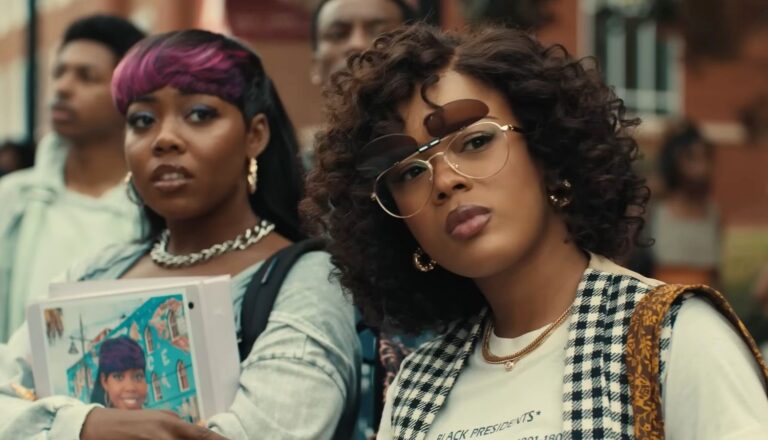
Netflix’s ‘A Different World’ reboot gets some points for diversity and sweet themes, but the sentimentality of college years includes partying and sensuality.




Lady Lara Croft isn’t exactly what you picture when you think of a rich, manor-living British noble.
For starters, Lara doesn’t really care for her title. She’ll only wear a dress if it has pockets—and she’ll likely pair it with some sneakers. And the manor that belongs to her family? Well, the only good it’s done Lara recently is to store all the ancient artifacts she’s spent her life collecting.
That’s because Lara Croft is also a tomb raider. At times, the job can be a bit controversial: Many people have always considered her more a thief than an archaeologist.
That changed a bit during Season 1 of Tomb Raider: The Legend of Lara Croft. After gallivanting across the globe in search of a mysterious green box (which contained an equally mysterious amulet), Lady Croft wound up stopping a worldwide cataclysm. Turns out, she’d much rather save the world than just collect one more artifact destined to gather dust.
Oh, and she’d rather save her friends, too.
That’s how Season 2 opens: with Lara rescuing her best friend, Sam, from the clutches of some nasty Russians. She receives some unexpected help from another formidable fighter named Fig, who soon whisks Lara and Sam to meet Mila, the powerful head of a cutting-edge, techno-dreamy facility.
What does Mila do, exactly? “We are in the business of saving the world,” Mila says. And that means doing more than raiding tombs: It means returning valuable artifacts to the cultures to which they belong.
For instance, Mila’s searching for some sacred masks—masks made from the stars themselves, according to legend. But does Mila really hope to return these masks to their West African homeland? Or does she hope to use their formidable power—because these masks are indeed much more than hunks of wood—for her own nefarious ends?
Lara has reason to pick the second door.
Lara Croft has flitted in and out of pop culture since her now-iconic character first showed up in the 1996 video game, Tomb Raider. Her shorts-and-tank-top combo (combined with exaggerated feminine curves) quickly turned her into a sex symbol. And, more often than not, Lara’s career of raiding tombs invokes supernatural and mystical forces.
This Netflix series is a bit milder in some senses. The cartoon Lara isn’t nearly as sexualized as former iterations (see my note about wearing sneakers with a fancy dress). And the onscreen violence, while certainly intense, is naturally a bit desaturated due to its animated nature.
However, families will still want to exercise some caution regarding all that mystical mumbo-jumbo. Most of what we see here is based in non-Christian belief systems and ancient mythologies. And when Christianity is portrayed, it’s often shown in an unflattering light.
Not surprisingly these days, one of Lara’s comrades is gay, and we see him dancing with another man at a friend’s wedding. And the show strongly suggests that Lara is attracted to, and may have been romantically involved with, some female characters (though the show, to this point, continues to play it coy).
All in all, Tomb Raider: The Legend of Lara Croft is about what you would expect, perhaps mitigating some of the franchise’s historical problems while at the same time adding some new concerns.
(Editor’s Note: Plugged In is rarely able to watch every episode of a given series for review. As such, there’s always a chance that you might see a problem that we didn’t. If you notice content that you feel should be included in our review, send us an email at letters@pluggedin.com, or contact us via Facebook or Instagram, and be sure to let us know the episode number, title and season so that we can check it out.)

When a man steals a mysterious green box from Lara’s home—the last artifact she collected before giving up tomb raiding—she’s pulled back into the tomb-raiding life, desperate to stop him from destroying the world.
Men chase Lara through a jungle, wielding machetes. Later, they surround her and Conrad, holding the pair of them at gunpoint. Lara and Conrad fight back. Conrad tells Lara to look away as he shoots one of their assailants in the head, later telling her that he had no choice: It was him or her.
Flashbacks show Conrad getting killed with an axe by a faction of the same men who attacked him and Lara after they stole the green box. At least one of her friends blames her for his death; Lara blames herself, too, refusing to move on.
Lara gets attacked by an alligator. It bites her leg and drags her deeper into the water. She escapes by stabbing the creature repeatedly with her knife. Lara escapes pursuers who are chasing her by leaping across a ravine and catching herself on the cliff opposite with a knife. While falling, Lara narrowly avoids landing in a spiked pit—a booby trap meant to deter intruders. Lara and another woman fight each other in a competition, hitting each other in the face and drawing blood.
A man breaks into Croft manor, shattering a glass window on the roof. He steals the green box. Lara tries to stop him, getting into a brief fight, but the man escapes. Lara steals a car and someone’s bicycle to chase the thief.
The green box is rumored to make the bearer wealthy. We’re told the writing on the box either means “gift of God” or “curse of God.” After it’s stolen from Lara, the thief opens the box, revealing a glowing green pendant. He dons the pendant, and it grants him the power of mind-control. He immediately orders a sailor to kill his captain. The sailor arms himself with a harpoon gun, but the thief stops him from killing the ship’s captain just in time. The pendant also seems to grant the wearer control over the weather.
Carvings in ruins show a burning city with an angry god. Crosses mark some graves. A woman burns her deceased husband’s belongings as part of a ceremony to help her move on. Someone calls Conrad a “god amongst men.” There’s a joke about ghosts.
A character suggests wine-tasting. Folks drink in celebration. Lara drinks and gambles with the wait staff at a charity event.
Lara has a nightmare in which her friends turn into zombies, all accusing her of killing Conrad as he burns alive. There’s a bit of double entendre.
There are two uses of “d–n” and two misuses of God’s name. Someone says, “for the love of all that is holy.” Another person says, “holy cow.”
Lara rescues her best friend, Sam, from some Russian kidnappers—with some help from a tattooed fighter named Fig. Soon, Fig escorts Lara and Sam to meet her employer, Mila, who runs a mysterious organization called Pithos. And one of Pithos’ many goals, Mila tells Lara, is “ethical archaeology.” She wants to retrieve ancient artifacts from their current (and presumably unethical) holders and return them to the cultures that produced them. First up: a precious mask from Benin, Africa. To her horror, Lara realizes that her father collected said mask. What’s a Croft to do? Raid the museum that Lara donated it to, of course.
Lara and Fig slice and shoot their way through several assailants. Fig tends to kill them (including slicing one of their throats), while Lara simply tries to knock them out. Still, we see plenty of blood fly throughout the battle. A massive explosion sends Lara flying into a pile of rocks, cutting her arms badly. We hear that Sam may have a concussion.
A man is stabbed and supernaturally held aloft; he seems to have his life essence sucked out through his mouth. A forest of massive vines springs up in the middle of a village, apparently killing the village’s inhabitants. Masks are shown to have mystical power. We hear that the mask Mila’s after disappeared after a Columbian missionary described it as the “face of the devil.”
Sam and Lara briefly hold hands. (The show seems to suggest that it’s something more than a friendly gesture, but it doesn’t indicate definitively.) Characters wear some curve-hugging clothes. Lara holds onto a shirtless statue (representing the Roman demigod Hercules). Someone jokes that a ball-shaped robot “has the same curves as a woman I once met in California.”
Characters drink beer. We hear “a–,” “d–n” and “b–tard” once or twice.
Thanks to the events of Episode 1, Lara realizes that the mysterious masks from Benin are no ordinary artifacts. One was used to destroy a village, and Lara’s determined to keep the other masks out of the hands of ne’er-do-wells. In pursuit of that, she and Sam head to Brazil to find, take and protect the mask of Iemanja, a water goddess from the Yoruba faith. But the current holder of that mask is loathe to give it up.
We’re introduced to the Yoruba religion, a stream of faith that is native to Benin and other parts of West Africa. When West Africans were enslaved and shipped to South America and the Caribbean, the religion went with them, and we see a grand festival dedicated to Iemanja in a village (where an effigy of the goddess is paraded around town).
To search for the mask, Lara and Sam head to the oldest church in Brazil. “The slaves would’ve been forced to convert and worship there,” Lara says. “But I believe they never let go of the old gods.” The two note that a cross at the front of the church was where “they tied slaves for whipping.” Inside, the church’s walls are decorated with paintings of Christian saints with African features. A painting of St. Christopher reveals a hidden worship space dedicated to Yoruban gods, including Iemanja. (“A sea goddess,” Sam says. “Like St. Christopher. Two different religions, same worship.”)
During the festival, Sam and Lara meet the “real” Iemanja, who shows off her power over the ocean. She makes Lara and Sam drink sea water to reveal their next steps. (“The sea will know,” she says.) Lara has a vision of falling stars and a mysterious door, but Sam says that she just saw a chicken. Flaming palm branches are waved in the direction of our adventurers. “You are now clear of evil,” Iemanja says, a twinkle in her animated eye. “Easy, right?”
Lara and Sam battle Fig a couple of times. Their fights involve knives and a bit of gunplay, along with loads of fists, feet and throws. A little girl is nearly run over by a careening cart. Someone staggers around a graveyard, apparently drunk. Someone misuses God’s name.

Paul Asay has been part of the Plugged In staff since 2007, watching and reviewing roughly 15 quintillion movies and television shows. He’s written for a number of other publications, too, including Time, The Washington Post and Christianity Today. The author of several books, Paul loves to find spirituality in unexpected places, including popular entertainment, and he loves all things superhero. His vices include James Bond films, Mountain Dew and terrible B-grade movies. He’s married, has two children and a neurotic dog, runs marathons on occasion and hopes to someday own his own tuxedo. Feel free to follow him on Twitter @AsayPaul.

Emily studied film and writing when she was in college. And when she isn’t being way too competitive while playing board games, she enjoys food, sleep, and geeking out with her husband indulging in their “nerdoms,” which is the collective fan cultures of everything they love, such as Star Wars, Star Trek, Stargate and Lord of the Rings.
Netflix’s ‘A Different World’ reboot gets some points for diversity and sweet themes, but the sentimentality of college years includes partying and sensuality.
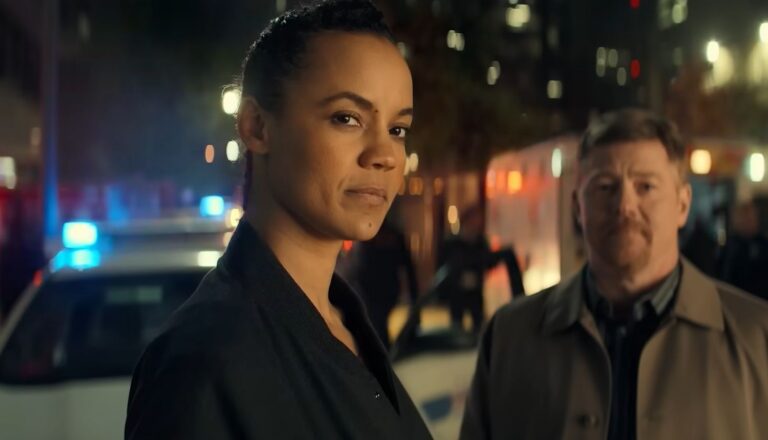
Private investigator Frances Neagley digs into the dark truth about her childhood friend’s tragic death in Prime Video’s ‘Reacher’ spinoff, ‘Neagley.’

Apple TV’s ‘Last Seen’ is a mature, dark crime drama with a lot on its mind. The contemplative series unearths trauma and harsh profanities in equal measure.

Netflix’s ‘Crew Girl’ is yet another teen love triangle drama filled with coarse language, underage drinking and way too many underdressed teenagers.