TV Series Review
Percy Jackson is used to the world feeling … off.
In fact, it’s felt weird for as long as he can remember.
When Percy was younger, he’d sometimes see a pegasus sit atop a building in his hometown or Manhattan. Or he’d look out the window to find a rhinoceros casually walking down the street.
Times like those made Percy, his schoolmates and even his principal question his sanity.
But, as those sightings become more frequent, there’s no question about it: Something is going on. Something is not right. And things are taking a turn for the worse.
One day, while 12-year-old Percy is sitting outside, he watches his pre-algebra teacher transform into an evil, bat-like creature who then tries to kill him. Percy stabs her with a pen, and she disintegrates.
He’s confused. Bewildered. And he’s the only one who saw what happened. Or so he’s told.
Until his mom drives him to a beach house in Montague to tell him the truth: Percy is a demigod.
Yup. That’s right.
Turns out, Percy’s mom fell in love with Poseidon when she was younger. And not long after, they had Perseus, or, Percy for short.
Ever since then, evil creatures have been trying to destroy Percy’s life. That’s why his best friend, a satyr named Grover, went undercover to befriend and protect Percy at school. That’s why Percy sees things no one else can see.
That’s why Percy’s life has been destined for difference, for greatness, since birth.
It’s Called Greek Mythology for Kids
Percy gets rushed to Camp Half-Blood, a magical camp made to train up demigods. There, he bumps into Annabeth, the daughter of Athena who soon becomes a close friend. And it’s not long before Percy, Annabeth and Grover find themselves (as many demigods at camp do) the subject of a prophecy by the Oracle of Delphi Camp Half-Blood. As the campers will tell you, that often involves getting sent on a quest.
For Percy? That quest is to rescue his mother from the Underworld (recently crushed by the Minotaur) and return Zeus’ missing lightning bolt before the powerful object causes war in Olympus.
Along with Annabeth and Grover, Percy manages both things—but he also learns that another camp friend, Luke, was behind all their hardship.
Turns out, Luke hates the gods. After all, very few of them are what you might call parent material, let alone anything anyone would want to have as a god. That’s why Luke has now joined forces with the Titan Kronos, who wants to overthrow Olympus. And part of their plan involves sowing chaos and destroying Camp Half-Blood.
As Season 2 opens, Luke initiates just that, poisoning a magical tree protecting the camp from monsters.
I, Too, Am a Child of God
Rick Riordan published The Lightning Thief, the first young adult novel in the Percy Jackson & the Olympians series, back in 2005.
Percy Jackson’s character enchanted so many readers that it soon became a five-book series. It then morphed into two films produced by 20th Century Fox in the mid 2000s.
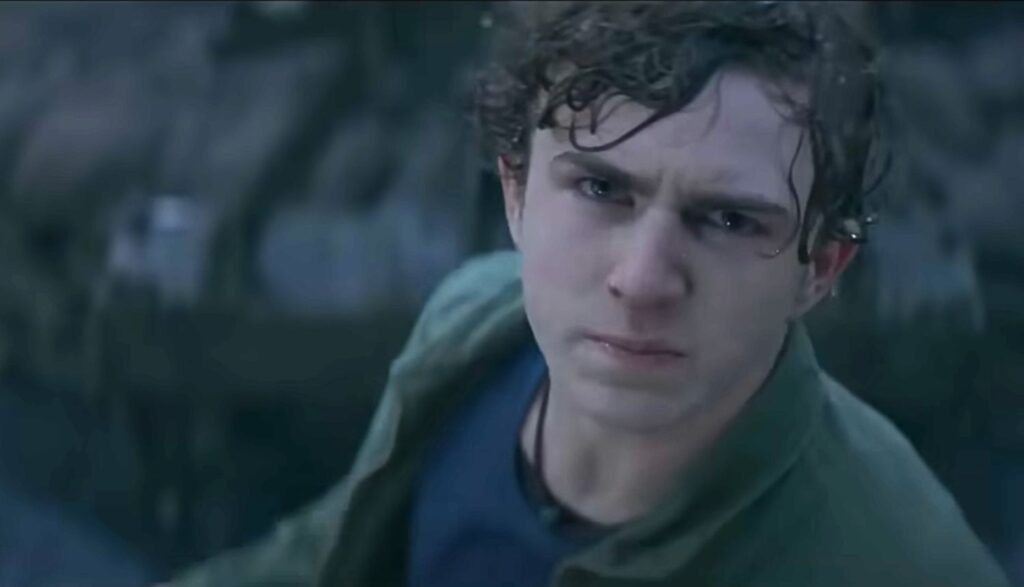
Now, Disney+ has taken the reins and put out their own adaptation, aptly titled Percy Jackson and the Olympians.
This TV-PG series is doing its job, visually. The graphics and visuals are sure to captivate a young audience. And I’m sure the storyline, for true fans, will do so as well.
Percy is a loveable outcast—one who is relatable with ADHD, dyslexia and a desire to be accepted by his peers. He also gains confidence and identity along the way as he befriends other demigods and takes the journey of a lifetime.
This series works hard to show the power of a parent’s love. It makes it clear that both parents play a critical role in a child’s life. It shows the importance of identity in all ages, but especially in adolescence. And it lays out Percy’s own journey, which proves how far we will go for those we love.
The show also emphasizes loyalty, kindness, empathy and honesty. But it weaves in other elements and messages as well.
Greek mythology is the bedrock for this entire series. That means that viewers will learn about this mythology and some of its practices and beliefs, all of which are taken as truth.
They’ll also see scary, evil, mythological creatures and watch as the heroes battle and kill them. There’s sword fighting, various magical powers and the ever-present understanding that the magical world is filled with both good and evil. The occasional sexual quip makes its way into dialogue, too (and, if the series stays true to its book counterpart, viewers should expect to see some LGBT characters.)
So far, there’s little profanity—though God’s name is occasionally used in vain.
And, most importantly, if this is something you choose for your family, you’ll want to have conversations with your kids about the differences in what we believe versus the beliefs that are established in this series’ mythological world.
(Editor’s Note: Plugged In is rarely able to watch every episode of a given series for review. As such, there’s always a chance that you might see a problem that we didn’t. If you notice content that you feel should be included in our review, send us an email at letters@pluggedin.com, or contact us via Facebook or Instagram, and be sure to let us know the episode number, title and season so that we can check it out.)