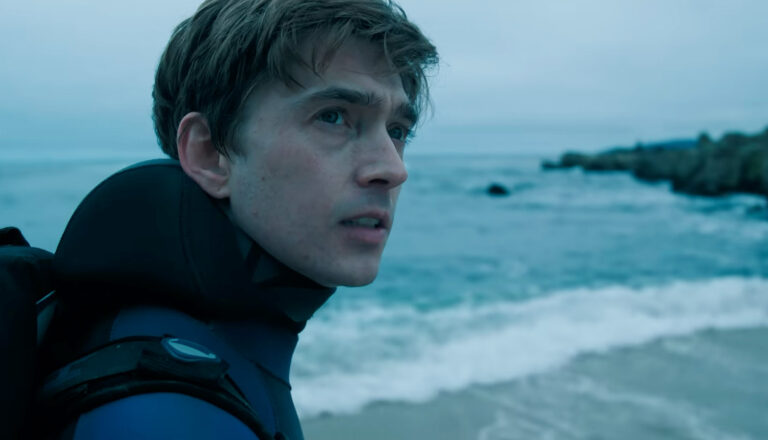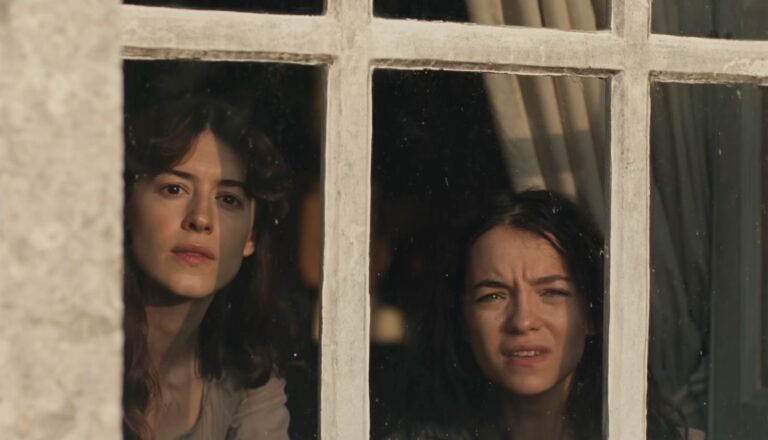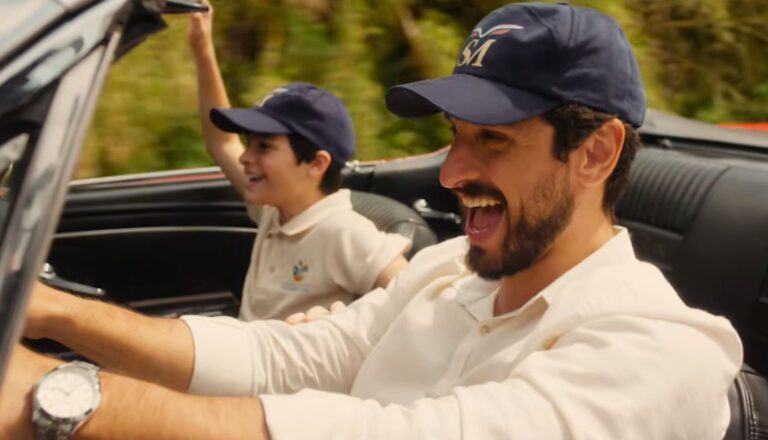


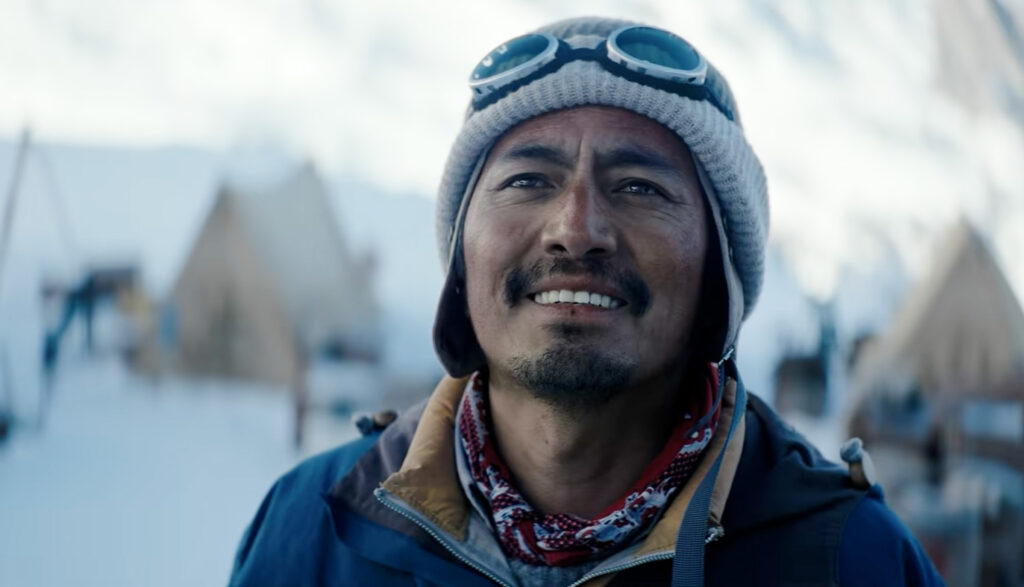
The first people to ascend Mount Everest did not have an easy go of it. Several of them nearly died. And when all was said and done, only two men actually set foot on the mountain’s summit. Tenzing shares their epic and historic tale, but the worship of Everest as a goddess could make this film a difficult journey for families to trek.
“Why did you want to climb Mount Everest?” a New York Times journalist asked mountaineer George Mallory in 1923.
“Because it’s there,” Mallory answered.
Everest has indeed been there, nestled in the Himalayan mountains between Nepal and Tibet, recognized as the world’s highest mountain since 1856. Mallory first explored the behemoth in 1921. In 1922, he attempted to reach the mountain’s 29,032-foot summit for the first time. His team was forced to turn back just 2,000 feet from the top.
In 1924, Mallory made a second attempt to reach the top of the world: He disappeared without a trace. And though his remains have since been found, it’s unclear whether he ever reached his goal.
To foreigners, Everest was a thing to be conquered. To Tenzing Norgay, a Tibetan-born Sherpa mountaineer, the mountain was Chomolungma, “Mother Goddess of the World.”
Tenzing wasn’t interested in “assaulting” Everest. He revered the mountain, and he hoped and prayed Chomolungma would allow him to ascend, to see it for all its beauty and to return home safely after.
Tenzing worked as a porter and guide on several Everest expeditions until the Swiss gave him his first real chance to see his beloved mountain’s summit in 1952. As a full member of the climbing team, he and fellow mountaineer Raymond Lambert reached a height of 28,210 feet. At that point, dangerous winds and a lack of oxygen forced a retreat.
Tenzing and Lambert were so close they could taste it. And Tenzing began to doubt whether his beloved mountain would ever let anyone reach her peak.
In 1953, Tenzing is once again afforded an opportunity to climb. The British, led by former military officer and skilled climber John Hunt, have received the necessary permits to attempt the summit. Hunt is hungry to succeed. England is about to crown its new queen, and he wants to do her proud. If they fail, the Brits won’t get another chance at Everest for at least three years.
But that’s why Hunt was chosen: As a military man, he believes that failure is not an option. He won’t just try to succeed: He will succeed.
Tenzing worries that Hunt’s attitude will anger the goddess. But like Hunt, Tenzing is hungry to succeed. This will likely be his final attempt to trek the dangerous peak. He nearly died on the last endeavor. And since his two young daughters have already lost their mother, he doesn’t want to risk leaving them without a father.
It will be a harrowing journey across ice and rock. But if he succeeds, Tenzing will have achieved a lifelong dream, reaching heights that no other person in recorded history has ever reached before.
Ed Hillary, a New Zealand mountaineer joining the expedition, is one of the few who truly recognizes and respects Tenzing’s skill and experience. He frequently speaks up for the Sherpa, encouraging Hunt and the other climbers to trust Tenzing and to give him more responsibility. That trust and respect are mutual, and the two men form a lifelong friendship as a result.
Before her death, Tenzing’s wife, Dawa, is his biggest supporter. No matter how difficult the hardship, no matter how great the disappointment, she never stops believing in him. Their love is palpable, evident in how they speak to and support one another. And that love extends to their two young daughters, as well.
After nearly dying during the 1952 Swiss expedition, Tenzing had promised his daughters that he would not attempt to climb Everest again. However, when he’s offered a full climbing position on the British trek, his daughters give him their blessing. They know that reaching the summit would be the fulfillment of a lifelong dream for their father. And they know that their mother would have wanted him to succeed.
John Hunt isn’t a bad guy, but his pride of country does seem to affect his decisions for the worse on a few occasions. Still, when good ideas are presented to him, he doesn’t brush them off: He listens and adapts accordingly. And though he’s initially hesitant to let Tenzing do more than lead the other Sherpas in transporting supplies up the mountain, he eventually comes to respect and trust Tenzing.
Tenzing is a Sherpa, but because he was born and raised in Tibet, not Nepal, many of the other Sherpas consider him an outsider. They say unkind things behind his back and frequently refuse to obey his orders. However, Tenzing never speaks ill of his men. He advocates for them on the mountain, ensuring they are treated with the care they are due. By the journey’s end, they’ve all grown to respect him, and some even seem to consider him a friend.
After falling ill as a child, Tenzing spends some time in a Buddhist monastery getting nursed back to health. Throughout the rest of his life, we see Tenzing interacting with the monks, sometimes participating in prayers or ceremonies led by the monks.
Tenzing and the other Sherpas believe that Everest is a goddess. They all bow and pray to the mountain throughout the film, asking for it to grant them safe passage. Shortly before their journey, they ask Buddhist monks to place a blessing on them. The Brits traveling with them participate in these prayers and ceremonies. And when something good happens, they all cheer their thanks to the “goddess.”
Tenzing says that when he’s on Everest, he can feel the spirit of his late wife. When he experiences hypoxia (a lack of oxygen) near the mountain’s peak, he sees a vision of his wife, who encourages him to keep going.
A woman is cremated in Buddhist tradition. Several characters say “namaste” in greeting.
Tenzing and Dawa kiss in one scene. They frequently exchange tender touches, touching their foreheads together or caressing cheeks.
Climbing Mount Everest is a dangerous venture. The men with Tenzing are constantly at risk of hypoxia, frostbite and hypothermia. Shifting ice sheets, avalanches and high winds also pose a threat. And even then, a misplaced foot or sheer exhaustion could result in a fatal fall.
Several characters nearly die because of all of that, and we hear about past expeditions where people did die for one reason or another. In one scene, a man falls into a deep crevice when the ice he’s crossing suddenly gives out. Luckily, he and Tenzing are tethered together by a rope, which catches his fall. But it takes quick action and great skill to get the man to safety. In another instance, a man collapses from hypoxia after vomiting. He’s shaken awake by his fellow climbers, who warn him that if he sleeps where he is, he’ll never wake up again.
Tenzing’s wife dies due to an unnamed illness. In one scene, she grabs her side in pain, but it’s never explained further.
We see a dead yak in the background of one scene.
There are singular uses of “d–n” and “h—.” We also hear some colorful British terms, including “bloody” and “cheeky bugger.” There’s one possible misuse of God’s name.
Several characters smoke pipes or cigarettes.
There is some obvious tension between peoples of different nations and clans. The Sherpas who climb on Tenzing’s team are, at times, resentful of the people who hire them. They know that many climbers see Sherpas as expendable: They don’t care if the Sherpa porters survive, they just care whether their supplies make it up the mountain. Additionally, the Sherpas, who make their living porting supplies for climbing expeditions, worry that once someone succeeds in summitting Everest, no one will ever try again.
While preparing for the hike up Everest, the climbers are all hosted by a British ambassador. However, the rooms of the man’s house are reserved for “full” climbers only: The Sherpas are told they’ll have to sleep in the barn. The next day, we see the Sherpas urinating on the front lawn in protest. They’re scolded for this behavior, but Tenzing, acting as a translator, tells them to ignore the Brits and simply pretend to be sorry.
As a child, Tenzing and his family were yak herders. But after their herd died during a plague, they were kicked out of their home (which was reserved for herders only). The entire family hiked from the north side of the Himalayas in Tibet to the south side in Nepal. Along the way, Tenzing became very ill. His parents were forced to leave him behind at a Buddhist monastery, promising they’d return for him once he got stronger. However, we never see evidence that they returned.
A man vomits from altitude sickness.
A couple of people make a bet with each other.
On May 29, 1953, Tenzing Norgay and Ed Hillary became the first people to crest the top of Mount Everest. Both men had risked their lives to achieve this lifelong goal. It took three months to complete. And to this day, it’s considered one of the greatest achievements of the 20th century.
The movie itself is great achievement. Stunning mountain views and a beautiful depiction of a husband and wife loving each other well round out the film’s powerful story.
However, it’s not a perfect story. Tenzing’s reverence for Everest doesn’t just border on worship, it is worship. He prays directly to the mountain, asking “her” to grant him safe passage. And due to discrepancies in historical accounts of that 1953 expedition, we can’t always be sure that what we’re seeing on screen is an accurate depiction of what really happened.
Between that and the ever-present peril of climbing such a behemoth, younger, more impressionable children may do better watching something else. They’d probably be bored by this film’s slower pace anyway. But even with older children, parents should have mindful discussions about the balance between faith and reverence for nature before diving in.

Emily studied film and writing when she was in college. And when she isn’t being way too competitive while playing board games, she enjoys food, sleep, and geeking out with her husband indulging in their “nerdoms,” which is the collective fan cultures of everything they love, such as Star Wars, Star Trek, Stargate and Lord of the Rings.