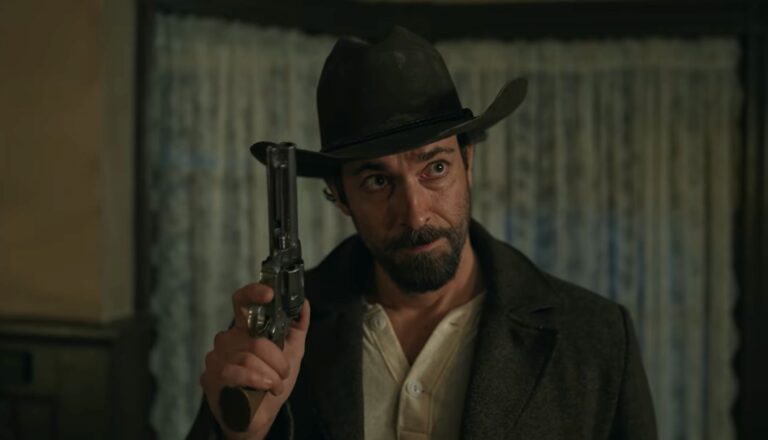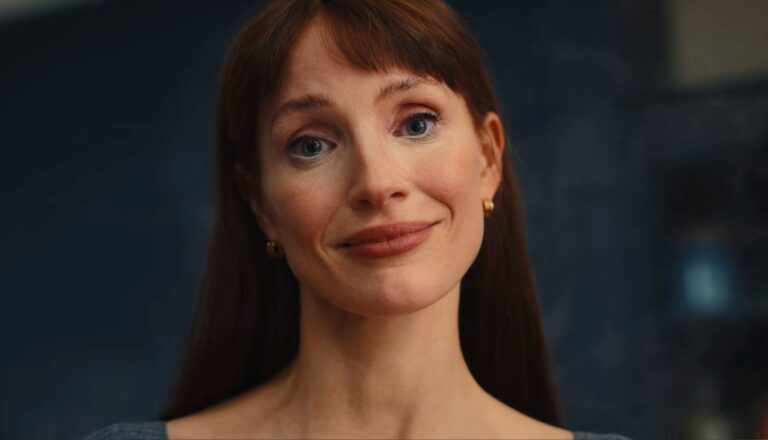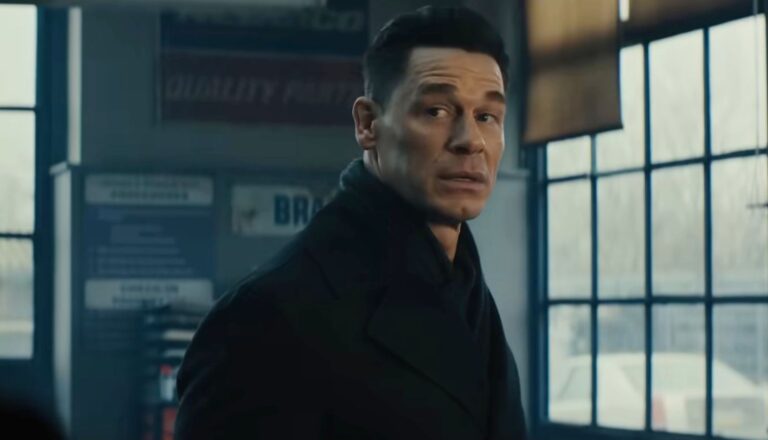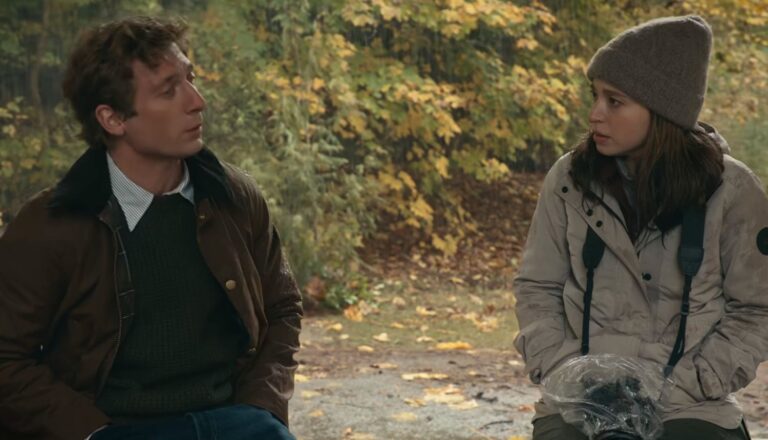


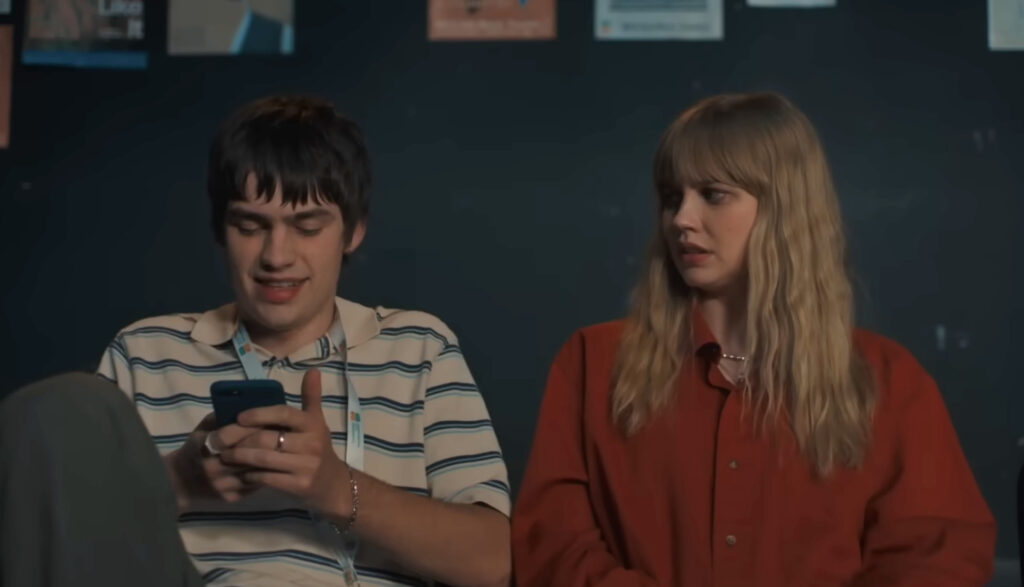
Boy meets girl. Boy loses girl (literally). Boy tries to find girl with the help of another girl who is secretly running a psychological case study on him. Finding Emily is a charming take on the romcom formula, but the film’s sexual material, suggestive elements, language and LGBT content will leave families looking for a different movie.
Owen found the perfect girl. Then he lost her.
Like, literally.
Let’s back up. Owen works as a sound engineer for a university in Manchester, England. Part of his job involves managing the decibel levels of sound equipment at events, including a college-sponsored rave. That’s where he had his meet-cute with Emily, his dream girl.
They hit it off. Talked. Danced. Owen was smitten. When Emily’s friend dragged her away, Owen chased her and asked for her number. And she gladly gave it to him.
The next morning, Owen was on cloud nine. That was before he realized that Emily had given him a phone number with a missing digit.
He can’t contact her. He doesn’t even know her last name.
But he’s desperate to find Emily.
Owen visits the college, and asks for a student named Emily. Someone knows an Emily and tells Owen she’s a psychology student. He goes to see her and …
It’s the wrong Emily. A totally different person. It’s not an uncommon name, after all.
Owen despairs. But then this Emily says she will help Owen find his lost love. He wonders why she would help him, a total stranger, but she convinces him that she wants to see him reunited with his Emily.
In reality, this Emily sees Owen as the perfect case study for her looming psychology thesis. It’s on love and romantic attachment—namely, that love is a literal madness that will make people do crazy things. Not only that, but Owen’s predicament could be the key to unlocking a prestigious postgraduate placement.
What extremes will Owen go to for love? And, if they’re not extreme enough, maybe this Emily will nudge him in that direction.
Owen holds an idealistic view of love—not so much that romance between two people is perfect, but that it’s a special thing worth going to great lengths to find. He doesn’t let the cynicism of those around him sway his hopeful view.
While Emily (that’s Psychology Emily, who I will refer to just as Emily from now on) manipulates Owen for her own benefit, she eventually recognizes her misdeeds and tries to make things right.
Owen works hard to pay his share of a house payment, which he shares with his brother and his brother’s girlfriend. We learn that the house belonged to the brothers’ mother before she passed away, and Owen treasures the house for the memories made there with his family.
A few characters perform self-sacrificial deeds. Family and friends support and encourage one another. Characters display forgiveness.
Emily’s thesis is built around the idea that romantic attachments (i.e., love) are a vestige of evolutionary biology and unnecessary in modern society. There are similar conversations throughout the film which seemed influenced by Charles Darwin’s theory of evolution.
Neon crosses are glimpsed in the background of one scene. The phrase “God knows” is used. Emily jokes about who she was “in a past life.” A woman says she “manifested” something to happen.
As Owen and Emily search for Owen’s dream girl, they begin to fall for each other. The film presents an interesting juxtaposition: Owen is deeply smitten by a brief encounter with a girl at a party, while the budding romance he and Emily share develops over time as they get to know one another.
Owen is accused of being a virgin, which he protests. When pressed, he reveals he’s had sex with two women. We learn that Emily has held onto a longstanding crush on a fellow student named Tristan. It’s implied that their relationship was never anything more than casual—and potentially sexual—though Emily wanted more. At one point, Tristan makes an innocent-sounding (but potentially suggestive) offer to Emily.
When Owen’s romantic quest goes viral after an email mishap (he essentially starts a giant group chat with every Emily on the university’s registration list), he receives a lot of blowback, with some people calling him “incel,” “predator,” “rapist virgin” and accusing him of sexual harassment (which is not his intent). Others make crude sexual remarks tied to his search. When Emily first hears about Owen’s dream girl, she wonders if his encounter was a “heteronormative projection.”
While not central to the plot, there’s a fair bit of LGBT content in Finding Emily. A few scenes include performers in drag. One drag performer sings a song about “kinks.” A student wears a T-shirt that reads “I kiss girls,” and during the credits we are told she is romantically involved with another girl. Male bartenders wear tight, revealing clothing. An online influencer talks about something being “lesbian coded.” Though it seems to happen in a sororal manner, Emily’s friend gives her several quick kisses on the face and head; she also offers to marry Emily so Emily (who is American) can stay in England. The offer is given and received as a joke. Men are seen dressed as woman for a play about “star-crossed lovers.”
A man and his girlfriend kiss passionately before they’re interrupted, and the girlfriend quickly buttons up her shirt. Other couples make out, too. A woman seems to have spent the night with her boyfriend.
Finding Emily opens with a paraphrase of Sigmund Freud: “Love is a state of temporary psychosis.” A character says that while romantic connection, viewed externally, is impractical, it makes sense internally—and is vital to humanity.
One character makes a quick reference to BDSM culture. We hear that some male students took part in a “game” that involved peeking up girls’ skirts—which is subsequently given a crude name. Someone tells a crude story that involves a “peephole.” A character references a fictional documentary that featured a pedophile.
Students dance suggestively with each other at a party. Comments are made about the size of male anatomy. A man jokes that he will divorce his wife so that he can date another woman. (He’s not actually married.) Emily makes a cake in the shape of buttocks, and her friend sticks a finger into the cake suggestively.
We see a man’s shirtless torso. A woman takes a bath, and we see her bare shoulders. Several women wear revealing clothes, including some dresses that show cleavage. One woman’s bra straps are visible on her shoulders.
We hear references to “toxic masculinity.” Someone is called a “sex pest.”
Emily is accidentally smacked in the lip while attending a show with Owen, resulting in a small cut with some blood. Later, a woman mistakes this cut as abuse and directs her ire toward Owen. (Fortunately, Emily is quick to clear things up.)
Owen and his brother wrestle, slap and scrap a few times throughout the film. Emily blindly punches Owen in a fit of anger—she’s mad at someone else, not him.
We hear that a professor once put one of his students in a trash can.
The s-word is used seven times. God’s name is misused eight times, and Jesus’ name is abused twice. Additional profanity includes “h—,” “a–” and “a–hole,” “pr–k,” “tw-t,” “t-ts” and “p-ss.”
A few characters use obscene hand gestures. Some rude words are glimpsed as part of graffiti.
A professor dissuades his students against a “Ritalin-fueled” push to finish their assignments. Someone asks a girl if she purchased weed from her. The term “cokehead” is used. Emily asks Owen if he’s on any psychiatric medications.
Students drink beer and liquor. Several parties include alcohol. A shelf full of liquor bottles is seen. A few characters appear to be drunk. Someone mentions “fruity beers.”
For most of the film, Emily manipulates Owen for her own gain, prodding him toward more elaborate acts (even against his better judgement) to find his “dream girl” and strengthen her case study—all of which leads to his severe emotional distress. Emily accesses the university’s email system to allow Owen to contact every student named Emily, a breach of privacy that has real consequences for Owen. Emily frequently lies to Owen and others to get what she wants.
A scene takes place in what appears to be an “all genders” restroom, and we see a woman attempting to pee in one of the urinals. (Her long dress covers anything critical.)
A student leads a feminist rally. Someone says she “burned her bra” as a form of protest. A woman is called a “broadcast Barbie.” A man jokes about defecating on a desk. Someone jokes that she’s “better late than pregnant.”
There is a mention of the Stanford Prison Experiment, a study now infamous for its questionable ethics.
Finding Emily doesn’t reinvent the romcom genre, but it hits the beats in interesting ways and does so with a lot of charm. The performances are solid, the story is clever, and there are some unexpectedly heartfelt moments of familial love and friendship. And while the film shows us plenty of the cynicism that has pervaded a modern view of love and relationships (which, to be fair, is not without some reason), it consistently leans toward Owen’s hopeful view of love: That it’s a good thing that deserves fighting—and forgiving—for.
However, a biblical understanding of romantic love—that God has given humanity the gifts of love and sexuality to form a covenantal communion in marriage—is absent from the film. Contrary to what Finding Emily may suggest, love is not an evolutionary quirk, but a human reflection of one of God’s eternal qualities.
Add in the inclusion of crude sexual material, suggestive elements, LGBT content and some harsh language, and discerning families will likely try to find something else to watch.

Bret loves a good story—be it a movie, show, or video game—and enjoys geeking out about things like plot and story structure. He has a blast reading and writing fiction and has penned several short stories and screenplays. He and his wife love to kayak the many beautiful Colorado lakes with their dog.