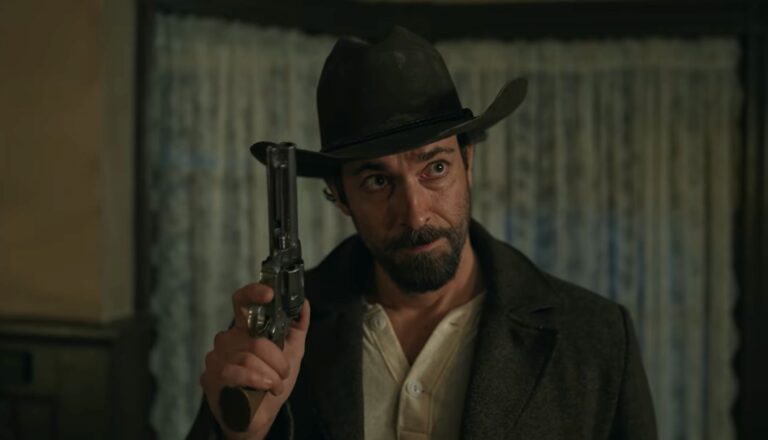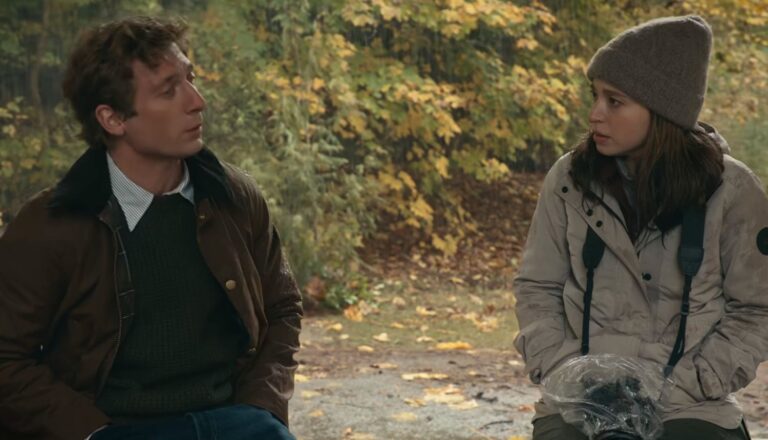


After a world-devastating pandemic kills his wife and child—and marauding scavengers kill his dog—a guy named Hig is distraught. And he sets off in his battered Cessna aircraft to see if something better still exists. The Dog Stars takes time to examine both the good and evil natures of man. But it also includes gory violence, psychopathic cannibalism and excessive profanity.
It wasn’t all that long ago that Hig had quite a lot to live for. He had a loving wife, a baby on the way, a small, comfortable home. He even had a good dog that would come running at a call, ready to face any creeping danger in the night.
But the danger that arrived didn’t creep. It didn’t make a sound. It couldn’t even be seen. No, the deadly menace that attacked them was a virus, a pandemic plague that ruthlessly killed people and spread all around the globe.
His preborn baby was the first loss in Hig’s family. His beloved wife, Melissa, died soon after. Hig and good dog Jasper struggled on. But then Hig’s faithful pup was snuffed out of existence, too, by foul and murderous scavengers.
Hig buried Jasper with a note for Melissa, digging the dog’s grave right next to hers. Maybe, on some different plane of existence, those two might reunite and romp on some ethereal, flowered field together. He hoped so. Meanwhile, Hig is left alone in this dead and dying world.
But then Hig hears a snippet of a garbled radio signal coming through from Grand Junction, several hundred miles to the west. And he decides that, since there is nothing left for him here, there might be something out there. This could be his best chance of finding something, anything that could make his life worthwhile.
So the young pilot gathers supplies and extra fuel and flies his beat up Cessna plane due west. Hig isn’t exactly sure what he seeks. But seek it, he must.
Hig isn’t totally alone. Before setting off on his plane trip, he forms a makeshift partnership with a grizzled former marine named Bangley. As Hig forages for supplies in the nearby city of Denver, Bangley protects their small broken-down airfield base. Their relationship is quiet but relatively cordial.
Hig meets a father and daughter (Pops and Cima) who he eventually joins forces with. Pops is a bit prickly at first, but he warms to Hig and helps fight against deadly attackers. Hig and Cima establish a hesitant relationship since both are still grieving the loss of a partner. But the two draw closer and eventually become a couple, risking everything for one another.
It’s clear that Hig has also taken time (while on trips to Denver for supplies) to stop by a hidden Mennonite farm that he discovered. There are several families here with a large group of children. He stops by and kindly drops off some supplies for them and helps with repairs. They give him things in return, such as a basket of green beans. Later, Cima examines and gives medical care to the farm’s children. (She had earned a medical technologist’s degree before the pandemic.)
[Spoiler Warning] Near the end of the film, a group of people gather together, eat, play instruments and, in a sense, celebrate life. The film uses this as a sign that humanity can be repaired through a desire to build families and regrow all that was lost or stolen away.
Someone references Psalm 121 and God’s promise of help. Someone else declares “Praise, God. Amen.” (However, it’s soon clear that these people are deceitful and deadly and far from faithful.)
The Mennonite families don’t speak to Hig about their faith. But when he visits, we see some clutching Bibles.
It’s very evident that Hig finds Cima attractive. Even Pops notices Hig’s gaze at Cima and harumphs about Hig’s need to stick to the work before him. Cima wears shorts and cleavage-baring tank tops that show a lot of her toned form and point to the fact that she isn’t wearing undergarments. She also wears a fairly low-cut dress.
Later, Cima walks to where Hig is sleeping on the ground in a bed roll. She snuggles up to him, and it’s implied that there might be further physical interactions that the camera doesn’t capture. The pair kisses at the end of the film.
Though not played for titillation, Hig finds a wounded Bangley dressed in nothing but boxer shorts and a few bandages.
[This section contains spoilers.]
Early on, we see Hig land his small plane in the streets of the overgrown and crumbling city of Denver. There are roving bands of dogs that he must scare away. He also encounters a disheveled scavenger who shoots an arrow at him and threatens to kill him if Hig doesn’t hand over his supplies. However, Hig has an automatic rifle and riddles the area near the man with gunfire. (But he chooses not to kill him.)
Through his travels, Hig encounters lots of different dangers. Sometimes they’re groups of men on foot; other times they might have horses to ride or dogs that help them hunt. Many have some sort of weapon, from handmade blades and crossbows to rifles and pistols. The problem with guns is that the ammo is scarce. Bangley is seasoned enough that he saves his casings and creates new bullets for himself.
On that subject, Bangley is a practiced killer. What he lacks in conversation or good humor, he more than makes up in skill with a rifle. He can sit in his tower setup on the rundown little airfield that he and Hig occupy and easily drop any group of invaders at 900 yards. Silent, pinpoint shots to their heads take out any invaders before they are aware they’ve even been spotted. After killing interlopers, Bangley burns the corpses to avoid disease.
When a group of 50 or so men, traveling as a wild, tattooed pack, attack at night, we see Bangley use night vision goggles to avoid their murderous attacks (though he takes two arrows to the torso) and still eliminate the entire group in bloody ways. (We see heads explode and blood spew in the green night vision.) The next day, torn-open corpses litter the ground, and birds pick at the spilled viscera. In that battle, the screaming invaders set fire to a building, blaze away with rifles and use a grenade launcher to blow up a building and Bangley’s tower.
Bangley makes it clear that he is in favor of staying isolated and killing anyone who approaches the airfield with a weapon. And he balks at Hig helping the Mennonite farm families. “When has offering goodwill to others ever helped us stay alive?” Bangley declares.
Another group of killers present themselves as a large group of Native Americans. They shoot arrows and rifles, burn buildings and attack Hig, Pops and Cima in force. They climb up on Hig’s plane during a takeoff, driving axe blades into the aircraft’s aluminum skin. Cima and Pops defend with rifles. Men are blown off the plane and off horseback in a bloody splatter. The plane also flies through a charging crowd of men as it lifts off the ground, slashing them and lopping off fleshy chunks. One man’s head splashes bloodily against the windshield.
Hig barely avoids a charging herd of bison. We learn that Cima’s mother died from stage IV breast cancer.
The three protagonists escape capture at one point by causing a large fire that sets people aflame. They then shoot their way past the killers. We see one female leader with raw burns on her neck and face who is then caught up in a massive, deadly explosion.
One of the more disturbing events in the film takes place when Hig, Cima and Pops land at the Grand Junction airport. At first glance, this refuge appears to be a sign of flourishing humanity regrowing. But with time, it becomes clear that these survivors have developed a cultish community that lures in strangers, captures useful individuals and then murders and eats the rest. We’re shown a freezer packed with the butchered remains of victims.
Hig reveals that he euthanized his ill wife because her physical torment was too unbearable to watch. But he admits that he has carried that guilt, along with his grief, ever since. He indicates that he’ll take his own life if he doesn’t find a new purpose for it.
The dialogue contains a regular stream of more that 40 f-words and a dozen s-words joined by uses of “d–n,” “a–hole” and “b–ch.”
God’s name and Jesus’ name are both profaned a total of four times (two of those blending God with “d–n”).
Hig smokes throughout the movie, and several others join him, including Bangley, Pops and Cima. Bangley also smokes cigars. Pops and Bangley both drink glasses of alcohol, and Pops pours a shot for Hig, too.
Hig discovers that the Grand Junction airport has a large supply of alcohol. One individual there offers Hig, Pops and Cima martinis and a pitcher of 160 proof alcohol. We see a fairly large group of people drinking in an airport lounge.
Hig feels compelled to find some remnants of civilization in the world. When someone asks him what he’ll do if he discovers that there’s nothing out there, Hig declares that there’s a shear-sided Colorado mountain that he always enjoyed—which he’ll fly his plane into the side of.
Part of that dark side of Hig is due to the fact that he can’t let go of his grief and guilt over the deaths of his wife and child. We see him sit and relive many fond memories and gentle moments with his lovely, pregnant wife, Melissa. But those memories also become, in a way, a chain that binds him and prevents him from moving forward with his life. (He’s only able to do so with the help of others.)
Based on Peter Heller’s 2012 novel, The Dog Stars makes for a simple but compelling movie that dramatically examines the conflicting natures of mankind.
This is definitely not a film focused on faith (though Christian belief is on the peripheries of the tale). But it still asks viewers to consider what keeps us moving forward when everything of value in our lives—every protection, every good and rewarding thing—crumbles away. Why do some people reach toward the tattered vestiges of goodness, it asks, while others turn to the foulest of evil?
Those are compelling questions to consider; in some ways, they’re powerfully presented in this post-apocalyptic pic. And this movie’s slow-burn pacing and excellent cast aid that process.
However, to get to that introspective point, you have to take the time to dig past The Dog Stars’ presentation of all that “foulest of evil.” And, frankly, that’s not an easy ask for a discerning viewer. For this pic liberally spatters everything with brain-blasting, throat-slashing gore. It pushes its audience into the smiling grasp of psychopathic cannibalism. And it coats nearly every scripted sentence with some sort of foul profanity.
All of that extraneous gunk doesn’t make this film less thoughtful, but it certainly makes it harder to enjoy.

After spending more than two decades touring, directing, writing and producing for Christian theater and radio (most recently for Adventures in Odyssey, which he still contributes to), Bob joined the Plugged In staff to help us focus more heavily on video games. He is also one of our primary movie reviewers.