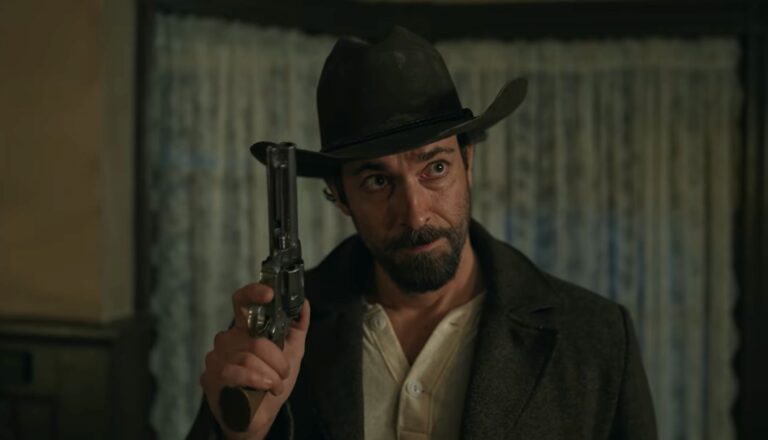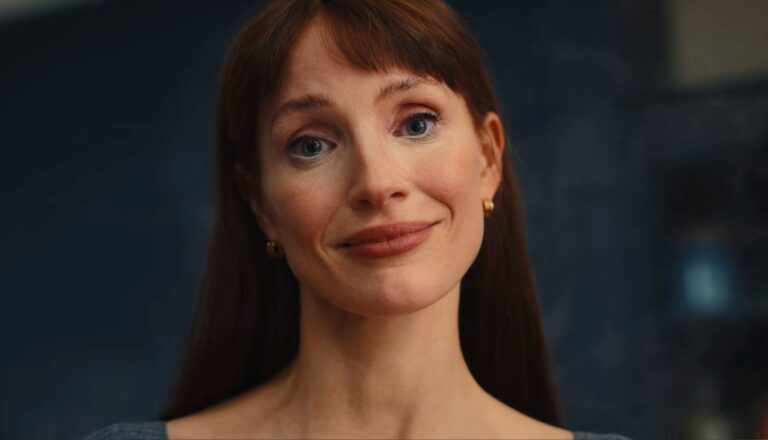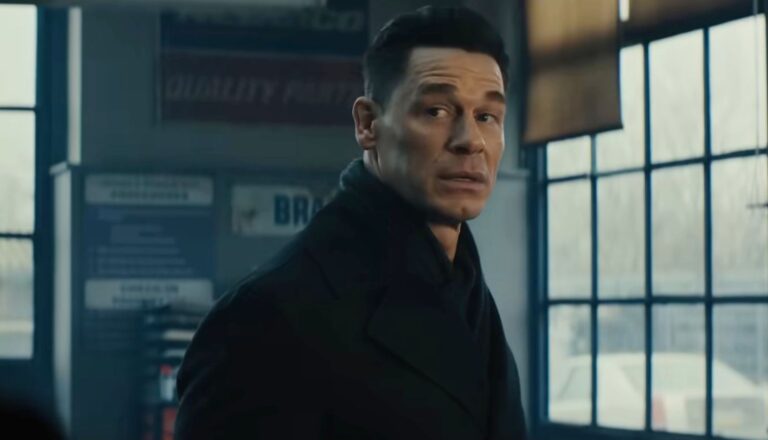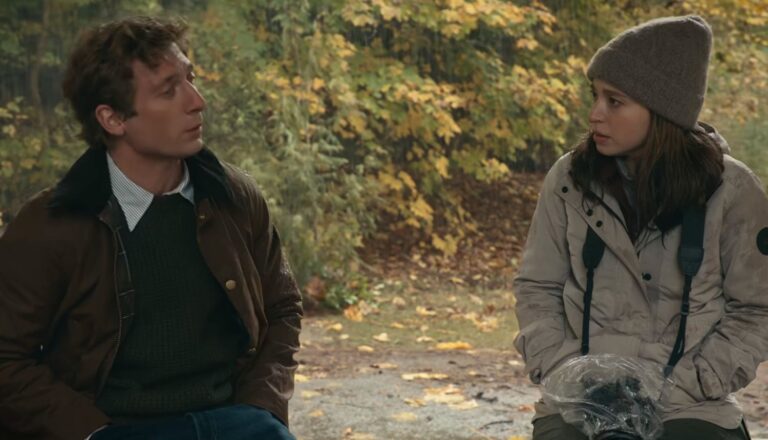


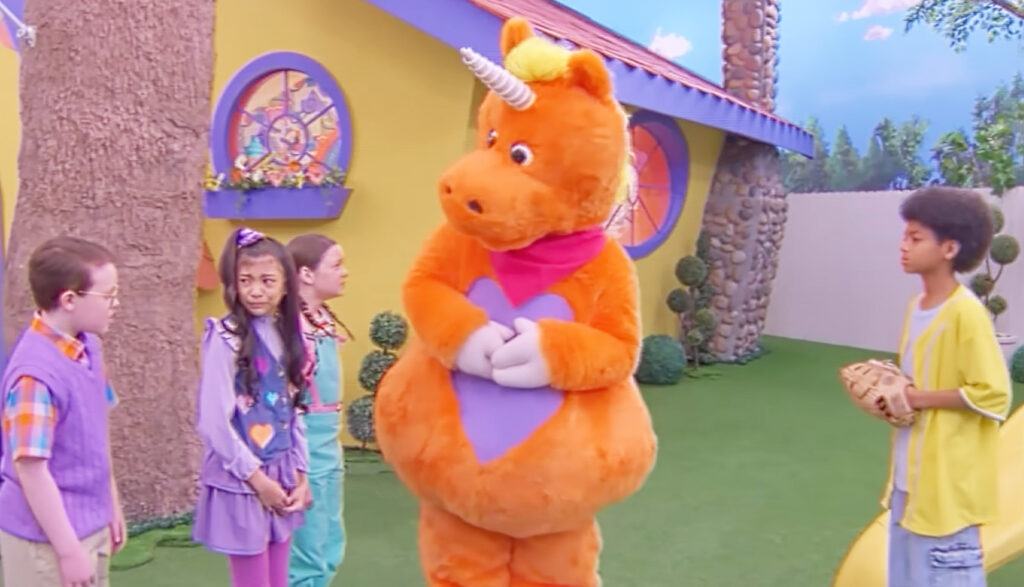
Buddy has only a few positive elements—and a bit more going on creatively than your average slasher flick. Much of the gory violence here is inflicted on children, as well as harsh language and drug use. The films minimal commentary on the predatory nature of some real-life children’s shows is underdeveloped at best—and comes at the cost of the audience seeing kids in uncomfortable and violent situations.
Do you remember children’s programs from a few decades back? The ones featuring a collection of colorfully dressed kids interacting with fun, lively mascot characters? In them, kids sing, dance and learn important life lessons. Typically, the episodes end with the protagonists solving whatever minor inconvenience was thrown their way in heart-warming fashion.
Now, have you ever asked yourself: “What if the kids don’t want to play along? What if the Barney-esque main character handles the children’s insubordination with brutal violence? And what if the kids on the show can’t escape because they’re not actually on the set of a TV show?”
If you have wondered any of those things, I have a movie for you. But also, that’s oddly specific—and pretty dark.
When the child actors on the TV show It’s Buddy realize that the lead of their show, an orange unicorn named Buddy, has less than stellar intentions, they start searching for a way to stop him—or at least escape him.
Meanwhile, in the real world, a married mother of two named Grace is starting to believe that something is missing from her life. The sight of an empty chair at the dinner table, as well as the vacant space on a stick-figure-family bumper sticker lead her to question whether her family is complete. Her frantic outbursts begin to lead her to find a connection with this mysterious kid’s show, It’s Buddy.
Grace’s connection to the series, which has no trace of existence on the internet, might just lead her to the answers she’s looking for—or, they may lead to an unwanted interaction with the violent orange unicorn himself.
[The following sections may contain spoilers.]
While the backdrop of the It’s Buddy children’s show is merely a means to an end—the end being excessive gore—there are a few positive messages within that program. The in-show children learn the value of forgiveness, how to clean up after themselves and what it means to be brave.
In multiple instances, those same kids overcome their fear to help one another. When two of the children, Freddy and Wade, begin to suspect that Buddy may have less than friendly motives, they seek the help of a trusted adult. We hear that Freddy has always had a heart for hurt creatures, and she risks her life to save a few injured characters from the It’s Buddy world.
Grace is a kind mother who is clearly invested in her family. After realizing that something feels off with her mental state, she seeks help through counseling. Grace is willing to put herself in danger in order to help others on a few occasions. She encourages a young girl to speak up about Buddy, saying, “Pretending everything is OK never works.”
After Grace has an argument with her husband, she tells her son that people can love each other and still fight. She bandages up a few scrapes and cuts throughout the film, using two bandages each time so that they can “look out for each other.”
The It’s Buddy TV show seems to exist within its own universe. It would seem that Buddy has some level of magical control over this domain, and multiple instances of characters getting sucked into their televisions to join Buddy seem to hint at some sort of magical connotation. Actors who find themselves within the show are forgotten by people in the real world, and it seems as though the areas they used to inhabit (such as a bedroom) literally morph so that their loved ones forget they ever existed.
That’s part of the reason why Grace feels like something is missing in her life, an intuition that grows while staring at an empty chair at the dinner table. When Grace attempts to explain her strange feelings to her husband Ben, he dismissively remarks that the chair must be cursed.
Dissatisfied with her husband’s nonchalant attitude about these bizarre feelings, Grace hires a “clairvoyant parapsychologist” named Dr. Debora, hoping that the woman can provide some answers. Ben is frustrated at the presence of the “psychic,” who has interrupted their family dinner—although his annoyance seems to stem from his belief that his wife is getting scammed.
Debora’s psychic paraphernalia includes some candles and a small crystal ball. She asks to conduct a séance, though that never occurs. Her search for the “spiritual anomalies” that are plaguing Grace is also cut short.
A mother and daughter’s love for each other proves to be stronger than Buddy’s magic.
In typical kid show fashion, It’s Buddy features some magical elements, including a sentient mailbox, backpack and couch. When the children call on Buddy, he transforms from a small stuffed toy into an adult-sized costumed presence. Magic dancing shoes are a plot point in the fictional series early on as well.
When the kids switch out the lyrics of a happy song to “I hate you,” Buddy transforms into a spikey black scary entity that looks rather demonic.
An older man within the It’s Buddy universe tells a young girl that she has a pretty face. Then his male puppet companion gets jealous, so he passionately kisses the sentient toy.
A young boy tells a few girls that he needs to pee, but he doesn’t want them to see his genitals. (The girls reply in disgust that they don’t want to see his privates either and turn their backs while he does his business.)
For the first fifteen minutes or so, the film sets a sufficiently creepy tone without showing anything overtly gory. Alas, that doesn’t last long: It seems Buddy’s rampage is inevitable, and the movie is intent that audiences see it all.
Multiple children are killed, both off- and on-screen. Buddy impales one kid with his unicorn horn, and we see a gaping hole in the child’s chest a little later. Another kid is seemingly suffocated when he hugs Buddy. A third child gets swallowed whole by the unicorn mascot. Buddy drags one child just offscreen, we hear a struggle and some screams. The child’s friends later find his blood on a book he was reading, causing them to become suspicious about his whereabouts. In another scene, we hear a tussle offscreen and the camera cuts to a shot of Buddy holding down a child as he cuts him with a knife, taunting the kid by repeating, “Why are you cutting yourself?”
Another child gets a small cut on her arm when Buddy pushes her into a tree—a lucky fate in comparison to her castmates.
The adults aren’t safe from Buddy’s wrath either: A woman gets strangled by the orange unicorn, Buddy stabs at least two other adult characters, a man is brutally impaled on Buddy’s horn, and another gets an axe firmly planted in his head.
Non-human, sentient characters also get mutilated—in some instances, Buddy rips them apart as they scream in pain. Mascot characters get stabbed and impaled as well. One gets her head ripped clean off. Another is lit on fire, with half of his face getting burnt to a fleshy crisp. A puppet is thrown into a deep puddle, and he thrashes around as he drowns. Buddy cuts off large fleshy pieces of his furry hide so he can squeeze into a tight space.
When the child actors first become aware that Buddy isn’t all he seems, their discomfort is palpable. And it’s not a stretch to say that Buddy’s behavior feels predatory. He forces the kids to hug him and sing a song at the end of every episode with lyrics that say they love him. (The children later put a violent twist on that song, with lyrics like “stab your heart” and “get an axe, chop off your head.”
In another uncomfortable, predatory scene, Buddy embraces an adult female character, asking her to hug him harder and sing for him. She hesitantly complies, clearly terrified, and while she does, Buddy gropes her clothed behind and licks her face repeatedly.
With the bulk of the film taking place on the set of a children’s show, foul language is held back for a while—until it isn’t. We hear three uses of both the f-word and s-word, a couple of each exclaimed by little kids. We also hear “h—” and a couple misuses of God’s name.
After rebelling against Buddy, the kid actors on his show realize they can say anything they want. And they start throwing out words like “poopy,” “titty,” and “penis.” One kid exclaims, “Bad words are so fun!”
Several children eat the petals of a flower, which put them in a sort of psychedelic trance. An older character who partakes with them seems to have been eating the petals for years, a decision that seems to have taken a toll on his mental state.
While talking with a therapist, presumably for the first time, Grace asks the doctor if she can start taking medication.
A character remarks that his apple juice tastes like a fine wine. Another drinks a beer.
A boy urinates on a flower, a decision that the sentient flower is not happy about.
Grace is clearly struggling with her mental health, but husband Ben does little to try to understand her emotional pain. His attitude toward her is frequently dismissive, and the couple argue loudly within earshot of their kids. Children also bicker throughout the film, being unnecessarily rude to each other on a few occasions. A teen boy continually keeps earbuds in around his mom, who has to ask him to take them out multiple times.
In the last few years, more and more stories have come to light about the underlying abuse of child actors from beloved kids’ shows. There seems to be an unfortunate dark side to some children’s media, a feeling that it seems Buddy is attempting to capture.
Unfortunately, rather than providing any insightful commentary, the film is content walking a tonal tightrope of horror and comedy, never fully succeeding at either.
Compared to other recent movies of the genre, the standout element here is that much of the violence is directed at kids. While the most visceral kills are saved for the unsuspecting adults, multiple children meet bloody ends by the time the credits roll.
Horror aficionados will likely find the clever blend of a squeaky-clean kids’ show with over-the-top slasher tropes to be an entertaining diversion. The film boasts some moments of creativity and a valiant attempt at some heart—usually through Grace’s interactions with the child actors. However, these fleeting positives are not nearly enough to give Buddy a recommendation, especially for families.
Around the halfway point of the film, Grace tells a little girl that pretending something is OK when it clearly isn’t never works. Well, I think that sentiment sums up this movie pretty well.

Jonah Parker’s first interaction with Plugged In came when he was just five years old, after his parents read a review for The Chronicles of Narnia: Prince Caspian and deemed the content too intense for him. What started out as a contentious relationship between Jonah and a staff of reviewers who knew not of his existence would later turn into an appreciation for the site’s ability to present media content in a way that was accurate and fair. Jonah enjoys analyzing how our entertainment echoes the creativity of our Creator while finding glimpses of Biblical truths within every genre. He believes that Robert Pattinson’s Batmobile is the perfect mix of cool and practical.