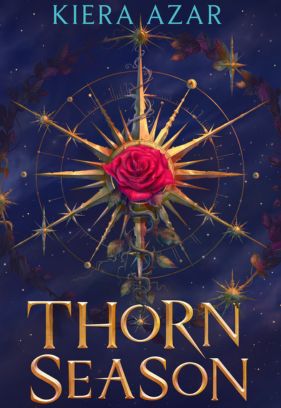
Alissa must act quickly to determine who in the royal court of Daradon is holding a powerful tool which, in the wrong hands, could lead to the extinction of magical “Wielders,” such as herself.


The Kingdom of Daradon is filled with unrest. Citizens born with the ability to wield a magical specter, an invisible tendril of magic that extends from within themselves, are being hunted down and killed. These brutal executions are being carried out by a group aptly named the Hunters, and with the number of Wielders being killed rising every month, Alissa is feeling more anxious than ever.
Alissa’s status as a noblewoman has kept her ability to wield magic hidden for the first 18 years of her life, but all that is about to change. The compass that Hunters use to sniff out their prey has been missing for a while now, which begs a few questions: How have the Hunters been tracking down Wielders without it? Who has the compass now, and what do they plan to do with it?
As Alissa joins the royal court, she quickly catches the eye of a few potential suitors, but not every royal is in Daradon for the right reasons. If Alissa isn’t quick, she may not be the first to locate the compass; if she’s sloppy, her secret power will be found out.
Figuring out who to trust is imperative for survival. But as Alissa works to discern the true intentions of the other royals, she begins to wonder if she might be falling for one of them—and that could threaten to expose her secret.
None.
Frequent mentions of gods (and sacrifices to appease those gods) abound in the book, but the specifics are vague. No further belief system is mentioned.
Magic is at play here, but more as a superpower than any heavy spells or witchcraft. The book doesn’t delve into anything especially dark or spiritual as far as its magic use goes.
Almost every main character is a royal of some sort. King Erik uses his power for selfish ambition and has made the decision to murder many people. Alissa’s father also makes some reprehensible decisions, but he does so with the intent to protect his daughter.
With the conflict of Wielders and Hunters at the forefront of the narrative, violence is a constant threat. Characters are stabbed, punched and thrown around often. People are kidnapped, drugged and, in some cases, tortured. The Wielders use their specters to inflict a fair amount of damage as well. The magical tendrils smack into people and even choke a few.
Characters share stories of how Wielders are being killed, including one where dozens of Wielders were shot between the eyes with arrows in a mass execution. We learn one man died after his heart was removed. Someone describes the public skinning of another man.
If some rulers had their way, all Wielders would be killed in a mass genocide. A character is forced to kill at a young age to prove his loyalty to the Hunters.
Mild profanities include infrequent uses of “h—,” “d–n,” and “b–tard.”
Daradon’s legal drinking age seems to be 18, and characters that fall into that age range frequently drink at parties. However, one character recalls sipping brandy with her friend before they were of age.
While there aren’t any explicit descriptions of intercourse, there is a sexual undertone to much of the book. Characters passionately kiss and get handsy with each other—sometimes out of genuine connection, sometimes to deceptively seduce. There are many descriptions of male characters’ chiseled physiques and female characters’ breasts. Discussions of secret affairs and infidelity are also common.
While much of the explicit romance is between heterosexual couples, the book winks at same-sex attraction as well. A character is described as preferring beauty in her romantic partners rather than a specific gender. A female character has a crush on another woman, although its only briefly mentioned.
None.
Thorn Season will likely scratch the young adult fantasy itch that so many teen readers seem to be feeling these days. The world of Daradon has been crafted with care, and the writing is strong—almost a dozen named characters weave in and out of the narrative with ease. For those already bought into the genre, readers will likely grow invested with the twists and turns, back stabbings and betrayals that Thorn Season has to offer in royal capacity.
The book is less sensual than similar offerings in the subgenre, but that isn’t exactly an endorsement. It would seem that the rotating cast of suitors all pining for Alissa’s hand feel the need to drown her in thinly veiled innuendo. She returns some flirtatious attention to a few of them as well, sometimes using her own allure for personal gain.
The book also touts more violence than one might expect. Sure, you have the typical sword clashes, kidnappings and uses of magical powers that populate the genre. But readers will also find themselves wading through descriptions of torture, attempted genocide and brutal killings.
On top of these issues, it can be tough to root for Alissa. The slippery morals of those around her cause her to act out as well, sometimes in violence. Her actions may push readers to their limits, leaving them wondering if she is still a hero worth cheering for by the end of the book.
Similar to the rules of court, only older royals should find themselves slinking around the literary halls of this castle.
You can request a review of a title you can’t find at letters@pluggedin.com.
Book reviews cover the content, themes and worldviews of fiction books, not necessarily their literary merit, and equip parents to decide whether a book is appropriate for their children. The inclusion of a book’s review does not constitute an endorsement by Focus on the Family.
Jonah Parker’s first interaction with Plugged In came when he was just five years old, after his parents read a review for The Chronicles of Narnia: Prince Caspian and deemed the content too intense for him. What started out as a contentious relationship between Jonah and a staff of reviewers who knew not of his existence would later turn into an appreciation for the site’s ability to present media content in a way that was accurate and fair. Jonah enjoys analyzing how our entertainment echoes the creativity of our Creator while finding glimpses of Biblical truths within every genre. He believes that Robert Pattinson’s Batmobile is the perfect mix of cool and practical.