I.R.L.

Credits

Age Range

Publisher

Awards

Year Published

Reviewer

Bob Hoose

Book Review

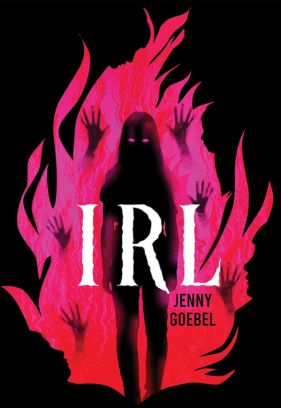
When Lucy’s family moved to rural Alaska, she had to attend school online because of the winter season. Now it’s spring, and she gets to meet her new friends in person. But when Lucy arrives at school, all she finds is a burned-out building and a small graveyard with some very familiar names on the headstones.

Plot Summary

The fact is, Lucy was pretty happy when her family moved to the backside of nowhere in rural Alaska. After getting bullied throughout fifth grade back in San Francisco, being anywhere else in the world was worthy of a big thumbs-up.

Lucy’s mom had taken a job as the head scientist at a secluded research facility. And since Lucy’s dad owned a small business back in San Francisco, he could easily stay connected with work online while others ran the store. Not only that, but their new, lushly wooded home was as scenic and beautiful as an Ansel Adams photograph.

Of course, there was one drawback: winter.

Lucy and her parents moved into their nice little Alaskan cabin just before the snow hit. The roads soon turned treacherous, meaning that for the next several months Lucy would have to take her sixth-grade classes online.

That wasn’t so bad really. There were only 12 kids in her class and meeting them online was a great way to ease into the new setting. Plus, the kids were all … great! Each one of them was welcoming and seemed excited that Lucy was joining their group. They kept asking about her life back home, oohing and ahhing over the things she told them.

What a completely different experience that was. It was kinda wonderful actually.

Now, however, the weather is turning. It’s still pretty snowy, but things are beginning to melt and soften. Frankly, Lucy is really excited about meeting everybody IRL (in real life). And, well, a little nervous, too.

I mean, seeing her new friends in person will be awesome. In their last zoom call together, she was even kinda flirting with Jamie, one of the guys. And she’s never done that before. But still, maybe she’s a little gun-shy when it comes to talking to people face-to-face.

Anyway, when the day arrives, Lucy gets dressed early and gets her parents to let her snowshoe her way over to the school on her own. That’s what all the others are doing, and Lucy wants to fit in right from the start. So she sets her GPS for the short trek and takes off.

Something is odd though. As Lucy draws closer to the school, the surroundings are quiet—too quiet. In fact, there are no footprints in the snow. The school has been closed all winter, but wouldn’t someone have gone this way before she did?

Lucy breaks through the last patch of trees and skids to a stop when she sees the building up close. There’s the sign that reads White Pine Secondary School. But it’s crooked and hanging from a single nail. The faded paint is hardly legible. But it’s the building that makes Lucy’s heart plummet.

The school is clearly abandoned—and has been for a very, very long time. Water is dripping in through a gaping hole in the roof of the obviously burnt-out husk. The GPS map on Lucy’s phone says this is the place, but it can’t possibly be correct, can it?

Or is this a prank? Is this all set up to make her look foolish? Lucy quickly scans the footprint-free area. Are the kids hiding somewhere nearby, ready to jump out and call her names? It seems so elaborately hurtful, though. Were all 12 of them mean bullies?

That’s when Lucy spots the small cemetery next to the school. It holds what looks like 12 snow-covered headstones.

She looks, takes a stuttering step backward, and listens to how deathly quiet this awful place is. That’s when Lucy Bell-Rodriguez begins to feel afraid.

Christian Beliefs

None.

Other Belief Systems

The main focus of this book centers on a group of ghosts that are ostensibly seeking revenge for a past wrong. But as the story unfolds, that motive and the spiritual force that empowers these spectral entities become less distinct and definable.

On the other hand, you might say that the author is using this ghost story to allegorically comment about the negative impact of relying solely on digital interactions to make our assessment of people versus in-person connections.

Authority Roles

Lucy’s mom and dad love their daughter, but they are both pulled away by their jobs. Tween Lucy is then left to deal with her troubles—and deadly dangers—on her own. In fact, Lucy’s mom is so distracted that she purposely pushes her (formerly bullied) daughter’s concerns (about once again being bullied) aside with casual bromides.

On the positive side, Lucy uses a special method her dad once taught her to calm down and gain control during a near-panic-attack moment.

An elderly man named Harold is the grumpy and gruff security guard at the research facility where Lucy’s mom works. At first, he seems like a man who might be helpful to Lucy’s ghost-plagued situation. But with time, we find that he’s self-focused and selfish.

Most of the other characters we meet are deceptive and untrustworthy.

Profanity & Violence

[Note: This section contains spoilers.]

Lucy recounts ways that students at her former school pretended to be her friend and then publicly shamed her in painful ways. And at first, Lucy fears that the new friends she meets in online school might be similarly mean-spirited. But their “spirit” is completely different.

The 12 kids in Lucy’s online class are actually children who all died in a tragic school disaster a century ago. This massive fire was caused by a 13th student, and the 12 victims want to draw in Lucy to fill that 13th position: They want her murdered and buried in the small cemetery that holds their own bodies and headstones. By the end of the story, they’ve caused several violent situations designed to kill Lucy—including starting a pair of fires, causing a large tree branch to fall and tipping over a huge turbine.

Those ghostly attackers also send a living person to kill and bury Lucy. But the potential killer falls into a rushing river and perishes. Lucy’s mom protects her and takes the brunt of a falling heavy object. It knocks Mom unconscious and pins her to the floor. Lucy is able to free her mom and save her life.

Lucy leaps out of a moving truck. She lands in a snowbank, but still gets banged up and bruised—and she fears her leg might be broken.

Sexual Content

Lucy and a guy flirt with each other online.

Discussion Topics

What did you think of this story? Do you believe in ghosts? Why do you think we are drawn to the idea of communicating with ghosts?

Did you know that the Bible includes mentions of ghosts? Those references in scripture generally don’t portray ghosts as dead spirits but as demons or evil spirits. Leviticus 19:31 makes it very clear that we should steer clear of such things. And it strongly forbids consulting the dead. “Do not turn to mediums or necromancers; do not seek them out, and so make yourselves unclean by them: I am the Lord your God.”

Additional Comments

Jenny Goebel’s I.R.L. strives to be a ghost story with a Twilight Zone-like vibe. And that ghosty set-up has earned this middle grade book some buzz in reader circles. However, the story’s resolution feels rushed and overpacked with creepy moments and heated action sequences. An uplifting resolution? Not so much.

I.R.L. addresses the destructive nature of bullying and the fear and trauma bullying can create. It doesn’t, however, give young readers much of a takeaway on the subject. And in that context, Lucy’s parents are shown in a fairly negative light.

You can request a review of a title you can’t find at letters@pluggedin.com.

Book reviews cover the content, themes and worldviews of fiction books, not necessarily their literary merit, and equip parents to decide whether a book is appropriate for their children. The inclusion of a book’s review does not constitute an endorsement by Focus on the Family.

Bob Hoose

After spending more than two decades touring, directing, writing and producing for Christian theater and radio (most recently for Adventures in Odyssey, which he still contributes to), Bob joined the Plugged In staff to help us focus more heavily on video games. He is also one of our primary movie reviewers.