



Now more than ever, our culture has a one-track mind when it comes to buzzy topics. Anything social media can get its grubby hands on to spark debate and controversy—rage-baiting viewers into a strong response to like, comment and reshare a post—it will.
Your favorite social media platform becomes an echo chamber of annoyance that begs users like you to interact as quickly as possible, not taking the time to fact-check any post that wanders onto your feed. After less than a minute, a like has been given, an angry sentence or two hastily written to pollute the comment section. And then a reshare ensures that all your followers are now sucked into the same cycle of reactionary response that stole away your own time.
All that’s left to do is repeat this pattern until your daily average of over two hours of scroll time is fulfilled—surely leaving you feeling optimistic about the world, ready to take on the day and love your neighbor as Jesus would!
Person or Product?
Obviously, that is a very cynical view that focuses on the worst that social media has to offer. Like many tech topics we discuss here at Plugged In, social media is not inherently evil: It’s a tool that can be used for good or for bad.
If used responsibly, social media can connect people whose distance makes it hard to stay in touch. It can be an accessible source for information. And one would hope that with billions of users on these platforms, with how easy it is for anyone to post a picture or video online, some darkness has been brought into the light—exposing truth at a scale not before possible.
However, the rules of social media have changed in the last decade. While I’m sure many of you are relatively in the know on how these platforms turn people into products, the heads of these sites don’t view their average constituent in such a positive light. In fact, I’d argue most tech titans prefer you behave like the type of user I described in the opening of this blog. Ideally, for the sake engagement on these platforms, you should be addicted, angry and misinformed.
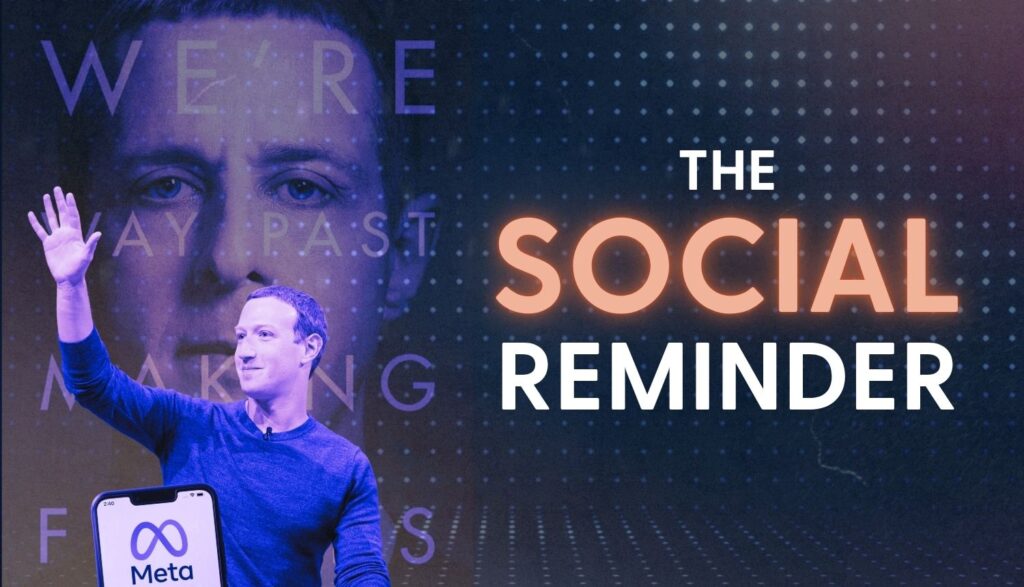
Acclaimed writer (and less acclaimed director) Aaron Sorkin’s The Social Reckoning—a sort of spiritual successor to 2010’s The Social Network—highlights this view. The film serves less as an exposure to new information, though, and more as a reminder of what we already know.
Meta’s Facebook (as well as its competitors) is designed from the ground up to be as addicting as possible. How many times have you closed Instagram, just to reopen the app moments later out of sheer habit? Few people would be surprised to know that depression rates almost double in teens who frequent these apps for three or more hours a day—and yet, social media feels imperative to everyday life.
On top of an algorithm that rewards negativity above all else, critics of Facebook have also accurately pointed out that much of the information circling these sites is false. A text card at the end of The Social Reckoning tells us that around 43% of adults get their news from social media—a staggering number considering Facebook’s aversion to fact-checking information.
In the film, Mark Zuckerberg (played by actor Jeremy Strong) argues that “Facebook isn’t the referee. We’re the public square.” But if the social media mogul isn’t trying to ensure the information prodding a reaction out of you is correct, who is?
The answer: no one.
Reality Check
In a media landscape currently obsessed with artificial intelligence, it can be easy to forget that the ongoing issue of social media addiction hasn’t gone away—it’s just been pushed to the sidelines by newer, flashier topics. If users don’t enter these digital minefields aware of how developers have designed these apps in a way that can easily become harmful, overuse of them can become a slippery slope.
Don’t forget that these companies view their users as products. Your time and, potentially, emotional well-being are nothing more than a commodity for these platforms. Enter into these digital landscapes prepared to question the information you’re being fed, even if it seems like it might be from a reputable source. Know when to set limits on the amount of time you’re spending interacting with potentially negative or rage-inducing content.
It’s not just kids and teens who need limitations on screen time: It’s all of us.

Recent Comments