


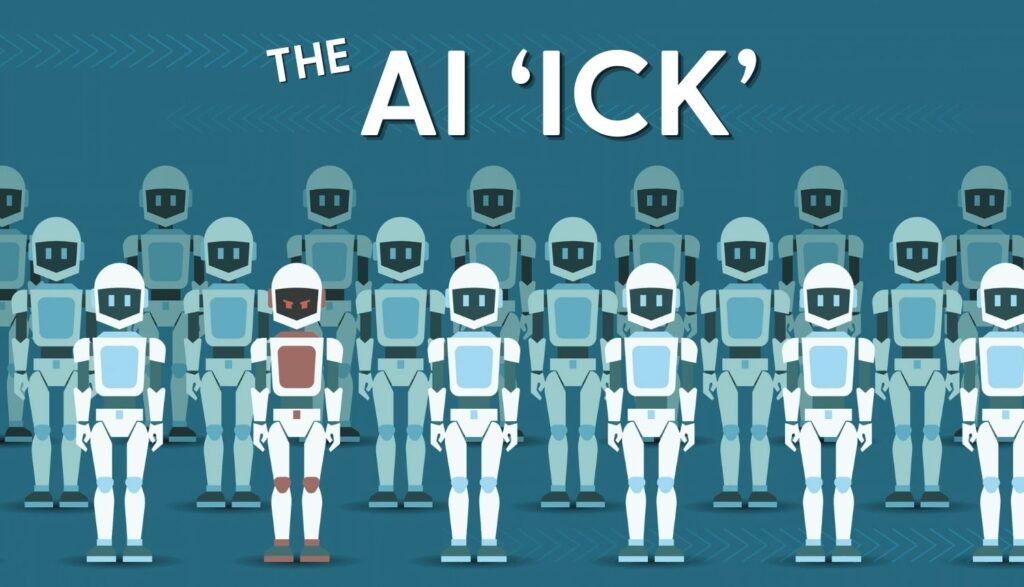
They say familiarity breeds contempt. In the case of artificial intelligence, that seems to be true.
More people know about AI than ever before. According to Gallup, approximately 70% of Americans say they are either “somewhat or extremely knowledgeable about AI,” an increase from prior years. Despite that increasing familiarity, those same respondents are now less comfortable with the technology, with 39% saying that they feel AI does “more harm than good.”
Those that think AI does equal amounts of good and bad landed at 52% which, for those of you counting at home, leaves only 9% of Americans who believe the technology has more benefits than drawbacks.
Not exactly a resounding endorsement.
The Right Tool for the Right Job
To be fair, some of the consternation is tied to specific areas that have become threatened by AI. Last year, Pew Research polled people on their view of AI’s impact on individuals and society as a whole. When asked if AI would make a person’s ability to “solve problems” better or worse, reactions leaned negative but were more split: 29% better to 38% worse. But when asked the same question in regard to creative thinking (16% better to 53% worse) or forming meaningful relationships with others (5% better to 50% worse), the gap widened significantly.
Plugged In has said it before, and it’s a good bet that we’ll say it again: AI is a tool, and as such, not inherently good or bad. Like any tool, the problem comes from how people use it. As the research shows, many Americans believe that AI is being used in the wrong way, i.e., to replace fundamentally human endeavors—like relationships and creativity—with slop.
‘Like a Prayer’ and AI Pushback
It’s not only those living in the United States who are developing the AI “ick,” though.
Earlier this year, a cover of Madonna’s 1989 hit song “Like a Prayer” rocketed up all the way to No. 2 on music charts, causing significant backlash. Why? Because the cover song had been made using AI. In response, the Australian Recording Industry Association (ARIA) banned all songs from music charts that aren’t “substantially human made.” While ARIA allows for some AI to be used in music creation moving forward, they are demanding that human artists be the dominant force in the creative process.
Another example of recent AI pushback comes courtesy of the European Union. Through the EU Kids Act, the EU announced its intention to prohibit AI chatbots “from simulating emotions or interpersonal relationships” during interactions with minors. The goal of this “AI emotion ban” is to safeguard children from developing an unhealthy (and, obviously, artificial) relationship with AI chatbots. While we have recently discussed whether kids even want AI, they’re still at a particular risk to build parasocial relationships with AI.
Reigning in the Wild West
These examples highlight a growing trend across the globe—people acknowledging the capabilities and risks of AI tools and working to moderate its use. These last few years since the introduction of AI tools to the mainstream has felt like the Wild West, as institutions have scrambled to leverage this emerging technology and incorporate it into (seemingly) all facets of life.
However, this growing pushback is a positive development. It marks an upswell in critical thinking about AI—where it should be used, and where it would be better left out.
Hopefully, that will lead us to more responsible and ethical solutions for the use of AI. Because for many, familiarity with artificial intelligence has left them feeling more than a little bit contemptuous and cynical.

Recent Comments