Dark Matter
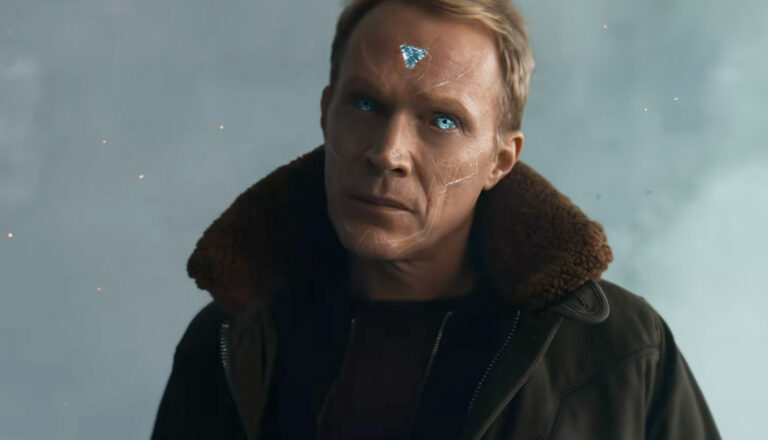
Dark Matter reminds us that our choices define us. They make us who they are. But this show makes some poor choices itself.
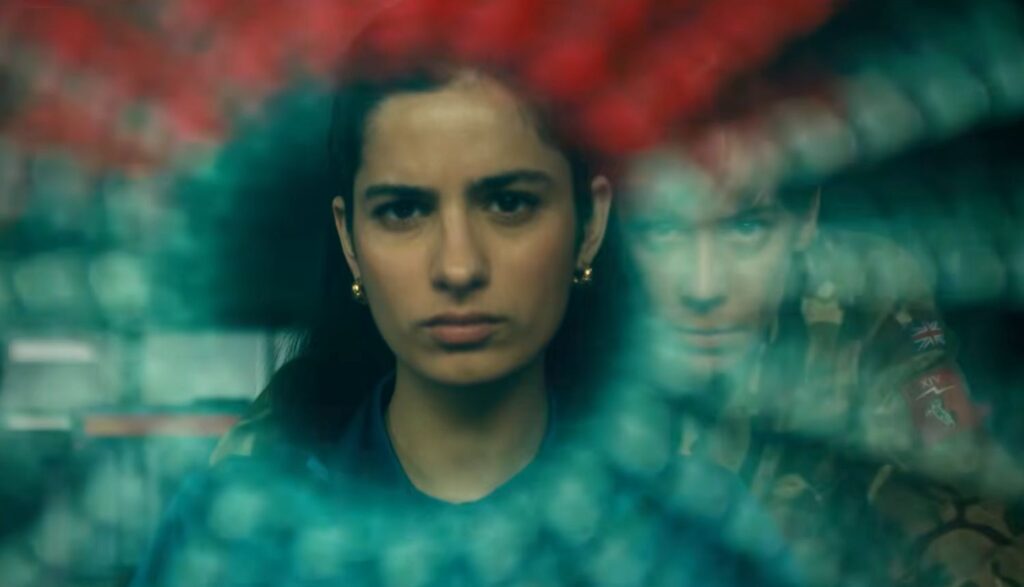
Saara’s internship with the British Government Communications Headquarters was going to be stressful any way you sliced it. Working to prevent cyberattacks while your coworkers only see you as a temporary annoyance is an uphill battle.
When a cyberattack aimed at the U.K. government in its entirety happens within her first week on the job (with the threat of more on the way) Saara quickly realizes that a healthy work-life balance is completely off the table.
As her family experiences a tragic death, Saara must balance her grief with her new role as she’s thrust into a race against time to figure out who the attacker is, what nation they represent and when they will strike next.
As the series picks up for its sophomore outing, the focus has partially shifted from Saara onto Chief of Operations Danny Patrick. He hopes to deescalate what has morphed into an impossibly tense situation with multiple nations on the brink of war.
But when it’s clear a mole is within their ranks, Danny and Saara begin to question who they can trust.
The Undeclared War is nothing if not ambitious, but its attempt to create an engaging digital political thriller doesn’t quite succeed in delivering one. While veteran actor Simon Pegg is giving it his all as Danny Patrick, he doesn’t become the series’ central character until Season 2—though to the show’s credit, that shift does make the second season’s plot significantly more entertaining.
That said, the script still has a few harsh profanities (including the f-word) hidden within its lines of code. It is also notable that while Saara herself does not seem to be a woman of faith, her family members are Muslim. But as the series shifts her character out of the spotlight in Season 2, that plot element lessens as well.
However, even with Season 2’s quality boost, The Undeclared War consistently struggles to make endless scenes of its characters typing furiously on their computers feel investing. I would imagine that those who will be most interested in the series are viewers with some semblance of knowledge of how coding works—yet those same viewers may also criticize how inept some characters’ decisions are.
All of this begs the question: Who is this show for?
(Editor’s Note: Plugged In is rarely able to watch every episode of a given series for review. As such, there’s always a chance that you might see a problem that we didn’t. If you notice content that you feel should be included in our review, send us an email at letters@pluggedin.com, or contact us via Facebook or Instagram, and be sure to let us know the episode number, title and season so that we can check it out.)
Having successfully discovered who was responsible for the cyber warfare of Season 1, Danny and his team come to the haunting conclusion that someone from their own ranks must have been leaking information. As tensions escalate, the only way to prevent a full-on war is to find the mole and attempt to stop a few trigger-happy government officials from approving full on retaliation.
Once again, the threat of war is intense, but very little actual violence is seen. A man is forcefully thrown inside a car. Danny is forced to make split-second decisions about whether perceived attacks are real or merely tricks intended to escalate the situation.
Language includes single uses of both the f-word and s-word. Christ’s name is misused once, along with mild profanities, such as “p-ss” and “ballsy.”
A man lies in bed with his wife, fully clothed. The two cuddle and smooch, although that’s as far as viewers see of the intimate moment. A character remarks that people will betray their friends for a variety of reasons, listing sex and love as two of them.
Saara wins a coveted internship at Britain’s GCHQ (Government Communications Headquarters) and quickly finds herself fighting on the front lines of a cyberattack against the U.K. After she’s relegated to what was supposed to be a menial task, Saara finds evidence of a second attack on the horizon—this next one being significantly more catastrophic.
No explicit violence is seen, although discussion of the real-life consequences of malware attacks comprises the majority of the episode. As for the first blow, it was strategically placed to reveal the power of the hacker by only causing a few casualties.
We see a man’s lifeless body in a hospital bed, and we’re told that he died after suffering an accident on some train tracks. His family grieves, and in their mourning, emotions get out of hand. Hurtful jabs are thrown around, but the frustration is purely verbal.
Language is harsh but infrequent, including a use of the s-word and a couple of f-words. Single uses of “crap,” “p-ss” and “h—” round out the profanities.
While it would seem that Saara is not a practicing Muslim, her family members are. Her sisters wear hijabs, and there is brief discussion of how a death in their family should be handled within the context of their traditions. Due to the color of her skin (Saara’s of South Asian descent), Saara inquires if she was hired at GCHQ to check a diversity box.
Saara sleeps in the same bed as her boyfriend, although nothing explicitly sexual occurs.
Jonah Parker’s first interaction with Plugged In came when he was just five years old, after his parents read a review for The Chronicles of Narnia: Prince Caspian and deemed the content too intense for him. What started out as a contentious relationship between Jonah and a staff of reviewers who knew not of his existence would later turn into an appreciation for the site’s ability to present media content in a way that was accurate and fair. Jonah enjoys analyzing how our entertainment echoes the creativity of our Creator while finding glimpses of Biblical truths within every genre. He believes that Robert Pattinson’s Batmobile is the perfect mix of cool and practical.

Dark Matter reminds us that our choices define us. They make us who they are. But this show makes some poor choices itself.

‘LEGO Star Wars: The Mandalorian’ transforms the originating, live-action, Disney+ show into a funny, sweet and kid-friendly special.

‘Leanne’ models the sitcoms of yesteryear, though its frequent sexual banter and poor views of marriage may leave families saying, “I don’t.”

Ash Ketchum begins his journey of becoming a Pokémon master. Pokémon battles are frequent, yet permanent injury is seemingly nonexistent.