TV Series Review
Christian history has seen many tipping points—moments where things after looked very different from things before. The Council of Nicaea defined orthodox Christian doctrine from 325 A.D. forward. The invention of the printing press in 1456 gave regular ol’ Christians access to the Bible. The Protestant Reformation, beginning in 1517, shook things up quite a bit, too.
And then there was LoveSong.
OK, so maybe the band’s 1970 formation might not be quite the equivalent of the Gutenberg Bible or the 95 Theses. But did it change things? According to this documentary, it sure did.
Brand New Song
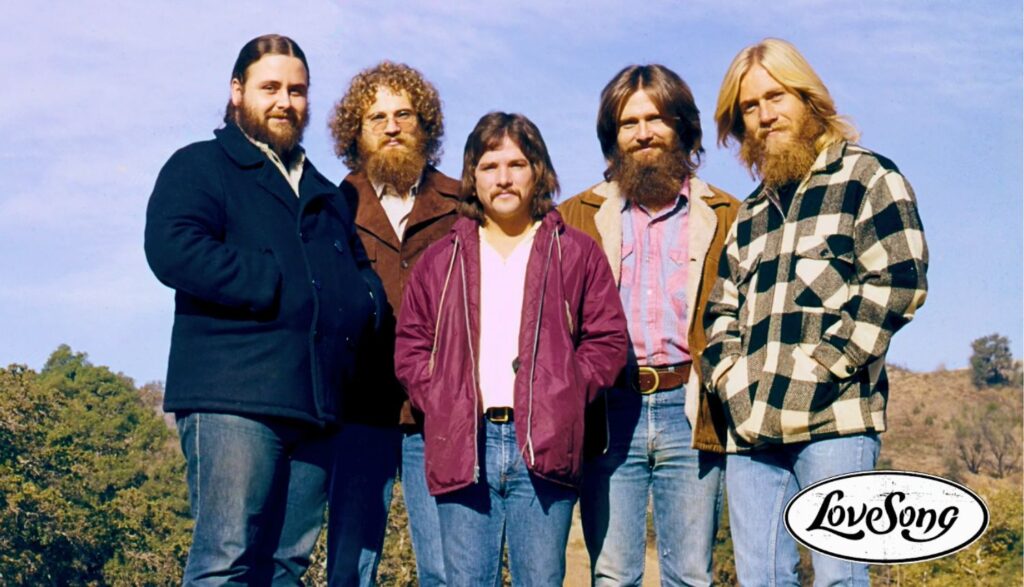
A Band Called LoveSong: The Music and Movement of the Jesus Revolution chronicles the rise, the music and the massive footprint of, well, a band called LoveSong. Created by a bunch of one-time drug-using hippies looking for something better, the group turned its focus on Jesus and, in so doing, helped change the face of Christian music forever.
The three-part documentary, now playing on Amazon’s Prime Video, focuses on LoveSong’s three founding, core members: Chuck Girard (who died in 2025, shortly before the documentary was released), Tommy Coomes and Jay Truax. All played in other bands before LoveSong and rubbed elbows with some of the great secular acts of the day. All became enamored of the 1960s-era counterculture—and the drugs that went along with it. They (along with Fred Field and John Mehler) formed LoveSong not as a Christian band, but a secular one.
But then the members ran headlong into the then-fledgling Jesus Movement and its epicenter, Calvary Chapel Costa Mesa. They heard about the charismatic hippie preacher Lonnie Frisbee. They listened to Calvary’s deceptively hip pastor, Chuck Smith. And they discovered what they’d been searching for all along: Jesus. And they wanted to share that truth with whoever was in earshot.
Technically, LoveSong didn’t stick around long. By 1973, the band was turning off its amps. But the band’s influence is, in some ways, beyond measure. It inspired Christian musicians to start their own bands and fans to dive into ministry. It helped lead countless people to Christ. And according to the doc, it helped change the face of Christian music.
Before LoveSong, most church-goers sang out of hymnals while an organist played along. Many—perhaps most—Christians couldn’t believe that a scruffy, long-haired, bearded, guitar-playing “hippie” could be a follower of Christ.
“We didn’t understand that people were afraid of us,” Coomes says during the doc.
Now, many of us worship in churches with drums, electric guitars and radio-ready songs. The band set the stage for what became known as Christian Contemporary Music—so much so that CCM’s own encyclopedia declares LoveSong “the most important Christian rock band of all time.”
Changes
As such, A Band Called LoveSong serves an important purpose in introducing and chronicling this “most important Christian rock band.”
The band’s core members—Girard, Coomes and Truax—become our guides, regaling viewers with fun stories and backstage insights. They’re joined by the voices of others who had a hand in the band’s success: former members, producers, preachers and more. And we also hear from people—dozens, it seems—who were deeply impacted by the music of LoveSong and the Jesus Movement of the early 1970s.
It’s an engrossing look at these talented, faithful musicians. And, in a way, the documentary seems to lean into the vibe of the Jesus Movement itself. In trying to capture the era’s fervent sincerity, it may cause secular or half-believing viewers—trapped, of course, in our own scary and cynical age—to wonder whether Jesus really might be the answer. And as if in answer to that question, one of the doc’s interviewees even serves up something akin to an altar call toward the end.
And at the center of it all is LoveSong’s music—their tight harmonies, their insightful lyrics, their flat-out musical chops. You can see why they got so popular: They were good.
But just as LoveSong’s members hardly lived perfect lives before coming to Jesus, the doc comes with a few issues, too—understandable ones, but worth noting all the same.
To illustrate the 1960s counterculture from which the band came, we see clips of people smoking and drinking, along with images of marijuana joints and pills. Band members talk about their own experiences with drugs—stories that are critical to the doc but might make some families uncomfortable. We hear references to the casual sex vibe of the 1960s, too, and we hear one questionable use of God’s name.
If the doc has a narrative weakness, it’s in its near-hagiographic treatment of the band. Once LoveSong comes together and its members commit to Jesus, there’s nary a bump to be felt. The band being apparently “anointed” by God is mentioned again and again, but I’d imagine that even those so gloriously anointed would experience moments of doubt and pain.
But those are the only quibbles regarding this strong, thorough and often incisive three-part documentary—one that both recalls LoveSong’s legend and introduces it to new fans.
(Editor’s Note: Plugged In is rarely able to watch every episode of a given series for review. As such, there’s always a chance that you might see a problem that we didn’t. If you notice content that you feel should be included in our review, send us an email at letters@pluggedin.com, or contact us via Facebook or Instagram, and be sure to let us know the episode number, title and season so that we can check it out.)