Game Review
Meccha Chameleon is a new PC party game—reportedly developed by a Japanese two-person, indie team—that splashed on the scene with a million copies sold in the first four days after its release. It’s sort of like a quick multiplayer game of hide-and-seek. And the title’s popularity is seemingly growing by the day.
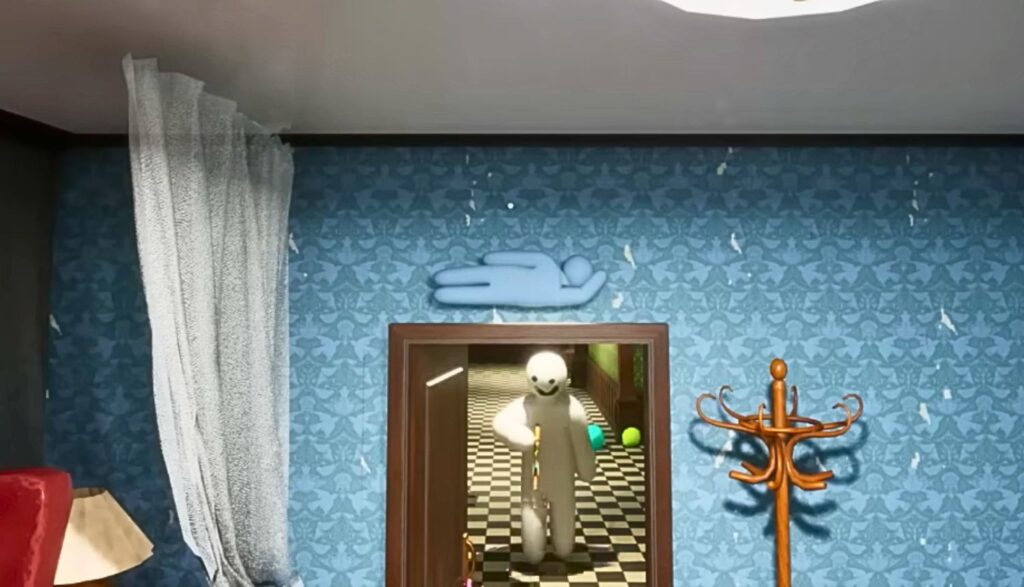
Meccha Chameleon’s game concept is fairly simple and straightforward: Your group of players is divided into hiders and hunters. The hiders have a group-determined time limit to quickly explore their map and figure out how to blend into it. And then the hunters walk about in an attempt to find and shoot any hidden players, eliminating them from the round before the clock—or their bullets—runs out.
Now that may sound a lot like some other indie games you’ve heard of, but the difference is in the details. For instance, in Meccha Chameleon you don’t become an object in a room or try to hide completely out of sight. Players here start out as a basic white avatar and have to use a simple tool to paint themselves into the map’s scenery while staying out in the open.
You only earn points in Meccha Chameleon when you’re in the direct line of sight of any given hunter without them actually noticing you’re there. You can plaster yourself against a painting hanging on the wall and try to match its design. You can stand in front of a statue or sit on a couch and try to paint/match the color and textures of the objects behind you. Etc.
The challenge can be ratcheted up by shortening the amount of time that the hiders have to paint themselves into place, or limiting the number of bullets that the hunters have to fire. And, of course, the complexity of a chosen map comes into play, too.
If, for instance, a map is cram-packed with many objects or filled with abstract color splashes, that can give hiders an advantage. Hunters only have a certain amount of time and might quickly slide past a well-painted character in a cluttered setting.
On the other hand, if a match takes place in an art gallery filled with famous works of art, that will pressure the hiders to be all the more artistically creative. (My personal lack of painting skills betrayed me repeatedly.) Trying to perfectly match a woodgrain or duplicate a painting’s face or motif is tough.
Meccha Chameleon is sold through Steam and then downloaded to your PC. Players can go into a map on their own to practice their art skills. However, this is an online multiplayer game. It will require an internet connection. You can play either on a private server lobby with friends or in a public room, interacting with random gamers.
POSITIVE CONTENT
The game is fun and designed for quick play and laughing interaction with others. There’s no story to work through and no built-in content issues to worry over. …
CONTENT CONCERNS
… However, this is an online game that demands verbal communication with others to enjoy the multiplayer action onscreen. Hiders watch the progress of the hunters, comment with other players and even whistle to get hunters to stay in areas where hiders can rack up more points. That constant interaction can also result in unwanted language and potentially inappropriate interactions when playing with random strangers.
The game’s official community servers and Discord channels lack any active human moderation, which opens the door to that potentially toxic behavior.
Hunters also shoot at the hidden players. (Instead of showing graphic damage, however, hitting a camouflaged hider simply eliminates them.)
In addition, there’s the question of the game maps. The basic game comes with five maps, but there are a wide variety of community-created maps to use. Those maps don’t cost anything, but there have been instances of players being reported for creating or hosting custom maps that contain offensive symbols and imagery. (The wisest choice for younger gamers would be to host their own matches or stick to private lobbies with friends.)
GAME SUMMARY
Meccha Chameleon is a viral multiplayer game that has taken the gaming community by storm. And it’s generally laugh-worthy fun. But problems with offensive community-created map images, unmoderated servers and always-on voice chats should give parents of younger gamers pause.