Episode Reviews
June 5, 2026—S1, E1: “Fingers and Toes”
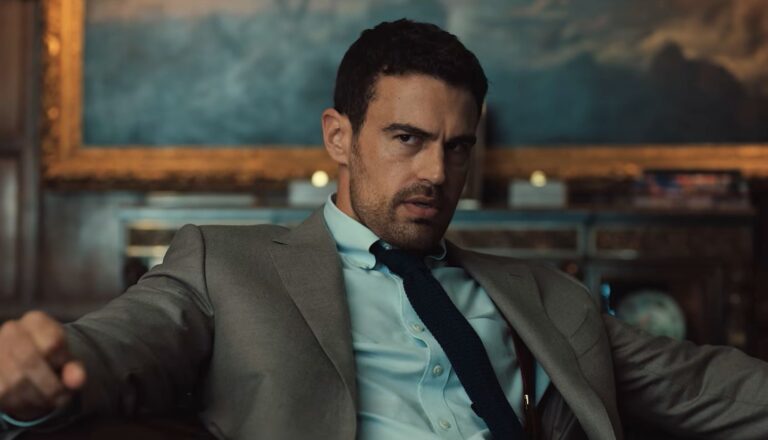
Tom and Anna Bowden seem to be living the best of lives, what with their huge house, two kids and one pretty little (and presumably doomed) housecat. A local news outlet interviews Anna because of her charity work. And while the reporter tries to sneak in a question about the trial of Max Cady—a drama now 17 years in the past—Anna is able to just wave it away.
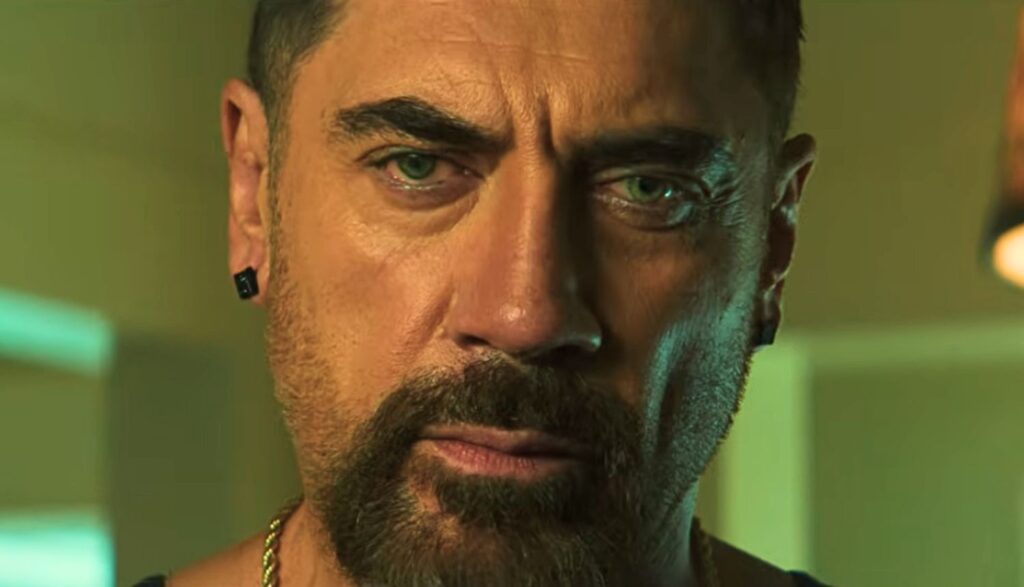
But when Cady shows up to a fundraiser for Anna’s charity, his presence is not so easy to ignore. Cady takes the microphone and encourages people to write generous checks to the organization—an organization dedicated to helping release people who have been wrongly incarcerated, just like Cady alleges he was. But Tom and Anna believe that Cady’s goodwill is a cover for something far more sinister. And they might well be right.
Cady’s one-time mistress kills herself onscreen—but it takes two bullets to complete the deed. She sticks the gun in her mouth and pulls the trigger once. (The camera films the scene from the back of the woman’s head, and we see her head fall with a thump on the kitchen table.) But when her phone begins to ring, the woman revives—spitting blood and what appears to be a tooth out of her mouth. The woman answers the phone and talks to whoever it is on the other line. “It hurts,” the woman says. “What do I do?” The voice on the other end of the phone apparently tells her to shoot herself again, which she does—this time in the temple. Blood spatters a series of newspaper clippings that the woman had pinned to her wall.
A character somehow loses a toe: The wound leaves his foot a bloody mess, and he leaves a series of bloody footprints as he walks. (The character seems to be drugged, and he looks as though he doesn’t comprehend the injury.)
Tom and Anna’s daughter, Natalie, fishes four skunk carcasses out of the family swimming pool—two adults and two offspring. Someone crushes a glass in his hand, cutting it. Cady shows someone a scar on his scalp, where doctors inserted a metal plate in his skull. (He says that he suffered brain damage from the original injury.) Zack plays a violent video game. He also hits himself in the head.
We hear how Cady’s pregnant wife was murdered (the crime he was accused of): The woman was stabbed dozens of times—so relentlessly, in fact, that the attack left knife marks on the bones underneath. She and her preborn baby both died. Her body was then dumped into a swamp, where alligators ate most of the corpse. (We see the bloody, horrific mass of what was left in a news photo.)
Female characters wear cleavage-revealing outfits and swimsuits, and one wears a bikini. An animated character in a video game is dressed in a skimpy outfit. A podcaster stalks Natalie and repeats sexual insinuations about her parents to get a rise out of her. It works: The teenage Natalie tosses a drink in the podcaster’s face and shouts at him, “You’re stalking a little girl!”
A kitchen is filled with candles and what looks to be a small statue, suggesting some sort of atypical worship scene. Cady references that, ever since his brain injury, he sees images of his dead wife and son. (Zack also seems to see spectral visions of Cady’s son—but instead of being a preborn infant, the son is as old as he would’ve been now: a teen.)
Tom hides what appears to be a vial of some sort of drug, perhaps opium. A former inmate, released by Anna’s nonprofit, rubs elbows with the nonprofit’s staff and seems excited to drink. (He talks about the “hunch punch” that he consumed when he was in prison.) We hear about how Anna “got sober” and had a family. Zack appears to be drugged or on drugs, and a visitor makes mention of it.
Characters say the f-word nearly 30 times, and the s-word six times. We also hear “d–n,” “h—” and “p-ssed.” God’s name is misused five times (once with the word “d–n”), and Jesus’ name is abused once.
June 5, 2026—S1, E2: “Why Would I Want to Hurt You?”
Anna and Tom rush Zack to the hospital after discovering that one of his toes is missing. Anna suspects that Cady did it—and she’s still convinced that Cady is guilty of his wife’s murder, too. But Tom believes that Zack bit off his toe himself (he has a history of self-harm), and he now believes that Cady’s innocent of the murder. Meanwhile, Cady tricks someone into giving him a dog and goes house-hunting.
A flashback depicts the incident that earned Cady the metal plate in his head: Three fellow inmates kick, punch and beat him mercilessly—perhaps intending to kill him. Cady eventually gets the upper hand. He kills one by smashing a weight against the man’s skull. Another dies after Cady shoves his face through a bench-press bar. The third lives, but he writhes around incapacitated. Cady suffers a massive blow to the head, which draws a lot of blood and ultimately renders him unconscious.
While in the hospital, Zack starts gagging and eventually vomits up his missing toe (along with a lot of other gunk). Cady pops a dislocated finger back in place. Police officers surround the home that Cady’s living in, and Cady fights them all—apparently breaking one of the policemen’s arms. (He later lies and says he didn’t know they were cops.) The corpses of two people—a mother and her grown son—are found in their shared home. Someone speculates that the mother shot her drunk son and then died of a heart attack.
In the hospital, Tom talks to a counselor about Zack—including how Zack apparently shared some racy pictures of his girlfriend that were then spread around school. (Zack overhears and hits himself in the head several times.) Zack is now in contact with someone online—apparently a female who makes lewd suggestions when the two play videogames and sends Zack erotic photos. (We see some of those photos: No nudity is present, but they’re certainly suggestive.) Anna scrolls through the suggestive conversations that Zack’s been having with this “woman.” She comes to suspect that Zack’s online interest is actually Cady masquerading as a woman.
While Zack’s in the hospital, one of Natalie’s female friends comes by with a bottle of vodka and a marijuana joint. The friend drinks and smokes. Natalie refuses to share the joint, saying she doesn’t want to be “too messed up” when her parents come back. But she suggests that her friend “baby-bird” marijuana smoke into her mouth so that she can get kind of high. The friend appears to come close to doing just that—which would involve the two girls nearly kissing—but then withdraws, saying it would be “weird.”
In another of Cady’s flashbacks, Cady recalls being locked in a kennel like a dog. Later, his father “baptizes” Cady in front of a cross, but holds him under the water for far, far too long. (As he remembers the moment, Cady tells someone that his father gave him a “sense of morality.”) Cady also mentions that his mother apparently killed herself when Cady was 13.
A counselor asks Tom if Zack does drugs. Tom says no before adding that his son does smoke marijuana, but nothing hard. Tom dispenses a drop of something, likely opium, on his tongue.
Characters say the f-word around 25 times (sometimes paired with the word “mother”) and the s-word another seven times. Also heard: “a–,” “b–ch,” “d–n,” “h—” and “p-ss.” God’s name gets paired with “d–n;” Jesus’ name is abused twice. We hear the Spanish word for “d–k” a handful of times as well.