Mixed-Up

mixed-up

Credits

Age Range

Publisher

Awards

Year Published

Reviewer

Bob Hoose

Book Review

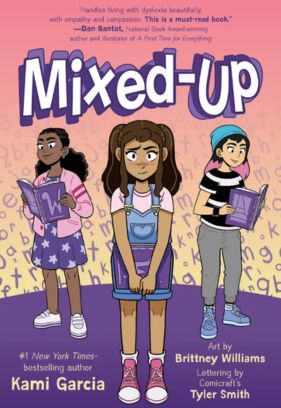
Stella was really excited about starting fifth grade. But the schoolbooks are bigger. The words longer and harder. Stella can’t quite keep up. It’s even affecting her friendships. And Stella can’t figure out why she’s suddenly … dumb?

Plot Summary

Stella, Emiko and Latasha are the best of friends. They have been for, like, forever!

This trio of besties are cut from the same cloth. They know each other’s quirks and strengths and enjoy the same snacks. They can cheerily chat and giggle into the wee hours of the morning during a summer break sleepover. And they love the same TV shows—especially Witchlins. Emiko even has a homemade witch hat that she simply has to wear every time they watch a new episode together.

And now, three incredible new things are taking place:

  • The girls are all going into fifth grade. (Yay.)
  • Not only are they all in the same class, but they get to sit next to each other. (How did the school let that happen?)
  • And best of all, Witchlins is coming out with a brand-new online game. (Woohoo!)

It’s like this new school year was designed to make Stella a happy camper. “Besties stick together. Just like witches,” the girls all cheer together.

However, Stella quickly realizes that there’s also something going on that’s, well, not so happy or magical. It has to do with words. I mean, the fifth-grade books are so thick. There are very few illustrations. And the words are so long.

Stella isn’t dumb. But she kinda feels that way. She’s the last one done with reading in class. In fact, most of the time she doesn’t even finish. And she can’t seem to remember anything she’s read.

Oh, and when the Witchlins game comes out, it all depends on this Witchlins guidebook. And that book is jam-packed with long words, too. So, not only is Stella falling behind in class, but she can’t even keep up with her friends when playing a game!

Worse than anything, Stella is embarrassed to talk about her new problem—even with Emiko and Latasha. What’s she gonna say? I’m too stupid to understand it? So Stella ends up falling behind, drifting away, standing apart. It’s like she has some kind of disease that she’ll never cure. It’s hopeless.

However, even though Stella is correct—that there is no cure—she’s also very wrong. Her situation isn’t hopeless in the least. It simply requires the right adult with the right understanding. Stella needs the right tools, the right patterns and the right friends to help her deal with something that has a really odd-sounding name.

Yeah, “dyslexia” does sound like some sort of magical word. But in this case, witches need not apply.


Christian Beliefs

None.

Other Belief Systems

“Witches” are a big part of this middle grade story. There’s nothing directly said about the spiritual beliefs of witchcraft in this book, but Stella and her best friends are avid fans of a kids’ show called Witchlins (and a new related online game). The girls and some other students talk about the fun of watching witch shows, dealing with dark magic challenges and creating fanciful witch characters that wave wands, fly on brooms and cast magic spells.

Authority Roles

Stella’s parents and brother all recognize that Stella is depressed and struggling with something at the beginning of her new school year. But since she refuses to talk about what’s troubling her, they tend to be left in the dark. Despite that, Stella’s mom, dad and brother keep reaching out to her. They try to love her the best they can. Once the truth comes out, Mom and Dad take steps to support Stella.

Stella’s teachers are the first to notice that Stella is stumbling academically and becoming uncharacteristically quiet. She’s obviously very bright, especially in subjects such as math, so her teacher, Miss Marin, gently asks questions and makes suggestions that might make things easier for Stella in class.

Eventually, Miss Marin recognizes Stella’s dyslexia and leads her to a school reading specialist. This young woman equips Stella with some tools and skill sets that improve the girl’s reading and comprehension.

Little by little, Stella grows more confident, though she has, in the interim, grown distant from her friends. However, when Emiko and Latasha come to understand her struggles, they quickly embrace their friend. It’s made clear that the teachers and the school are open to helping Stella in whatever way they can.

Profanity & Violence

None.

Sexual Content

None.

Discussion Topics

Do you know any friends or family members who struggle with dyslexia? How do you think that learning disability works? How does it affect someone’s brain?

Dyslexia made Stella feel like she wasn’t very smart. It even made her feel embarrassed and angry sometimes. Can you understand why she felt that way? If you or a friend struggled with this disability, what do you think the best choice would be? Who can you talk to about it?

Stella and her friends love a kid’s show about witches. In fact, a lot of shows these days focus on magic or dark, supernatural things. Is there a problem with watching these sorts of things, even if they’re cartoons? Did you know there are real witches in the world? Do you know what they believe?

Additional Comments

Mixed-Up is very effective at conveying the struggles that young people with dyslexia face. Readers will walk away with a better understanding of what dyslexia is—and the skills and tools used to manage it.

At the same time, Stella’s story is uplifting and positive, and it encourages friendship and family support.

The only potential drawback here is the fact that witches are looked at through a lighthearted and playful lens. There’s no occultism on display, but parents may be concerned that this graphic novel could potentially desensitize kids to dark spiritual elements in the real world.

You can request a review of a title you can’t find at letters@pluggedin.com.

Book reviews cover the content, themes and worldviews of fiction books, not necessarily their literary merit, and equip parents to decide whether a book is appropriate for their children. The inclusion of a book’s review does not constitute an endorsement by Focus on the Family.

Bob Hoose

After spending more than two decades touring, directing, writing and producing for Christian theater and radio (most recently for Adventures in Odyssey, which he still contributes to), Bob joined the Plugged In staff to help us focus more heavily on video games. He is also one of our primary movie reviewers.