Movie Review
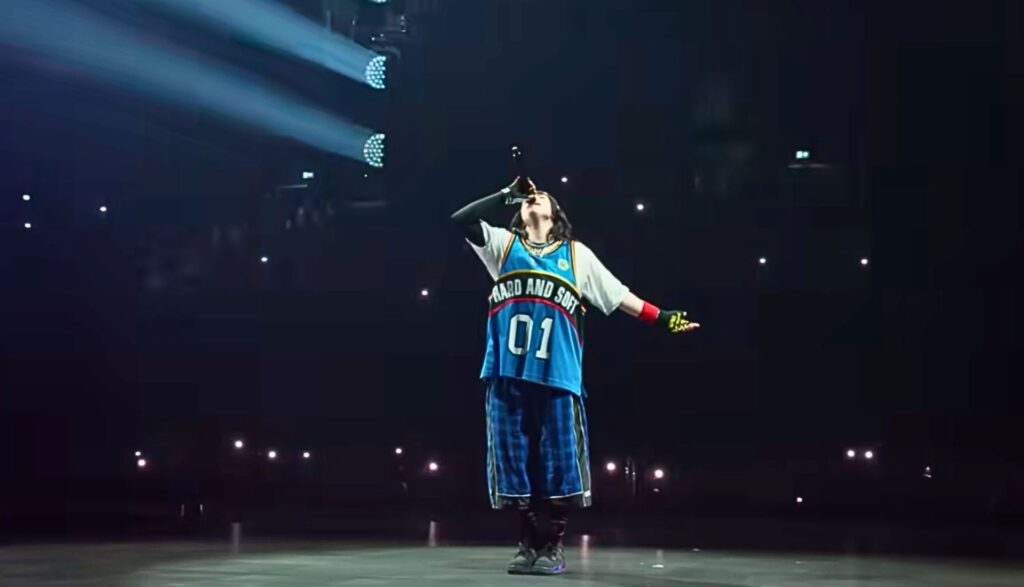
Coming to theaters is a collaboration that I don’t think many saw coming: Alternative pop singer Billie Eilish teams up with filmmaker James Cameron, the highest-grossing director of all time, to co-direct the concert film Billie Eilish: Hit Me Hard and Soft – The Tour Live in 3D.
3D. Ah, yes, now it’s starting to make sense.
Given Cameron’s bent toward 3D movies and deep-sea exploration, the singer who helped pen “Ocean Eyes” may indeed seem the perfect collaborator for a man of his talents.
Avatar: The Way of Wildflower
Cameron, who initiated the connection, reached out with the idea to turn Eilish’s show into this 3D concert film. According to Hollywood Reporter, Cameron created a “new generation of 3D camera systems never been used before, including on Avatar films.” Cameron’s hope was to use 3D technology to reinvent the concert experience, making moviegoers feel as if they were actually present at the concert.
Now, I have to confess that I haven’t been to a 3D movie since 2003’s Spy Kids 3-D: Game Over, so this one was a newer experience for me. The element certainly worked as intended: Plenty of shots bring viewers intimately into the action. (During wide shots, audience members’ swaying hands briefly and realistically block our view of the singer.) The 3D had its greatest effect, however, when taking viewers backstage, revealing the controlled chaos required to bring just one of Eilish’s performances to life. A shot wherein we ride alongside Eilish in a box that’s wheeling her below the stage is a particularly fun use of the technology.
Of course, 3D is a mixed bag, too. Notably, close shots of the concertgoers gave them an uncanny appearance. And the creative decision to turn the camera to the audience likewise calls into question where the line is between feeling present at a concert and getting to appreciate the comfort of a big screen experience. We’ll see plenty of starstruck women sobbing in the audience as they sing out Eilish’s lyrics, but I presume most moviegoers would hope the camera would just focus on the stage.
The Internet Is Hungry
Moviegoers will listen to Eilish perform 22 different songs before the movie’s end. And following every second or third song, the documentary cuts away to a brief behind-the-scenes look. Sometimes these peeks show Cameron interviewing Eilish. Sometimes they’re just a variety of shots that show the singer preparing for the concert.
It’s in these scenes that we get a better appreciation for Eilish as a person, who speaks on a number of topics. (Eilish touched on many of these topics in greater detail in her previous movie, Billie Eilish: The World’s A Little Blurry.) Nevertheless, Eilish opens up about her insecurities: She says she feels as though she’ll only be desirable as a woman if she wears revealing clothing and allows others to sexualize her—something she intentionally counters with her distinct baggy-clothing style. These moments also capture Eilish’s care and concern for her fans as she reflects on the days when she was on the other side of parasocial relationships.
So Cynical
Because the vast majority of this movie is focused on Eilish’s concert performance, most content concerns will be found in Eilish’s lyrics.
Despite the name of the movie (mimicking her latest album), we’ll hear tracks from across all three of Billie Eilish’s albums: When We All Fall Asleep, Where Do We Go?; Happier Than Ever and, of course, Hit Me Hard and Soft. If you’ve read our previous reviews on those albums (please feel free to click on the links above, if you haven’t), then it won’t be shocking to learn that Eilish’s songs include crude language (including the f-word), themes of abuse and suicide and sexual lyrics—including references to Eilish’s own same-sex preferences.
Likewise, Eilish sings many other tracks which don’t appear on those albums, including “What Was I Made For?,” “everything i wanted,” “TV” and “when the party’s over.”
Of the songs we don’t have reviews for, Eilish sings her own “L’Amour De Ma Vie / Over Now,” a song that grapples with the struggle of not loving someone as much as they love you—and the struggle of moving on from that. Of note, the song criticizes her ex for their bedroom performance. The singer also performs “Guess,” a Charli XCX song on which she collaborated. The song lyrics mention oral sex and underwear—and a video above Eilish’s stage depicts people dancing around in revealing clothing.
For Eilish fans who didn’t get to attend one of the singer’s 106 shows for her Hit Me Hard and Soft tour, the concert movie has wonderful sound design—obviously the most important piece of any music-centric film. And they may appreciate the crisp, layered music, even if those 3D visuals didn’t always work.
However, for parents wondering whether this moviegoing experience is worth the price of a ticket? Well, it’s cheaper than an actual concert ticket, but I’m not quite sure that makes it worth the cost.