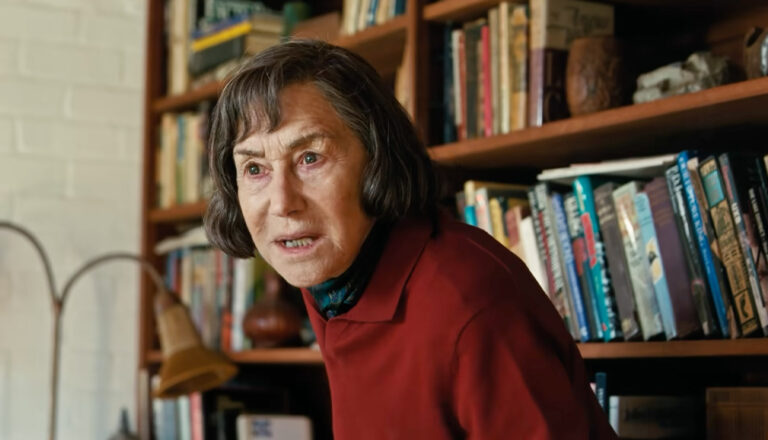


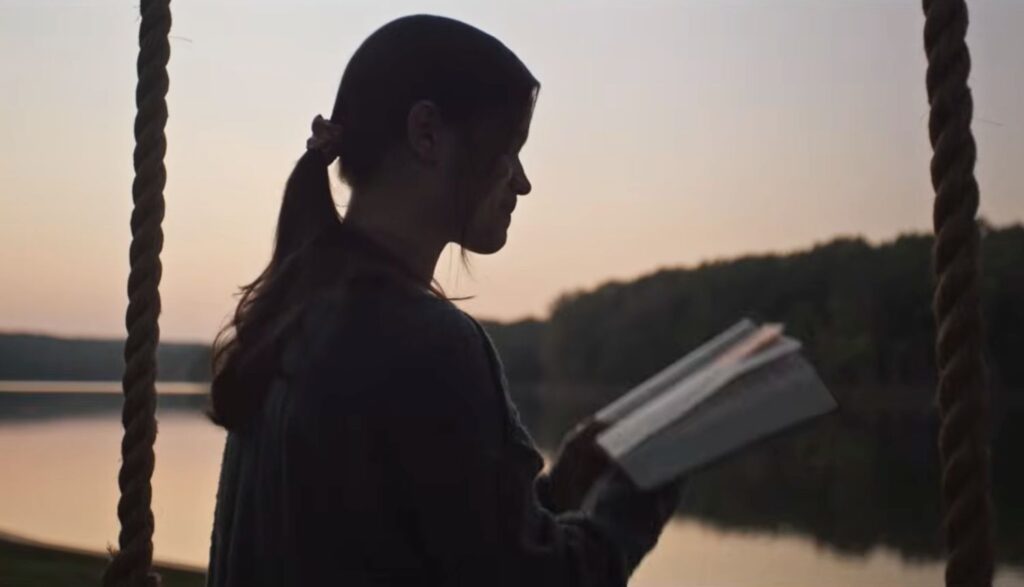
When Hope gets abducted and forced into human trafficking, her life turns into a living nightmare. Still Hope details her journey through that appalling experience and her subsequent rescue, emphasizing the long and difficult recovery that follows. Based on true stories from trafficking survivors, the film covers difficult subject matter. We see violence and some drug use. And though it doesn’t shy away from the horrors of sex trafficking, the film doesn’t delve into visually explicit territory. And ultimately, it ends on a hopeful note.
In Luke 6:37-38, Christ told His followers, “Forgive, and you will be forgiven.” It’s a command that is both wise and beautiful.
And challenging.
Hope certainly struggles with it, and she has stronger justification than most.
As a teenager, Hope was abducted and forced into the waking nightmare of human trafficking. Torn from her family, threatened and abused, Hope suffered an endless parade of evil at the hands of her captors. After nearly two years, she had all but given up any hope of escape.
But escape she did, through her own bravery and the kindness of a stranger.
Hope was rescued. She was reunited with her family. And some of her traffickers were even put behind bars.
Still, Hope is not at peace. She feels broken. Violated. Angry. The last thing she wants to do is forgive those who abused and tormented her. But without that forgiveness, will she ever find healing?
Hope’s family never gives up the search for her. They rejoice when she is found. However, when it becomes clear that their eagerness to have Hope back home is not helping her to heal, they support her decision to go to a group home for women who have been trafficked. Hope’s mother responds to her with gentleness and love. And while Hope’s father doesn’t fully understand what his daughter went through, he clearly loves her.
The group home provides counseling and a safe place to heal. One counselor, Jennifer, was a victim of trafficking herself. She counsels Hope with understanding, validation and unwavering support. Jennifer helps Hope reframe how she sees herself in the wake of her traumatic experiences. Though it’s a difficult process full of stops and starts, Hope begins to heal.
Hope shares a strong relationship with her grandmother, and it’s their connection that eventually leads to Hope’s rescue. After Hope gets abducted, an FBI agent works tirelessly to find her (and other trafficking victims). A few Good Samaritans contribute to Hope’s rescue. Hope tries to help another trafficking victim.
Still Hope ties Hope’s healing process to forgiveness, and it’s a forgiveness that is strongly insinuated to only be possible through the power of Christ. Faith is not presented as a “quick fix” to Hope’s situation, but it is presented as a powerful force in her healing process.
When she asks how Jennifer healed from her own experiences, Jennifer says, “Counseling, community and a personal relationship with Jesus.” Jennifer leaves the door open for Hope to talk about Christ if and when she’s ready.
Still Hope makes a point to say that faith in Jesus won’t immediately fix the fallout from tragic experiences like human trafficking. But it also communicates that Christ is the way to healing and redemption, even if that journey is a long one. The group home has a prayer room for its residents. Hope looks through the prayers and Scriptures placed on the walls of the room. She eventually begins reading through her Bible.
Before her abduction, Hope seems disinterested in church, texting throughout a service. When her mother emphasizes the importance of church, Hope’s younger sister asks, “Then why are we always late?”
A church puts on a candlelight service to pray for Hope after she has been missing for a year. The pastor remarks that there is “nowhere too far that God’s love cannot reach you.” Churchgoers pray together that Hope will be found.
Soon after Hope is found, her mother tries to encourage her with Scripture. While Hope isn’t initially receptive, her mother is understanding, acknowledging that “it’s hard for Hope to believe in God after what has happened.”
Someone gets baptized. In a dreamlike sequence, a white-clad woman emerges from a dark basement, representing the change that has taken place in her soul. A former trafficking victim says that the group home has “a lot of Jesus talk.”
We hear a reading of Psalm 23. A pastor teaches on verses found in Matthew 6. A children’s choir sings “I’ve Got the Joy Joy Joy Joy (Down in My Heart).” A character wears a cross necklace. Decorative crosses hang on walls. A group of women do yoga.
A girl tells Hope not to “move too slow” with a guy. We see a man’s bare torso. Hope talks about her peers “going out with boys.” Some characters wear revealing clothing.
Still Hope shines a spotlight on the horrors of human trafficking and does an admirable job presenting that difficult topic without falling into explicit territory itself.
Even so, the subject matter here is grim.
Hope strikes up a relationship with a guy, Trevor, over text. She hides this relationship from her parents. The two secretly meet up and go on a date. Unfortunately, this rendezvous is just the pretext for Hope’s abduction, as Trevor is part of a trafficking ring.
It’s clear what Hope is forced to endure. Her captors dress her in revealing clothing and take her to various “jobs,” an only slightly veiled allusion to prostitution. In one scene, Hope leaves a skeezy film set—the implication being that she was forced to participate in pornography.
Hope’s primary captor, Bishop, abuses and manipulates her. He threatens to hurt her family if she refuses to do everything he says. Initially, Bishop keeps Hope imprisoned in his basement, withholding food when she displeases him. Later, we see that another (even younger) girl receives a similar treatment.
We see girls being abducted, forced into vehicles while they struggle and scream. One of these girls is very young, not even a teenager. This girl and others are sold into sexual slavery.
The film opens with Hope running through the woods, trying to escape her captors before being tackled and restrained by Bishop. Later, Bishop hits Hope, causing her to bleed profusely from the nose.
Hope gets tattooed against her will. A woman talks about being beaten; later, she gets slapped for asking a question. Law enforcement officers level guns at criminals. A man draws a pistol.
Hope’s father says he wants to kill Trevor for the guy’s part in his daughter’s kidnapping. Following her experiences being trafficked, Hope views herself as a “whore.”
Hope is called a “slut” and later refers to herself as a “whore.” We hear one “jeez” and a use of the Spanish interjection híjole.
Trevor drugs Hope prior to her kidnapping. Bishop and a female accomplice, Queen, force Hope to take a variety of drugs so that she’ll become addicted (and, presumably, easier to control). We see Hope take pills, perhaps trying to deaden the pain during her traumatic experiences.
After Hope is rescued, she deals with symptoms of withdrawal. A counselor talks about going through the same difficult process.
A woman snorts a powder-like substance. Someone identifies herself as an addict. Someone smokes a cigarette.
Initially, Hope keeps the knowledge of Trevor hidden from her parents, even going so far as to give the boy a pseudonym on her phone to keep them in the dark. She also uses time with her grandmother as an opportunity to sneak out to meet Trevor. Unfortunately, these decisions make it more difficult for the authorities to find Hope after she gets abducted.
After she’s rescued, Hope recoils from her father any time he draws near. Though it’s clearly indicative of her traumatic experiences, he grows frustrated with this response.
The group home which Hope attends practices “holistic healing,” which encourages its members to work with their hands while focusing on their mental state as well. Some members of the group home participate in equestrian therapy. Early in her recovery, Hope believes several negative things about herself due to her traumatic experiences. A counselor tells Hope that “forgiveness has nothing to do” with the people who harmed her, but instead what she chooses to hold in her heart.
Hope’s grandmother passes away off-screen. We see a glimpse of her funeral.
Hope’s mother tells her daughter that she will “grow horns” (i.e. bone deformities) because she’s looking down at her phone so often. Hope texts on her phone throughout a church service. Another person sleeps through the service.
A character mentions having panic attacks. Someone vomits.
Still Hope is a hard movie to watch. It tells an unflinching story about the horrors of human trafficking. It also showcases the pain that follows such traumatic events for those who manage to escape.
Even after Hope is rescued, her life doesn’t get much easier. Crucially, the film doesn’t try to pretend that everything goes back to normal after victims of trafficking are rescued. A lesser movie might have placed Hope’s rescue as the climactic moment before cutting to credits and an uplifting song.
That’s not what the makers behind Still Hope chose to do. And I would assume a large part of that is because the film (as stated on its website) was inspired by the true stories of real trafficking survivors. After Hope is rescued, she’s still haunted by her experiences. It’s a long and difficult road to recovery—physically, mentally and spiritually.
“Healing is a process, not an event.”
That’s the message that Still Hope communicates throughout the latter half of its runtime. The film doesn’t shy away from the difficulty in healing from a horrific experience like human trafficking, but it does emphasize that healing is possible.
Still Hope manages to show the appalling reality of human trafficking without wading into explicit content. But that doesn’t mean that this film is appropriate for all viewers. The film skirts graphic content, but we do still see drug use, violence and some bad behaviors onscreen. Parents will want to use discernment before showing the film even to older teenagers.
This movie is hard. But it is hopeful. And, as far as I could glean, it was respectful of real trafficking survivors. Ultimately, it ends on a redemptive note that will resonate with those who have experienced their own healing through the love and forgiveness of Jesus Christ.
Still Hope may be a challenging film, but I think it’s an important one.

Bret loves a good story—be it a movie, show, or video game—and enjoys geeking out about things like plot and story structure. He has a blast reading and writing fiction and has penned several short stories and screenplays. He and his wife love to kayak the many beautiful Colorado lakes with their dog.