Among Us
Paramount+’s adaptation of the Innersloth video game ‘Among Us’ has all of the game’s bloodshed, genderless crewmates and a bit of mild language.
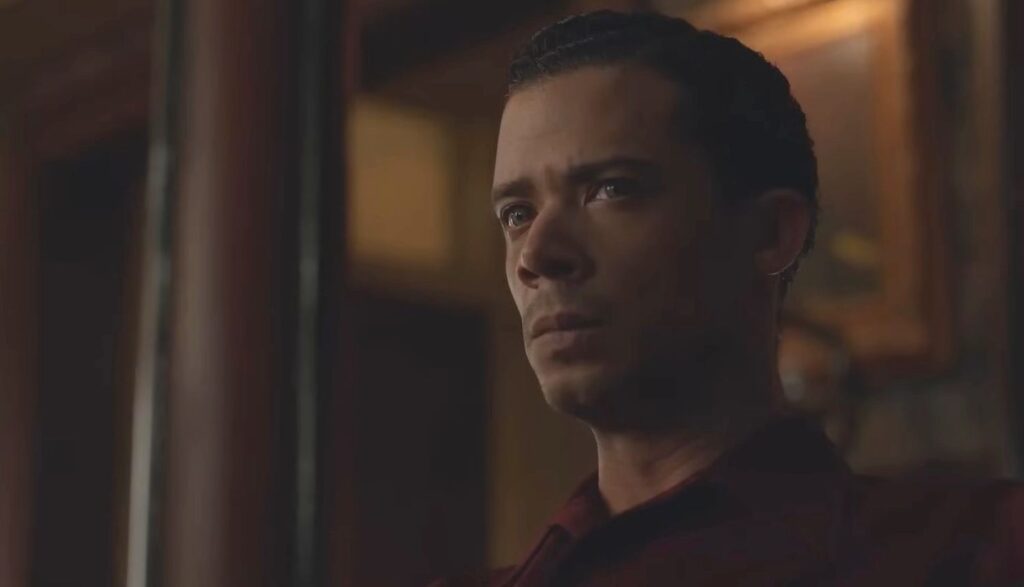
After 49 years, journalist Daniel Molloy conducts a do-over interview with Louis de Pointe du Lac.
Why wait 49 years for one interview?
Well, Louis has epic tales to tell from his over century-long existence as a vampire. And last time Daniel tried to interview Louis, things went horribly wrong.
Louis’ tale begins in 1910. Back then, Louis was a 33-year-old New Orleans brothel owner dealing with racial prejudice toward him and his family. Despite his business’ great success—earning him some favor with townsfolk—Louis feels completely alone, unable to express his most intimate desires.
Everything changes when Louis meets Frenchman Lestat de Lioncourt.
Something about Lestat feels alluring to Louis. Between Lestat’s air of mystery and seemingly supernatural abilities, Louis is completely enthralled. Soon, Louis discovers that Lestat is a vampire, and when the two men confess their love for one another, Louis allows Lestat to turn him into a fellow bloodsucker.
As Louis recounts to Daniel, his relationship with Lestat over their many years is tumultuous. The men cheat on one another—with Louis finding a new vampire lover named Armand in Season 2. Several times, Louis and Lestat attempt to kill one another. And together, the men turn a teenage girl named Claudia into a vampire and raise her as their own—an endeavor that leads to further complications in Lestat and Louis’ relationship.
Over the show’s two seasons, Louis navigates his relationships with vampire lovers and comrades, learns sacred vampiric laws from a vampire coven in Paris and works with Daniel to retell the twisted tale of his tragic life.
Based on Anne Rice’s 1976 novel by the same name, AMC’s Interview With the Vampire seems to tick every “concern content” checkbox on Plugged In’s proverbial list.
Many of the show’s main storylines center around Louis’ romantic relationships with other men, which feature both emotional and explicit physical intimacy—sometimes including nudity. There’s also a budding relationship between Claudia and another woman in Season 2.
Professing to be one of AMC’s top horror TV shows, Interview With the Vampire lives up to the genre by frequently depicting graphic violence. Vampires sink their teeth into innocent victims, causing blood to spill liberally from their bodies. Blood frequently drips from the mouths of vampires as well as pooling on the floor or splashing from human bodies. (Did I mention there’s a lot of blood in this show?)
Often intensifying the show’s other issues is its frequent use of harsh profanity. Characters use the f-word, s-word and “g–d–n.” A character uses the n-word in one episode, and characters also use sexually vulgar and offensive words to describe women.
Furthermore, several scenes feature characters drinking alcohol, and sometimes characters get drunk and behave carelessly as a result. Some people also smoke cigars.
And as you would probably expect in a show about vampires, there are plenty of spiritual and supernatural references. In Season 1, Louis’ brother Paul talks frequently—and somewhat incoherently—about religion, which annoys Louis. In one episode, Lestat states, “There is an ocean between Christ and myself,” and later in the same episode, Louis goes to Confession and expresses that he fears Lestat is the devil. In Season 2, Louis spends time with a coven of vampires, and those vampires teach him their sacred laws.
Between the LGBT content, graphic violence, harsh profanity and problematic spirituality, AMC’s Interview With the Vampire is definitely not a show your family will want to sink their teeth into.
(Editor’s Note: Plugged In is rarely able to watch every episode of a given series for review. As such, there’s always a chance that you might see a problem that we didn’t. If you notice content that you feel should be included in our review, send us an email at letters@pluggedin.com, or contact us via Facebook or Instagram, and be sure to let us know the episode number, title and season so that we can check it out. )
Five years after the death of his father, Louis de Pointe du Lac takes care of his mother, soon-to-be married sister and mentally ill brother by running a brothel in New Orleans. Though his business is successful, Louis feels deeply lonely. But then he meets mysterious newcomer Lestat de Lioncourt. Because of Lestat, Louis transforms into someone … or something … entirely new.
Several scenes feature violent vampire attacks. In one, a vampire attacks an innocent man on the street, biting his arm and splattering blood everywhere. In another, the vampire tears into two priests in a church, causing their blood to cover their bodies and pool on the floor. The vampire’s face is covered in blood. The vampire punches his hand through the face of one of the priests, causing blood to spray.
Two of these vampire attack scenes seem sexual in nature. In one, Lestat bites Louis’ neck after the men have sex. This causes blood to cover Lestat’s face and Louis’ neck, but Louis describes the moment as feeling intimate. In the other scene, the vampire bites a man’s neck after professing his love for the man. In this extremely gory scene, the vampire drains blood from the man and allows the man to drink blood from him in return.
A woman undresses in front of two men, exposing her breasts. The woman proceeds to kiss one of the men and perform other sexual acts while the other man watches. What follows is a highly graphic sex scene in which the two men undress completely and have sex with each other. The bare backsides of both men are visible, and though nothing else is visible, their explicit actions are heavily implied. Louis tells Daniel that he used to feel shame about being attracted to men, but now he has learned to embrace his sexuality. Two men kiss passionately.
A man dies by suicide after he jumps off a roof. In the aftermath, his head can be seen surrounded by a pool of blood. The mother of the man blames another family member for the suicide, stating that he’s “in hell because of you.”
Two brothers get in a fist fight, and one of the brothers threatens to use a knife. A man is covered in blood after a woman hit him. A vampire’s skin bubbles up and burns when exposed to the sun. A bite mark can be seen on a man’s neck. It’s implied that Lestat planned the death of someone important to Louis. A man elbows someone in the stomach, causing him to keel over in pain. Someone stabs a vampire with a knife, causing blood to pour from the wound.
Louis owns a brothel, and he later admits that he’s taking advantage of women in dire situations. There is a very brief visual reference to the AIDS epidemic. Lestat “purchases” a woman to have sex with Louis. A man caresses a woman sexually in public. A woman describes a sexual encounter in great detail. Another woman wears a top that almost completely exposes her breasts. A man is seen caressing a woman who sits on his lap.
There are eight uses of the f-word, three uses of the s-word, three uses of “g–d–n,” one use of “a–hole,” “two uses of a–” and several uses of “d–k” and “d–n.” One character uses the n-word in a manner meant to demean a person of color. Several people use sexually explicit and highly demeaning words to describe women. A character makes a demeaning comment about someone’s weight.
Louis is easily annoyed by his brother Paul, who frequently gushes about religious matters. A journalist gives advice, saying, “Your editor is your priest.” Lestat tells Louis’ family that “there is an ocean between Christ and myself.” Paul says he thinks Lestat is the devil. Later, Louis makes a similar comment while at Confession. Lestat tells Louis that God is nonexistent.
Daniel mentions that a memoir he wrote includes his experience with drugs. Later, Daniel says that he was high the last time he tried to interview Louis. In multiple scenes, people drink alcohol. A man gets drunk and acts recklessly as a result. Someone smokes a cigar. A man drinks alcohol to help him grieve.

Paramount+’s adaptation of the Innersloth video game ‘Among Us’ has all of the game’s bloodshed, genderless crewmates and a bit of mild language.

Netflix perhaps should have been more mindful about the content it chose to put in its German-language series ‘Murder Mindfully.’

The latest remake of ‘Cape Fear’ is a TV show this time—and that provides so much more time to add the worst forms of problematic content.

Much like the bleak life in the Soviet Union that it depicts, Star City is tense, bleak, violent and rather cold.