The Wonderfully Weird World of Gumball
After a seven-year hiatus, the wacky town of Elmore is back, as Gumball and his family embark on even more weird adventures.
Bobbie has been working at her dad’s tavern for 10 years. And for 10 years, things at Happy’s Place have been going her way.
Even after her father, Happy, dies, Bobbie expects everything will stay exactly the same.
The bubbly bartender Gabby will always say she’d “kill” to be Bobbie’s sister. The gentle waiter Takoda will always be kind to everyone. The OCD-ridden accountant Steve will always be a germaphobe. The quiet cook Emmett will always be a silent observer. And—as the new, sole owner of the tavern—Bobbie will always get her way.
And then she meets Isabella.
When Isabella sits at the tavern’s bar, Bobbie assumes she’s just another guest hoping to unwind. After all, Happy always used to say, “People come to Happy’s Place to leave their troubles behind.”
Unfortunately, Isabella seems to be the beginning of Bobbie’s troubles.
Soon after Isabella hops up on a barstool, Bobbie’s lawyer enters the tavern to explain a final section of Happy’s will. And when the lawyer sees Isabella at the bar, he invites her to join the will-reading, too.
“You two share something in common,” the lawyer says to Isabella and Bobbie.
“What’s that?” Bobbie asks.
“A father.”
And according to the will, they will also be sharing the tavern.
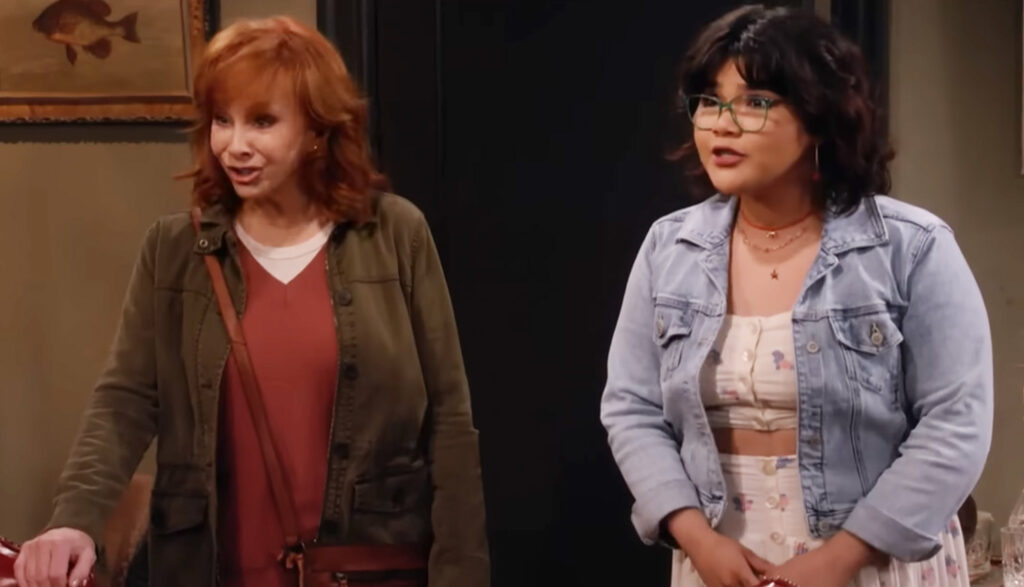
So as Bobbie processes the news that her late father had an affair, she must also begin a business partnership with her vivacious little sister, Isabella … who starts to make some vivacious little changes to the tavern.
Like many other television sitcoms, NBC’s Happy’s Place features a cast of quirky characters who learn to care about one another despite their differences.
At first, Bobbie has an extremely difficult time accepting her new family member. Isabella is excited to discover who her father is, but Bobbie is uncomfortable with what Isabella’s existence suggests about her dad. She tells Isabella, “You look at me, and you see the father you wish you had,” but “when I look at you, I lose the father I thought I had.”
Despite the rocky start, Bobbie slowly warms up to Isabella, and their budding relationship seems to offer a transformation for both sisters.
However, Happy’s Place offers some elements that may leave families feeling less than happy. The sitcom uses light language, such as “h—” and misuses of God’s name. And some situations bring forth a sexual quip or two—still tame by today’s standards, but nevertheless present. And, of course, the tavern setting centers on alcohol.
(Editor’s Note: Plugged In is rarely able to watch every episode of a given series for review. As such, there’s always a chance that you might see a problem that we didn’t. If you notice content that you feel should be included in our review, send us an email at letters@pluggedin.com, or contact us via Facebook or Instagram, and be sure to let us know the episode number, title and season so that we can check it out.)
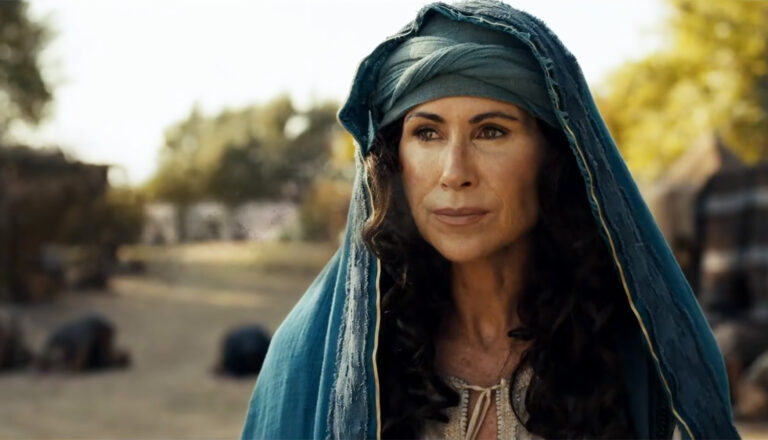
Bobbie’s life transforms when she discovers that her late father bequeathed half of his business to his secret daughter, Isabella. Meanwhile, Isabella endeavors to be accepted by her newfound family and coworkers.
The show takes place in a tavern, so naturally, characters drink glasses of alcohol throughout the episode. Additionally, some characters make jokes about overdrinking and using alcohol to cope with their emotions.
After discovering that Isabella is her sister, Bobbie decides to “let God and time sort it out.” Isabella references that she has an ex-boyfriend, but he does not know they have broken up yet. An employee sprays disinfectant on his coworker’s face, though she does not appear to be harmed. Characters keep their language mild, though words like “screwed,” “shut up” and “turd” are used. Isabella wears a crop top throughout the episode.
As Bobbie and Emmett flirt but refuse to commit to each other, the others in the tavern push them to finally start dating.
Isabella asks Bobbie when she last bought a bra. Gabby worries about walking in on Bobbie and Emmett being intimate, and Bobbie tells her that she hasn’t gotten intimate with the man yet. In response, Gabby chides her for taking so long, stating she’d never be able to survive talking so long to any man without getting to use him for sex. When she learns Bobbie hasn’t dated in 30 years, Gabby is surprised Bobbie hasn’t “jumped his bones” yet. She encourages Bobbie to “put on her big girl panties” and ask Emmett out.
Despite Emmett turning Bobbie down, she nevertheless kisses him. Someone comments about videos that show kids kicking dads in the crotch.
Gabby tells Isabella that she’d make a great cult leader. People drink beer and wine. Some of the women hold and express sexist views about men. God’s name is used in vain five times.
Gabby searches for a sperm donor, and she goes to unconventional lengths to make sure the man she chooses has good genes. She even considers who of the men at the tavern might be a good fit.
As Gabby orders the sperm online, we hear a variety of double entendre jokes about sperm and male genitals, which last the whole episode. When Gabby completes her order, she says to her coworkers, “Wow, I just made a baby! Come in, I like to cuddle after.” Bobbie and Emmett kiss.
Gabby states that, since men don’t lose their looks or fertility as they age, that’s how she knows God is a man.
Isabella requests any alcohol that might help her forget the terrible day she’s had. God’s name is used in vain three times. “H—” is also used three times.
Kennedy Unthank studied journalism at the University of Missouri. He knew he wanted to write for a living when he won a contest for “best fantasy story” while in the 4th grade. What he didn’t know at the time, however, was that he was the only person to submit a story. Regardless, the seed was planted. Kennedy collects and plays board games in his free time, and he loves to talk about biblical apologetics. He’s also an avid cook. He thinks the ending of Lost “wasn’t that bad.”

After a seven-year hiatus, the wacky town of Elmore is back, as Gumball and his family embark on even more weird adventures.

The Amazing Digital Circus places its digitized humans under the terrorism of a maniacal AI ringmaster and his chaotic adventures.

The self-centered hedonistic approach of every character in Emily in Paris only seems to increase, and the praises for it are doubled.

‘Little Disasters’ deals with child abuse and postpartum depression. But its other content concerns make it a bit of a disaster itself.