TV Series Review
John doesn’t exactly consider himself “father of the year” material. An incident at a London playground proves his doubts.
While absentmindedly pushing his son, Harry, on the swing, John idly stands by as another boy runs up to Harry and aggressively demands the swing for himself. The boy’s father charges up behind him, apologizing for his child’s behavior. But then the man punches the boy in the stomach as punishment.
The abuse shocks John and a nearby mother, but while John stays silent, the mom confronts the man. In response, the guy ferociously beats her and kicks her to the ground.
Terrified, John grabs his son and sprints away, leaving the woman to her fate. It’s only when he’s some distance away that John realizes, in his cowardice, he’s left his daughter, Violet, behind.
John runs back to find her. Violet is safe. But John’s choice sticks with him.
“I abandoned my girl,” John later admits. “They’ll grow up knowing their father’s a coward.”
They Come to You in Sheep’s Clothing …
John doesn’t stop running. A couple of months later, he and his wife, Fiona, move to Coldwater, Scotland. He’s still haunted by his decision at that park, and it’s affecting their marriage.
When their new neighbors, Tommy and Rebecca, invite them over for dinner, Fiona thinks it’ll be good for them (even if Tommy and Rebecca are both Christians, which the atheistic John and Fiona find silly).
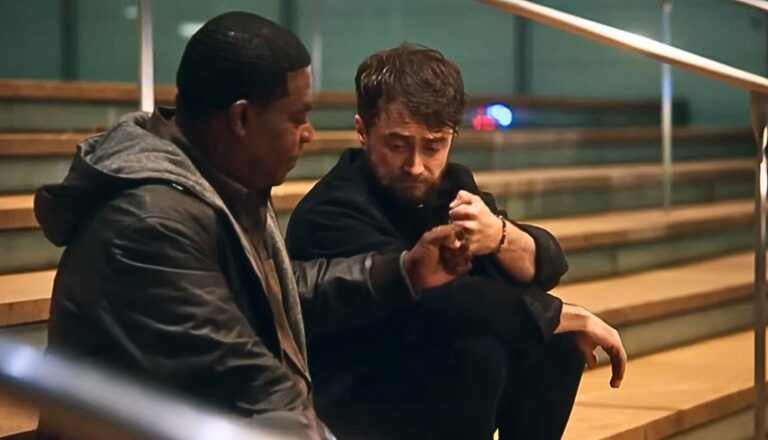
It is good for them: As Fiona bonds with Rebecca, Tommy talks to John. And for some reason, John decides to open up to the man about that terrible playground incident. Tommy comforts John, and he leads John in a prayer that, for the first time in months, makes John think everything just might be OK.
But later that night, when John still can’t sleep, he decides to go for a run—crossing paths in the park with Angus, the town’s local punk. Angus harasses and physically assaults John, choking him. In self-defense, John bashes the young man across the head with a rock, leaving Angus a bloody mess on the ground.
John runs yet again—straight into Tommy. And for some reason, he finds himself once more admitting what occurred to the man.
Tommy isn’t fazed by John’s story. Instead, he tells John to wash off Angus’ blood, get some sleep and stay silent about the matter—Tommy will handle Angus and the police.
John follows his neighbor’s advice as Tommy drives to the park. Tommy finds Angus not as dead as John thought, so he finishes the job himself. He burns the punk’s body to cover up the attack, and he takes Angus’ necklace for himself.
And as John finally lulls himself to sleep, Tommy returns home himself. He places Angus’ necklace inside of a box in his shed … alongside other trinkets he’s taken from victims over the years.
… But Inwardly Are Ravenous Wolves
Plenty of secular movies and TV shows like to have Christian characters. Unfortunately, most secular productions have no idea how to write those characters, since the depictions are usually based on the creator’s limited experience with Christianity rather than anything a genuine believer would approve.
Because secular media doesn’t know how to write a true Christian, it tends to write us in one of a few ways: In one case, a show might depict the character as someone who is essentially an atheist cosplaying Christianity. That character considers the religion’s beliefs and morals to be totally optional. And they certainly won’t let those electivesget in the way of what they want to do. More commonly, the creators may just write the believer as the antagonist to goodness itself. In our experience, secular media telling you that a character is a Christian is their version of a neon sign saying, “This is a bad guy!”
Paramount+’s Coldwater falls into both tropes, surprisingly. In the case of the former, Tommy’s wife, Rebecca, is literally an atheist cosplaying Christianity. She claims to be a vicar whilst simultaneously admitting that she doesn’t actually believe in God and is really just in it for the community. In the case of the latter, Tommy proclaims faith in God, but then he goes around murdering people.
Christianity is nevertheless deeply integrated into the show, with frequent references popping up from beginning to end. We wouldn’t be at all surprised if the show’s title is a reference to Matthew 10:42.
Outside of that religious setting, Coldwater contains some violence—after all, it is yet another crime thriller in a market oversaturated with them. So when the killing begins, viewers can expect some blood to splash a face or two. As for other content, sex and nudity appear onscreen, and crude language is frequent.
In other words, Coldwater tastes a bit more like Sourmilk.
(Editor’s Note: Plugged In is rarely able to watch every episode of a given series for review. As such, there’s always a chance that you might see a problem that we didn’t. If you notice content that you feel should be included in our review, send us an email at letters@pluggedin.com, or contact us via Facebook or Instagram, and be sure to let us know the episode number, title and season so that we can check it out.)