


Kevin Costner Presents: The First Christmas

Content Caution

MediumKids
LightTeens
LightAdults

Credits

In Theaters

Cast

Home Release Date

Director

Distributor

Reviewer

Kennedy Unthank

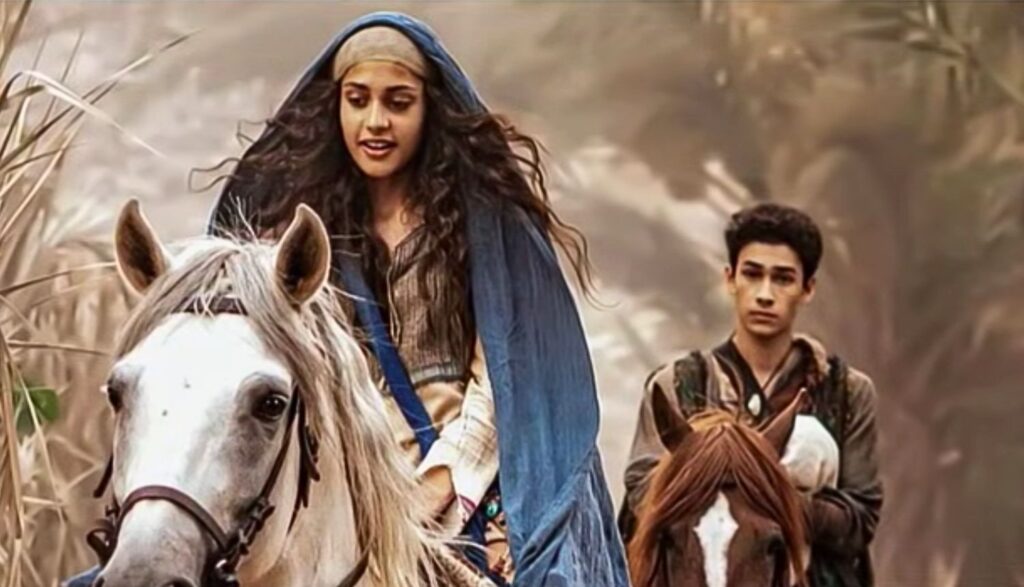
The First Christmas is an hour-and-a-half Christmas special narrated by Kevin Costner. Blending documentary and narrative storytelling elements, the special depicts the birth and early life of Jesus Christ, largely staying faithful Scripture but adding a few scenes of its own based on educated speculation. Some gritty violence and one crude word make their way onto the screen, too.

  • Previous
  • Next

Movie Review

“Over one-third of the world’s population believe that Jesus Christ was one of the most important persons that ever lived and have called Him Savior and Lord for over 2,000 years,” Kevin Costner narrates.

“But how’d it all start? What’s the real story?”

No, Costner isn’t alleging the story we know from Scripture is wrong or misleading. He simply remembers growing up with Christmas pageants that didn’t showcase all the details of that Christmas story—so he hopes to bring them to light for others to appreciate.

He narrates details often left out of your average Christmas pageant—such as Herod’s wicked role in the story, the difficulties Mary and Joseph faced as a result of Mary being made the mother of God and how long it took the magi to actually get to Bethlehem.

Joining Costner are Catholic and Protestant theologians and scholars, too, to supplement some of the narrative choices made in this special.


Positive Elements

The First Christmas portrays biblical events, so there’s little we can place here that wouldn’t just go into our Spiritual Elements section—or that many of you wouldn’t already know: Joseph and Mary submit to God despite knowing it will bring difficulties to their lives; we see others assist the couple in whatever ways they can.

Interspersed throughout the narrative are interviews that remind us that God often uses the lowly to demonstrate His power and humble the proud. Such is the case in the Christmas story—not only with Joseph and Mary but also in declaring the good news to the lower-class shepherds first.

While some creative liberties are taken in this special, they do not extend into salacious or unreasonable territory.

Spiritual Elements

This documentary covers many biblical moments from Matthew 1-2 and Luke 1-2. Some events, such as John the Baptist leaping in Elizabeth’s womb, are omitted. Instead, Elizabeth simply looks at Mary’s pregnancy bump and asks, “Mary, what have you done?”

In scenes taken explicitly from Scripture, dialogue between characters follows the biblical accounts accurately. When angels appear, they are surrounded by an aurora borealis effect.

The special takes some creative liberties, depicting what the producers believe occurred based on biblical, Talmudic and other historical accounts. Because of this, we sometimes hear phrases like, “it’s more plausible that” something took place a different way—not contradicting Scripture but bringing forth a different interpretation of the events within it.

A Catholic priest interviewed for the documentary speaks about the Roman Catholic doctrine of the Immaculate Conception: The belief—proclaimed dogmatic by Pope Pius IX in 1854—states that Mary was the product of immaculate conception, preserving her from original and personal sin. The priest supposes: “Because the Blessed Mother was not affected by original sin and did not suffer the effects, perhaps she didn’t go through the pain of childbirth.” (The documentary itself seems to nevertheless depict Mary suffering through that pain.)

We hear some reference to the Old Testament, such as Leviticus 12 and Isaiah 7.

At the end of the documentary, we are given a brief presentation of the gospel: “But many, including myself, believe [Jesus] didn’t stay in that cave for very long,” Costner says, “and that He rose from the dead, saving those who would believe in Him.”

Sexual & Romantic Content

Herod bathes: Though shirtless, we cannot see anything below the water.

Violent Content

Herod stabs his child with a knife hidden underwater, killing him and causing the water to turn red. A woman laments the deaths of her husband and young son while clutching their blood-covered bodies. (We’re told her whole village was slaughtered). Herod sets a decree to slaughter the infants in and around Bethlehem: Men corner women as they hold their children; we later see a wagon dripping with blood and filled with blood-stained bags, presumably containing the dead children.

Mary and Joseph pass between two rows of bloodied, crucified men—some of whom are still actively struggling. A couple of flash forwards depict Jesus getting nailed to the cross; and later, a spear pierces His side.

A woman kills herself by walking off the edge of a building. Herod intentionally stabs himself in the stomach with a sword.

A man spits at Mary and attempts to kidnap her. Costner reads statistics about infant mortality around the time of Jesus’ birth.

Crude or Profane Language

We heard one use of “a–.”

Drug & Alcohol Content

People drink wine and smash grapes for it.

Other Noteworthy Elements

Mary’s water breaks, and we watch her give birth (though nothing explicit is seen).

Conclusion

You’ve probably seen a depiction of the Nativity scene: Mary places her baby in a straw-filled trough as shepherds, wise men, angels and animals crowd around her, hoping to see the newborn King.

And just as we worship together and partake of the Eucharist to remind ourselves of what God has done, so too do we put on these Christmas pageants—to reflect on the Christmas story.

Kevin Costner Presents: The First Christmas doesn’t denigrate Christmas pageants, but Costner does think that some important details from Jesus’ birth story often get left out of them: Mary and Joseph first hearing the news, baby Jesus’ presentation at the temple, the Holy Family’s later flight to Egypt due to Herod’s rampage. The First Christmas presents such scenes and more in its depiction of the Christmas story, hoping to give viewers a fuller view of what happened in those days.

Notably, just as this “Christmas pageant” contains far more details, it also contains more violence, too: We see both men and children killed, their bodies drenched in blood—mostly due to Herod’s crazed bloodlust (details which show the dangerous time in which the Christ was born). We likewise hear a single crudity (“a–”). And some believers may disagree with a few of the choices or comments the documentary makes regarding the story’s spiritual backing.

With those considerations in mind, families with older children should be able to use this special to provoke a fruitful conversation about the birth of Jesus Christ.

Kennedy Unthank

Kennedy Unthank studied journalism at the University of Missouri. He knew he wanted to write for a living when he won a contest for “best fantasy story” while in the 4th grade. What he didn’t know at the time, however, was that he was the only person to submit a story. Regardless, the seed was planted. Kennedy collects and plays board games in his free time, and he loves to talk about biblical apologetics. He’s also an avid cook. He thinks the ending of Lost “wasn’t that bad.”