



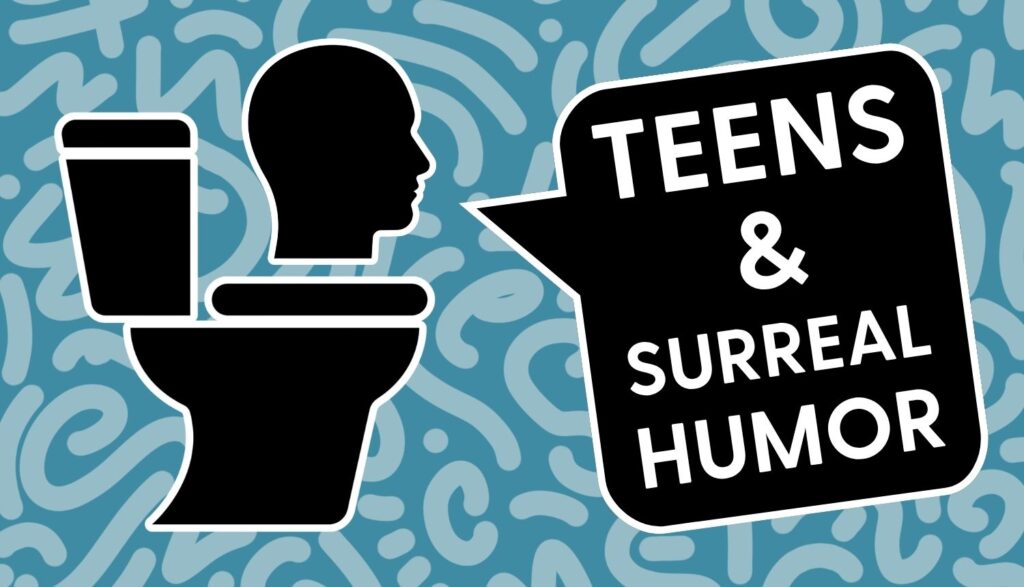
Humor has always been a part of our human fabric. We use it to bond social groups, deal with complex situations, communicate ideas and even as a shock-absorber in the face of grief or loss. How many times have you seen people recount a memory that’s dear and chuckle-worthy when they’re processing the painful loss of a loved one? Maybe it’s a cultural thing, but it feels like humor is a very important part of our DNA.
So it’s no mystery why today’s young people would use their own brand of the stuff to help them navigate this ever-changing world. But the Gen Z version of amusement has taken an interesting, surreal tack—and for interesting reasons. If you just don’t get Gen Z’s brand of online chuckles, well, that’s kind of the point.
I remember an old James Bond flick (Goldfinger) where the spy took time from his wooing of a beautiful woman to proclaim that the only way to endure the noisy rock-and-roll of a Beatles concert would be to don earmuffs. Even a suave guy like Bond just didn’t get the current trends.
Why So Surreal?
So what is this surreal and absurd Gen Z humor all about? How was it born? What does it mean?
To get a better understanding, we first need to consider a simple truth: Every generation is the product of its environment. Just as the Beatles came out of a post-war, changing youth-culture generation—and just as the ‘80s and ‘90s were powerfully shaped by new technology, such as portable audio devices, video games and VCRs—Gen Z has been weaned on the smartphone.
Today’s teens have always been connected to the internet and social media. And that has not only reshaped how they see and hear things, but it has also informed them what to think about those things. Gen Z, for instance, tends to get most of its news from social media feeds and short-form video platforms rather than traditional news outlets. It has also shifted away from faith, becoming statistically the least religiously affiliated generation in U.S. history.
And let’s face it, if you get most of your information and beliefs from TikTok and Instagram, well, you’re not going to get a very pleasant view of the world at large. The internet is a steady stream of chaotic content, an avalanche of dire predictions and warnings. Young people are fed bombastic climate claims, rants about our broken political squabbles, financial dreads and overwhelming global problems. The internet is, frankly, a swirling font of online rage.
Ah, but the internet is also a global connection workshop, of sorts. It’s a creative factory where it’s easy to crank out memes, peculiar images and giggle-fare by the boatload. And that’s where the healing balm of humor comes into play.
A Singing What Now?
Of course, we shouldn’t assume that Gen Z humor—from singing heads in toilet bowls to memes of a dystopian Ohio—is all random nonsense. There’s a purpose behind it all.
By reframing what they’ve been told is a grim reality into bizarre images and jokes, Gen Z is collectively processing its anger and confusion about the craziness of life. With the aid of what amounts to a handy little palm-held supercomputer, teens are able to create raw, unfiltered chaos of their own making and garner laughs with it rather than groans, group discussions rather than private angst. That absurd stuff can appear dark and strange at times, but this new brand of teen humor can be therapeutic in its own way.
Of course, there can also be negatives to the practice of laughing off the world’s woes. There’s a fine line between being winkingly resilient and being emotionally exhausted. Frequently consuming surreal satire to escape despair can actually lead to it if handled poorly. How many exploding pony or middle-finger-flipping orangutang videos can you watch before developing a twitch?
Gen Family
The best answer for parents is likely to approach these trends and online giggling silliness with an open mind and understanding. But you can also ask what your teens think about the jokes and memes. And the bigger issues behind them. Give your kids a sounding board to bounce their concerns off of.
Unlike a surreal meme, a good human connection—a one-on-one earnest discussion about our changing world—can build empathy. It can reinforce connection and make the world feel less isolating. And it very well may lead to a discussion of how faith and God’s big-picture plan plays into the scope of our world’s troubles.
Sure, a chat with Mom and Dad probably won’t be a real knee-slapper, but it could lend itself to a reality that doesn’t require surreal giggles to endure.

Recent Comments