Game Review
Video games can be complicated, lengthy, verbose and intense. Thronefall takes the opposite tack.
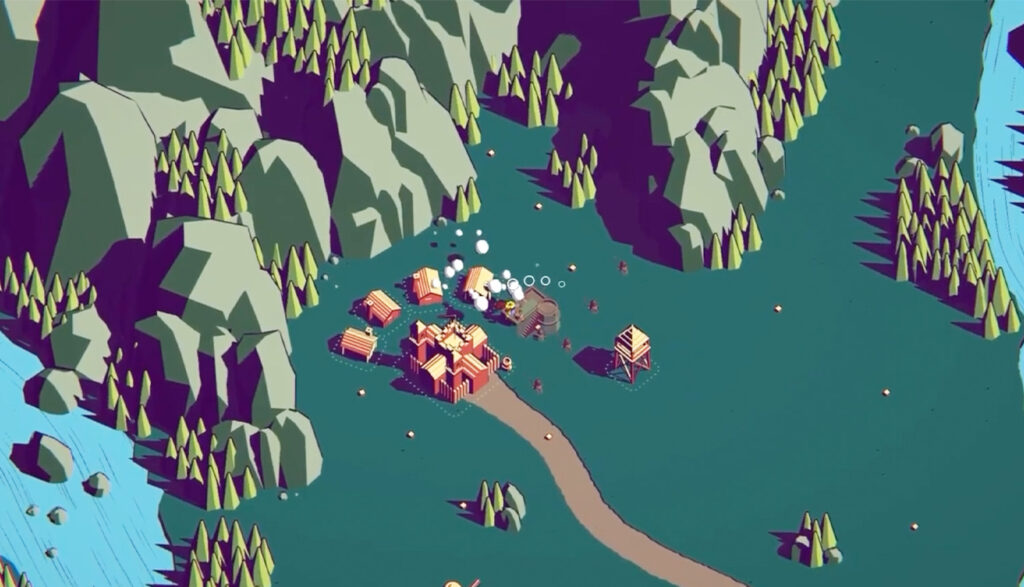
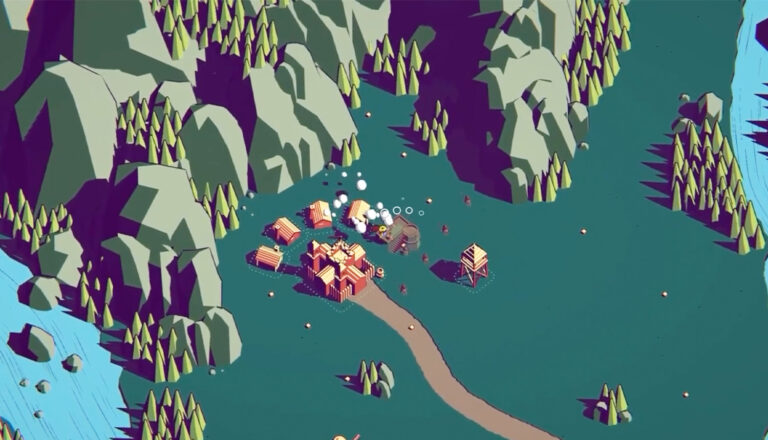
This is a minimalist tower-defense game that keeps things bare bones. It’s easy to pick up and there’s no messy cut scenes or dialogue. This indie title is simply focused on presenting a cel-shaded, pleasing-to-the-eye graphic style while offering an escalating, strategic depth. And the game can be consumed in minutes or hours—all depending on how much playtime life throws your way.
All in all, Thronefall is pretty impressive.
The premise here is simple: You start with a small base (or castle) that you must defend at all costs. Of course, you’ll want to do more. There are houses to potentially build, fortifications to construct, soldiers to train, buildings to upgrade. But those all require money.
So, right out of the gate, players realize that their gameplay will be divided into two camps: building their fortress and building an economy. Those two responsibilities are divided into two parts, as well: day and night.
Days are for building. Nights are spent battling and defending. Initially, the only money you make is from the enemies you defeat in those nightly raids and the few gold coins they drop.
With the next day, you then have choices to make. Should you use your tiny pool of resources to build up your defenses? Perhaps construct a ranged tower or a barricade? Or do you want to build money-making structures, such as a house, a farm or a gold mine? These special buildings produce a steady stream of income with each new dawn, but they also require protection every night.
Oh, and there’s another level of strategy to consider. If you want to start building the really useful structures, such as training camps for knights and spearmen or heightened defenses such as a tower ballista, you’ll need to upgrade your castle. And that requires a fairly sizable investment of funds.
Meanwhile the nightly enemy raids are intensifying. The hordes are growing. The ranks that started with a handful of angry peasants and archers begin to swell with monsters, flying beasts, swarming onrushes and armored catapults. It’s up to you to decide where the strategic balance lies and what the wisest investments may be.
Thronefall offers single-player play only. The game does not include a multiplayer option and it does not require an internet connection.
POSITIVE CONTENT
Thronefall is a building and battle game that focuses on strategically constructing a well-functioning and safe society in the midst of growing threats.
The visuals are colorful and pleasing and the soundtrack features medieval folk music that nicely fits the setting.
Combat is a big part of play here, though it is kept mess-free. If the central character avatar falls in battle it will regenerate after a brief cool-down period. And if the castle falls, players have the option to restart play on the day of the loss and readjust the coming night’s defenses accordingly. If the castle survives, destroyed fortifications automatically reconstruct the next day.
CONTENT CONCERNS
There are no major concerns in this game, however, a growing enemy onslaught is a key part of play. Players start with a single small avatar that wields a bow and a knife and can attack automatically from a distance or up close with a button push. But the auto-battling defenses (independently-attacking soldiers, archers, hot-oil pours, exploding traps, etc.) are the primary means of protection. (Foes have a declining health gauge and blink out of sight when defeated.)
Sometimes the attacking forces can feel frenetic and overwhelming if the proper defenses have not been put in place.
Enemies include golems, airborne magic-casters, slime monsters, stinging wasps and human combatants that attack with swords, arrows, cannon-like fire and bursts of flames.
There are some late-game spikes in gaming difficulty that may frustrate younger gamers.
GAME SUMMARY
If players want some straightforward, mess-free, tower-defense strategy play, they won’t find many better kingdoms to rule than those in Thronefall.