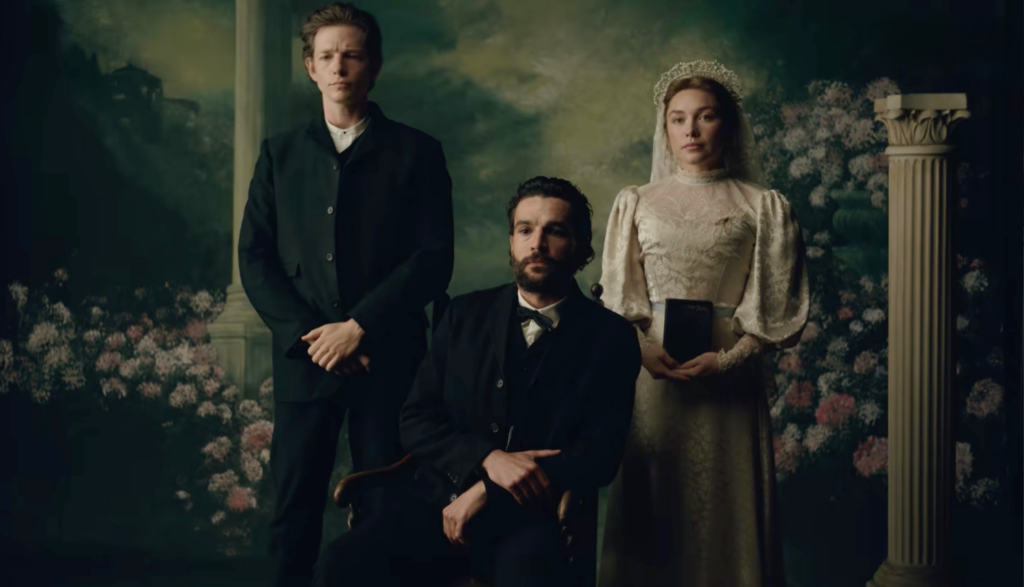
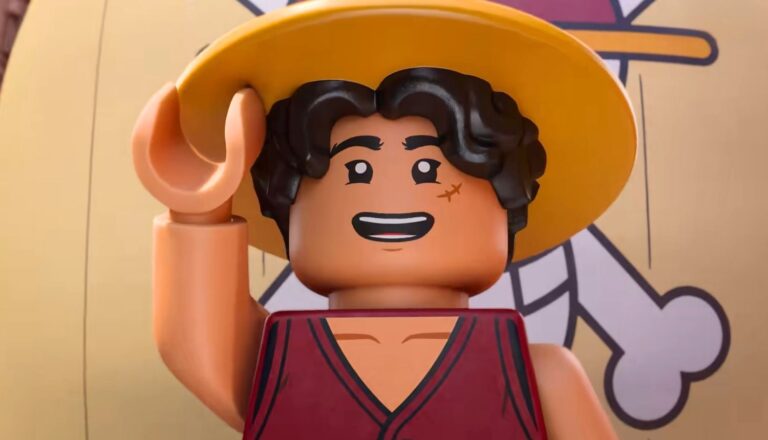
Lego One Piece
On its own, ‘Lego One Piece’ is blocky animation with some odd mystical elements. But the show could lead young viewers toward its more problematic inspiration.
Evil is not always apparent at first glance …
At first glance, that statement summarizes Cathy Ames entirely. After a beaten, bloodied Cathy crawls up on the porch of brothers Adam and Charles Trask, she immediately becomes a great source of tension between the recently reunited siblings. And now, they must decide what to do with this seemingly victimized woman who has slammed into their lives with the same sudden, jarring force as a rifle recoil into the shoulder of the soldier who pulled the trigger.
Long before the arrival of Cathy, Adam and Charles’ father, Cyrus—a self-proclaimed hero of the Civil War—raised his boys to follow in his footsteps. Adam felt forced into a life of violence that he never wanted. And Charles wanted nothing more than to be Cyrus’ favorite, to make his father proud on the front lines of whatever war his country might conjure up for him to fight in.
It would seem neither brother got the fate he wanted, a fact that sunk Charles into a complex blend of jealously and hatred for his brother.
Having now reached adulthood—and with each man’s permeating longing to be reconnected to his brother having finally overpowered the deep hurt left behind by their upbringing—Adam and Charles reunite at last. Although, this reunion is short lived due to the aforementioned arrival of one Cathy Ames.
As one brother begins to fall in love with Cathy, who is slowly being nursed back to health, the other may be the only person who can truly see what she is.
Evil is not always apparent at first glance.
But can one word sum up an entire person? Does one’s past define his or her entire future, or does one have the agency to overcome their worst impulses?
This being the most recent retelling of John Steinbeck’s highly regarded 1952 novel of the same name, audiences can expect much of the runtime to be filled with melancholic ruminations on the nature of sin. Viewers hoping to put on some content for background noise to accompany their social media scrolling sessions may be better served retreating to a series with less brotherly rivalry and brothel visits. Yes, the content here is explicit and bleak—but perhaps not without purpose.
In many ways, East of Eden is recycling the stories that have literally defined humanity. The series pulls from biblical narratives, such as the Fall of Man and the story of Cain and Abel. Like the novel it was based on, the series wrestles with sin—the impact it has on both the sinner and those around them.
In seven episodes, viewers are subjected to characters who are about as “good” as a sinful human could achieve, juxtaposed with one whose sense for self-destruction is rivaled by few other fictional characters. In both cases, the characters here could easily slip into their worst selves and be brought down to the level of depravity that their friends and family have subjected them to. However, there is also a palpable feeling that they could still find some sense of redemption.
It is these concepts of forgiveness and absolution that make God so different from the humans that He created. While the series showcases humans committing what society may deem as unforgivable, life-ruining acts against one another, East of Eden still hints that these people may yet have capacity for good—a fleeting softness within the cold heartedness, a passing glance filled with momentary regret.
Unfortunately, while the series is playing with concepts that are very much in line with Christianity, the show cannot be sold on those merits alone—especially to families.
In order to delve into concepts of redemption, East of Eden first must push its characters to the very edge of debauchery. Much of this is on full display for viewers—and it may be hard to shake off once the credits roll.
Cathy spends significant time of the series working in, or running, a brothel. Nudity and sex within this context are in nearly every episode, sometimes tied with masochistic fetishes. Multiple bloody beatings—a few of which are aimed at women—also add to the heavy nature of the series. In one episode, a woman attempts to perform an abortion on herself. (The act causes her harm, but both she and her babies survive.) Language is infrequent but present throughout.
These content issues will likely prove too heavy to wade through, and the series’ contemplative ruminations on the nature of good and evil may not be worth the time spent in pools of blood or degenerative sexuality.
The portrait East of Eden paints is one of cruelty and forgiveness, of generational trauma and cyclical destruction. The series’ thesis is that every person can choose their path forward, and while the consequences for certain actions are inevitable, one does not have to live captive to those past decisions forever.
Yet in the same sense, viewers must discern whether the mental consequences of this series will be worth the lingering effects of what East of Eden has to offer—both visually and conceptually.
(Editor’s Note: Plugged In is rarely able to watch every episode of a given series for review. As such, there’s always a chance that you might see a problem that we didn’t. If you notice content that you feel should be included in our review, send us an email at letters@pluggedin.com, or contact us via Facebook or Instagram, and be sure to let us know the episode number, title and season so that we can check it out. )
The arrival of a mysterious woman on the verge sparks tension between recently reconciled brothers, Adam and Charles. Flashbacks show the tough upbringing these two men endured at the hands of their strict Civil War veteran father.
Cathy’s voiceover in the opening of the episode references the biblical narratives of the book of Genesis, including the Garden of Eden and the story of Cain and Abel. A preacher at a funeral mentions the “eternal weight of glory beyond all comparison” that believers will receive in heaven. An ex-pastor says that he left the church not because he stopped believing in God, but because his congregation lost their faith in him.
We first see Cathy on the brink of death, bruised and bloodied. The woman’s wounds are certainly wince-worthy. Charles, suspicious of how she got her wounds, greets her with his rifle—until Adam sweeps in to care for the woman. Flashbacks to the Trask brothers’ childhood depict the two boys being trained for a life in the armed forces. The two children obliterate a few tin cans and an unsuspecting rabbit with firearms. Their father reprimands one of the boys, telling the child to fetch a switch. The child removes his shirt, and the audience hears both the sound of the stick hitting skin, as well as the boy’s tearful cries.
A war veteran touts the bullet that he supposedly bit down on while his leg was being amputated as a sort of trophy. Two boys tussle and fight a few times, with one instance escalating into a bloody beating.
A young man takes moral issue with the massacre of a seemingly nonviolent Native American tribe. The soldier observes a mother and her baby, and while the siege itself isn’t visible, we hear the mother and her child scream as their village is ransacked.
A man sustains a bloody gash on his forehead after accidentally hitting his head on some farming equipment. A man dies of pneumonia. It is said a woman purposely drowned herself in a puddle of rainwater.
The Trasks’ father describes the many battle victories that he participated in. At least some of these stories are false, conjured up so he can trick fellow veterans and steal from them.
A young man visits a brothel with his brother, soliciting the services of a prostitute. While much of the interaction is partially blurred, viewers catch the movement and sounds of intercourse. The woman’s bare breasts and man’s backside are briefly seen. The man then offers the services of the woman to his brother, who seemingly declines.
Characters drink socially. We are told a father would pour whiskey down the throats of his infant children to get them to stop crying.
Two uses of “d–n” and a use of “h—” round out the light language of the episode.
While the series’ frequent discussion of and visits to brothels make for sexual content concerns in near every episode, this episode may be the peak of the debauchery on display. Cathy reports that “the only true freedom in this world is economic freedom—and for the modern woman, that presents a problem.”
The solution to this problem, apparently, is to climb the ranks of a local brothel.
Multiple scenes include scantily clad or entirely undressed prostitutes either waiting for their services to be solicited by male patrons or already in the act. Breasts and rear ends are visible on a few occasions, and a scene includes multiple quick cuts of the various positions and sexual acts a worker performed for multiple customers, including oral sex.
A woman describes the act of having sex with “unclean” men in elaborate, grotesque details. A woman moans from stomach pain, and someone mistakenly believes she is having sex, commenting, “Can’t a woman enjoy herself?”
A prostitute says some of her clients incorporate a level of sadistic pain into their pleasures—including small cuts on their skin or asking her to dig her heels into their groins. In one instance, a patron is maliciously rough with the woman he sleeps with, hurting her. When asked where she was injured, the woman points to her crotch, saying “I cried in front of him, and he liked it.”
A woman says there’s an epidemic of older prostitutes killing themselves when their beauty begins to fade with age. A woman is slowly poisoned with multiple drugs, and her death is made to look like she succumbed to an unknown illness.
In addition to this drawn-out drugging, we hear multiple mentions of pills for illness or pain caused by frequent sexual interactions. Characters drink in the brothel and some are heavily inebriated.
One prostitute reads fortunes, and she offers to do so for the women of the brothel. We hear that a rival brothel has temporarily closed to observe Lent. Several women vomit, either from illness or being drugged.
Language includes four uses of “d–n,” three of which are paired with “God.” Three other misuses of God’s name are present. We hear a slur aimed towards a Chinese character. Men consistently refer to the women employed at the brothel as “whores.”
Jonah Parker’s first interaction with Plugged In came when he was just five years old, after his parents read a review for The Chronicles of Narnia: Prince Caspian and deemed the content too intense for him. What started out as a contentious relationship between Jonah and a staff of reviewers who knew not of his existence would later turn into an appreciation for the site’s ability to present media content in a way that was accurate and fair. Jonah enjoys analyzing how our entertainment echoes the creativity of our Creator while finding glimpses of Biblical truths within every genre. He believes that Robert Pattinson’s Batmobile is the perfect mix of cool and practical.

On its own, ‘Lego One Piece’ is blocky animation with some odd mystical elements. But the show could lead young viewers toward its more problematic inspiration.

The characters of Paramount+’s MobLand love their families. But the series itself isn’t anything resembling family friendliness.

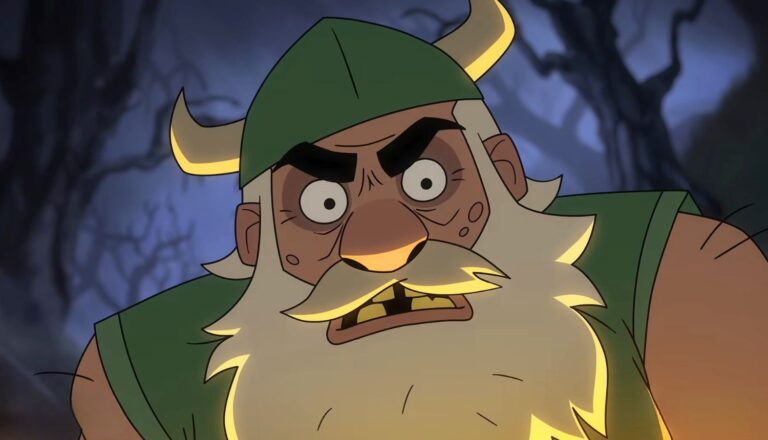
Paramount+ reboots the video game franchise ‘Golden Axe’ with a tired storyline and new content issues.

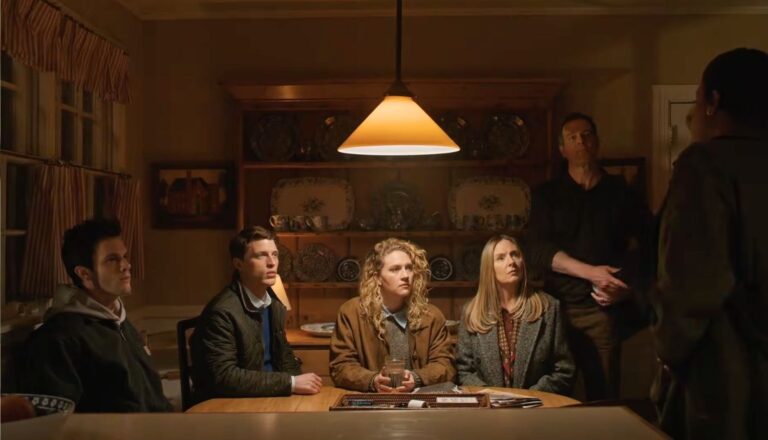
The Hollingsworths don’t care much for each other, and they certainly have their share of secret affairs. But will they keep one another out of the line of fire?