



The Brink of War

Content Caution

HeavyKids
MediumTeens
LightAdults

Credits

In Theaters

Cast

Home Release Date

Director

Distributor

Reviewer

Jonah Parker

The Brink of War, tackling a critical moment of the Cold War, plays out mostly how you might expect, with a few unexpected surprises. Parents should be aware that the movie comes with some strong language, but it also includes a welcome level of depth surrounding its main two historical figures.

  • Previous
  • Next

Movie Review

I think it’s safe to say that most people, if given the option, would prefer to not get into a heated political debate with someone on the opposite side of the aisle. Social media feeds are tailor made for the individual, ensuring that people are rarely forced to hear a viewpoint that isn’t their own. For many, the easiest way to avoid disagreement is to avoid the topic altogether. And, with the holiday season approaching, there well may be a family member that you would avoid a political debate with at all costs—with little at stake other than an evening filled with annoyance.

The Brink of War delves into one of the most high-stakes political discussions in American history. And the stakes are much, much higher than a ruined Thanksgiving dinner.

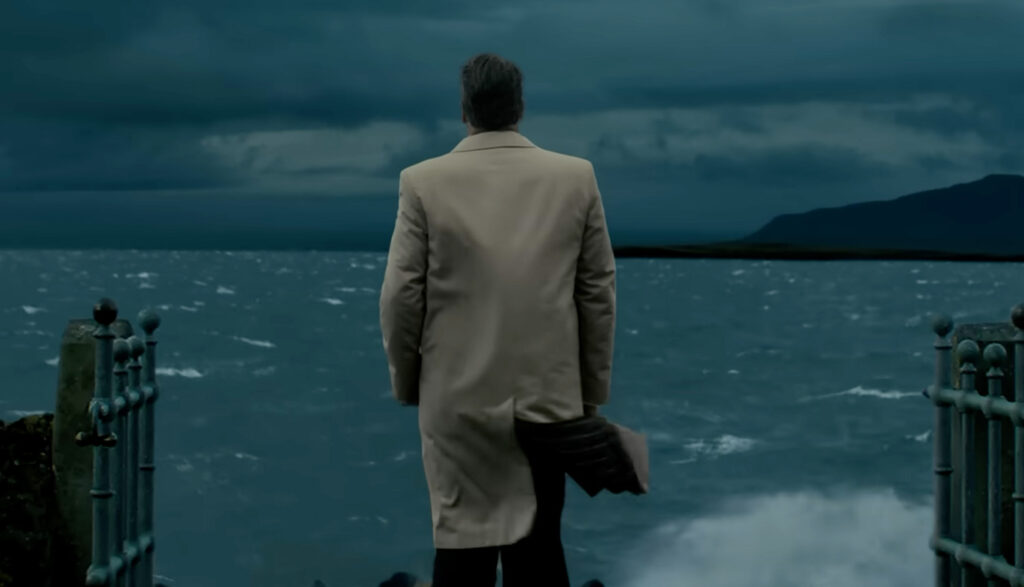
The year is 1986, and President Ronald Reagan is about to meet in a remote locale in Iceland with Soviet Union president Mikhail Gorbachev, a conversation that could lead to both nations actually shrinking the number of the world’s nuclear warheads—which would be a first in world history—or it could escalate the situation further. As the two men sit down to discuss weaponry, human rights and the United States’ fledgling missile defense system, they also begin to sift each other’s mettle—who they are, what they represent and what they truly want to accomplish. The world waits as the conversation continues, knowing that what they say could calm—or shake–the globe.


Positive Elements

The core goal of this Icelandic summit (which takes place in a remote house near the country’s capital of Reykjavik) is a praiseworthy one: To pull both countries back from (as the movie’s title suggests) the brink of war. Initially, Reagan and the U.S. believe that they’re simply aiming to cap, or slow the growth, of nuclear weaponry (along with other matters). But it soon becomes clear that a much loftier ambition may be on the table: The actual elimination of nuclear missiles. And that would be a worthwhile goal indeed.

One of the summit’s thorniest discussion points, though, is Reagan’s missile “shield,” known as SDI. While Gorbachev insists that the program violates existing treaties, Reagan contends that the shield will make the world—not just the U.S.—safer. And at one point, he even offers to share the technology with the Soviet Union so that they can have a missile defense system, too. Reagan also seems greatly concerned with the Soviet Union’s dismal record regarding human rights, and he continues to prod Gorbachev to improve that record.

While the film clearly views Reagan as the movie’s main protagonist, it doesn’t paint Gorbachev or the Soviets as cartoonish villains. Indeed, Gorbachev is the one who opens the door to shrinking—or even eliminating—nuclear weaponry, and he’s willing to call out what he sees as U.S. hypocrisy—hoping to hold the country to a higher standard. Both parties spend most of the film discussing their ideologies, and for much of the conversation there is a certain level of mutual respect. Both men intend to do what they believe is best for their people, and they aim to come to a conclusion that pushes toward a more stable peace.

Raisa Gorbachev, the general secretary’s wife, points out the hypocrisy of journalists during an instance where they criticized her for wearing the same outfit twice in public, especially while people are starving in her country.

Back in Washington, D.C., as the summit is going on, Reagan’s wife, Nancy, launches a national campaign for breast cancer awareness.

Spiritual Elements

Reagan quips that the house the meeting takes place in is haunted and has a ghost problem. Discussion of “God-given rights” happens a few times throughout the two leader’s conversations. Nancy Reagan (who in real life did embrace astrology) mentions a horoscope. (“Well, Mars is ascendent, so we have that going for us,” she tells her husband over the phone as she looks at a chart.)

After Reagan uses the expression “Christmas is coming!” Gorbachev is confused by the reference, leading Reagan to quip “I forgot you’re all atheist.” Reagan also makes a comparison to the Communist party and religion, saying “There can’t be an almighty God when there’s an almighty party.” Gorbachev comments that religion is nothing more than a false prophet, and that people need to save themselves.

A journalist mentions Norse mythology, specifically Odin, Thor and Loki. Reagan questions Gorbachev about the Russian Jews who wish to emigrate to Israel, and the Protestants who want to emigrate to America. (The Soviet Union doesn’t allow its citizens much freedom to travel abroad, much less leave the country permanently.) Gorbachev claims that “Jesus was the first Socialist.”

Sexual & Romantic Content

Reagan changes into a different shirt, and we see his bare torso. Mr. and Mrs. Gorbachev embrace during a private conversation. Raisa also tells reporters about how she and her husband are spending their time in Iceland on a ship: “It is very romantic,” she says. A reporter quips to another, “There’s one image I won’t be able to get out of my head.”

Violent Content

While no violence is explicitly seen (other than some table-pounding), much of the film is spent dealing with the topic of war. Conversations revolve around how many missiles each nation has, where they are, and how quickly they could strike a city if necessary.

We hear mentions of the onslaught of the Nazi regime, as well as the purges of Stalin. Gulags (forced Soviet labor camps) are brought up on multiple occasions, specifically their use as “torture prisons.” Stalin’s massacre of “12 million farmers” is a topic of conversation. Mustard gas and other weapons of war are talked about.

Reagan claims that a Russian man told a journalist that he wanted to bludgeon Gorbachev with a hammer and a sickle. Gorbachev comments that his people can’t shoot him—a reference to the assassination attempt on Reagan’s life.

Reagan has multiple nightmares where viewers hear gunshots, the sound of bombs dropping, and screaming. We see a scar from where an assassin’s bullet hit his torso.

Reagan sleeps in a bedroom filled with the mounted heads of animals, and he jokes that it’s “like a menagerie of death around here.”

Crude or Profane Language

The film contains some surprisingly harsh language for its PG rating, including three uses of the s-word, a use of “d—,” and a handful of uses of “h—.” The term “pissed off” is thrown around a few times as well.

Drug & Alcohol Content

Characters smoke, and others discuss going to a bar and being hungover the next day. We hear people reference whiskey, beer, and schnapps.

Other Noteworthy Elements

Someone seems to be about ready to vomit after a night of too much drinking. Gorbachev comments that time is the only thing you can’t take, borrow, or steal. While much of the conversation is somewhat polite, moments of tension cause emotions to run high. The two men yell at each other, pound a fist on the table, and poke holes in each other’s leadership style.

Multiple scenes revolve around men waiting for a restroom, with jokes made about the situation.

Conclusion

The Brink of War takes us into a critical 30-hour period in world history—one that arguably began the process of extinguishing the Cold War, but perhaps heralded the collapse of the Soviet Union itself. As such, this is an interesting film, one that will likely find an appreciative audience. The movie doesn’t reach the heights of some other recent historical biopics, but it does have a strong points that viewers can latch on to.

The film boasts a strong cast, including Jeff Daniels, Jared Harris and Oscar-winner J.K. Simmons. And it makes an effort to portray both Reagan and Gorbachev as fully realized individuals. Gorbachev (rivetingly played by Harris) is not akin to a ranting, angry, cartoon villain. He truly believes that his methods are justified, and the film gives him plenty of opportunity to go toe-to-toe with Reagan on a variety of issues—including whose nation, and what system of government, truly helps its citizens more. That’s not to say the film doesn’t take a clear side… but the movie’s effort in painting both leaders as flawed men who aim to see the betterment of the nations they represent is admirable.

The surprisingly strong language and the subject matter put the movie out of reach of kids, and the pacing may be a deterrent for teens as well. This is a film heavy on dialogue and light on action: Indeed, a bit of table-pounding is about the only “action” we see here. That being said, for those hoping to take a relatively tame trip to the theater and explore a fascinating bit of history, The Brink of War will likely scratch the history buff itch.

Jonah Parker

Jonah Parker’s first interaction with Plugged In came when he was just five years old, after his parents read a review for The Chronicles of Narnia: Prince Caspian and deemed the content too intense for him. What started out as a contentious relationship between Jonah and a staff of reviewers who knew not of his existence would later turn into an appreciation for the site’s ability to present media content in a way that was accurate and fair. Jonah enjoys analyzing how our entertainment echoes the creativity of our Creator while finding glimpses of Biblical truths within every genre. He believes that Robert Pattinson’s Batmobile is the perfect mix of cool and practical.