Album Review
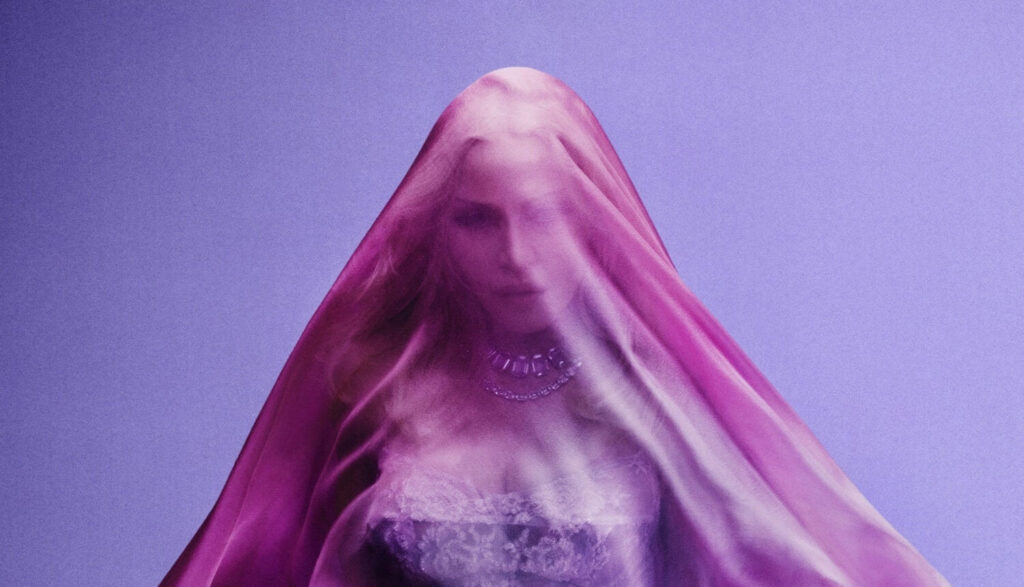
Confessions II arrives not as a continuation but yet another reinvention of the Madonna project, especially from her work over the last two decades.
A spiritual successor to her 2005 album, Confessions on a Dance Floor, Madonna’s latest swerves away from her recent string of releases both in tone and critical reception.
Returning to her original record label, Madonna’s clearly taken back the reins of her creative writing process (9 of the 16 songs contain solo writing credits). Her signature vortex of social, political, religious, and sexual imagery swirls across these heart-racing tracks.
And she’s doubled down on her electronic dance music formula, while also enlisting the help of Sabrina Carpenter, who herself has taken on a Gen Z Madonna impression the past few years.
Confessions II is hardly a minor Madonna album, if there could ever be such a thing. In these songs, she grapples with the grief of losing her brother. She rages against her late stepmother. She collaborates with her own daughter in an attempt to restore her broken family.
Sorting through such weighty trauma on the dance floor may seem counterproductive to some. But to Madonna, it’s clearly the only place that could ever make sense.
POSITIVE CONTENT
Now in her late 60s, Madonna’s still singing about her search for love and attempt to heal from wounds. This leads her to unravel parts of her autobiography that have been notably absent from her recent work.
“One Step Away” sees her admit that “Nobody’s free until they’re broken…Nobody’s free, it’s just a token.” Madonna seemingly recognizes the chains of addiction in her lifestyle and how freedom exists in breaking away from them.
“Everything” shows how Madonna’s unwilling to put up with the destructive cycle in her life. She stands up for herself as she sings, “Why you always make me feel so bad about myself?” and later, “Wherever’s the greatest amount of darkness/That’s where you’ll find the greatest light.”
On “The Test” Madonna sings with her daughter and appears to find solace in the fact that she is “a hand reaching tenderly to me” before admitting “you are my reason to be.” She goes on, “You made me whole when I was broken too/I hope and pray I can do the same for you.”
CONTENT CONCERNS
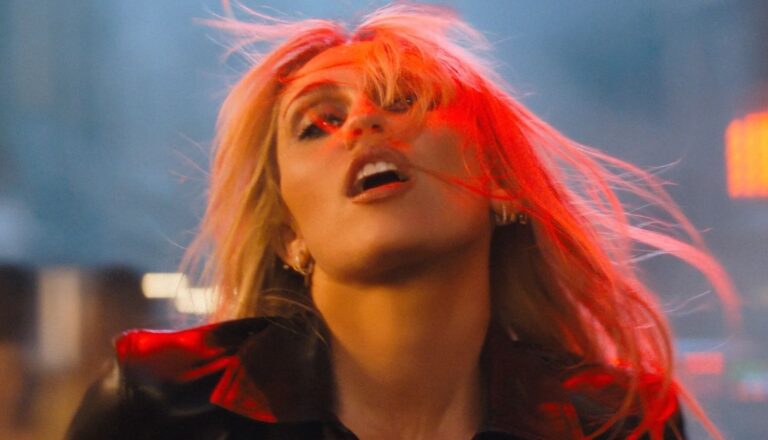
“Bring Your Love” pairs Sabrina Carpenter with Madonna in a plucky dance track designed to whisk you away into a numb high. The duo repeatedly begs an anonymous lover to “bring your love.” It’s the type of request with several layers of innuendo and unhealthy overreliance on a relationship.
Attached with a popular music video, Madonna and Carpenter wear revealing outfits and dance in a club with hardly clothed men and women floating in the background.
“My Sins are My Savior” features Madonna singing about how her harmful habits are her lifeline. It’s an alarming position considering the damaging outcomes of sin that we find in Madonna’s history. It feels almost a repudiation of the thoughts she shares in “One Step Away,” and she repeats the ironic line: “Come into the light/My sins are my savior.”
On “I Feel Free” Madonna’s desperate for relief and a fresh start, no matter the cost. She sings, “Been so lonely, I can’t take it anymore/Give me some champagne so I can get on the floor tonight.”
“Read My Lips” and “Everything” both describe how Madonna feels following dashed hopes at love or ongoing relationships. As love dwindles, she turns material and destructive. She sings, “You are not my friend, never were…Shut your mouth.” Also, “It’s not okay. I don’t f— with it.”
“One Step Away” reveals what Madonna thinks will actually save her as she sings, “Come and get salvation…We’re all waiting for our freedom.” She’s only one step from letting loose on the dancefloor where she thinks she’ll find relief.
“Fragile” is a tender song focused on her brother’s passing (which occurred during recording of this album). Madonna’s views on death and the afterlife appear as she sings, “Energy never dies/This is just a portal we’re going through” and “I see inside your soul and I feel whole.”
“Good for the Soul” contains several references to astrological signs and finding connection in “Traveling through space and time” and letting the “Interstellar helix unwind.”
On “School” Madonna portrays herself as a teacher of love. She sings, “I need a blank canvas and I’ll paint my desire” and “I only need two things: Trust and Romance.”
Several songs such as “Danceteria,” “Bizarre,” and “Love Sensation” detail (at times graphically) nights where Madonna finds love at and outside the club.
Given the album’s fixation on dance clubs, there are a handful of vulgar references to drinking and dancing, as well as sparse profanity such as a repeated f-word and one s-word.
ALBUM SUMMARY
As is often the case with an aging popstar, reflections turn murkier the longer one looks in the mirror. It’s clear Madonna yearns to freeze time if not return to her past, as she’s afraid of plunging into her unknown future.
She has regrets. Who doesn’t?
But when you’ve been in the spotlight for as long as she has, everyone already knows your sins. So is it even worth bothering with confession?
Confessions II rarely takes us outside the club. Yet the lone moments when she does escape the dance floor reveal a Madonna who’s open to the possibility there could be relief from the pain she’s experienced for so long.
While both her sound and persona have always been rebellious and on the cutting edge of pop trends, Madonna remains trapped in a self-destructive cycle of sexual and emotional desire.
Those poignant moments remain brief and are quickly overpowered by the irresistible magnetism of fatal vices that sadly make confessions necessary in the first place.
While her staying power and musical flexibility remain impressive, a personal adherence to Madonna’s confessional lifestyle will prove lethal for listeners who are untethered to a lasting foundation.