


Drama
East of Eden
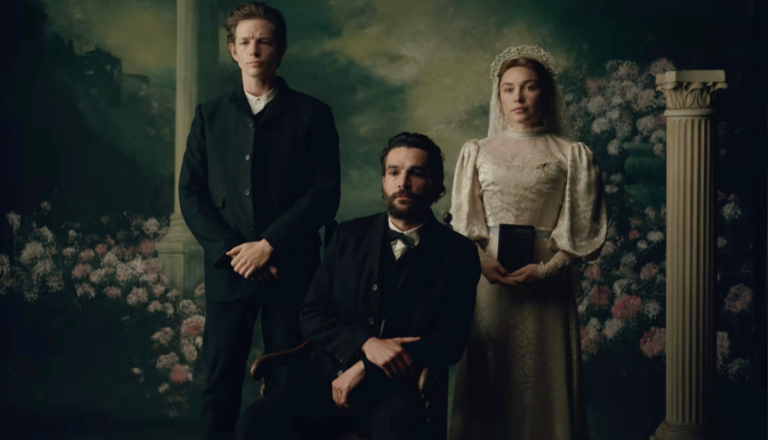
Netflix’s ‘East of Eden’ serves as a solid retelling of John Steinbeck’s epic novel—including all the moral quandaries of its source material in explicit fashion.
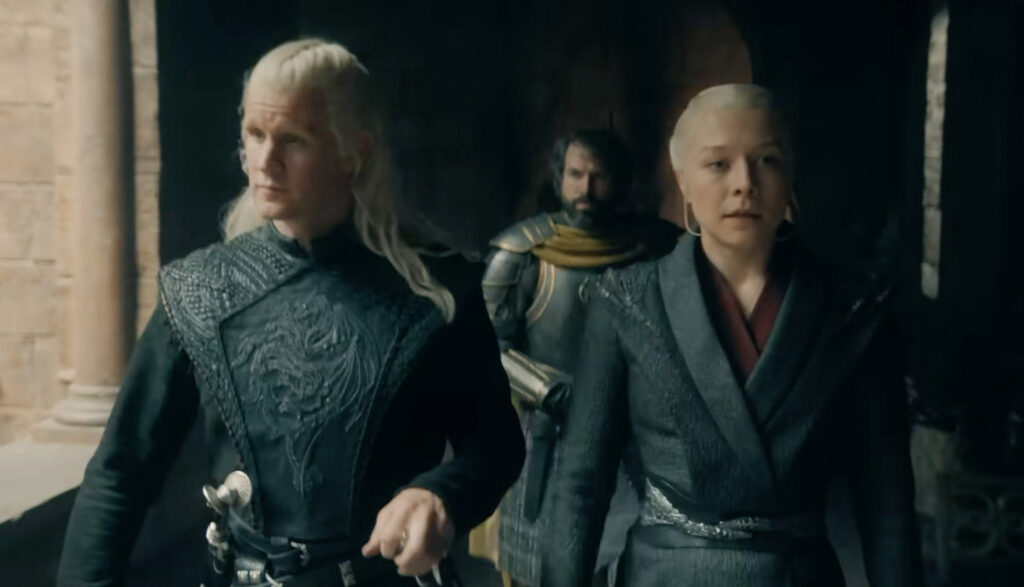
A long time ago, the House Targaryen conquered the Seven Kingdoms of Westeros with the help of their dragons. That was before the Mad King, Aerys Targaryen, was killed by Jaime Lannister. It was before Daenerys Targaryen became the Mother of Dragons and Khaleesi of the Great Grass Sea. It was before Jon Snow learned he was a Targaryen himself—not a Stark, as he long believed.
Back in that day, no one dared to stand against such formidable flying and fiery foes. Thus, King Jaehaerys ruled Westeros through 60 years of peace and prosperity.
Unfortunately, the Old King (as he became known) had no living son to name as his heir. So, he called a council to select a successor to the Iron Throne.
A thousand lords came to the castle at Harrenhal. Fourteen of those laid claims, but only two were truly considered.
Princess Rhaenys Targaryen (the Old King’s granddaughter) was his eldest descendant. However, Prince Viserys Targaryen (his grandson and the Prince of Dragonstone, the Targaryen’s ancestral home) was his eldest male relative.
Viserys was named Jaehaerys’ heir. When the Old King died, Viserys took his place on the Iron Throne without contest. Which, of course, had been the king’s intention all along—to avoid a war of succession.
Because the Old King knew: The only thing that could tear down the mighty House of the Dragon was itself.
Unfortunately, for all of Jaehaerys’ good intentions, they were all for naught.
Viserys is indeed crowned king. But after multiple failed attempts to produce a male heir and the eventual death of his wife, Aemma, he’s presented with a difficult decision: to let his violent and impudent brother, Daemon, succeed him as king; to remarry and name any potential male children from that union as his heir; or to choose his eldest child—his daughter, Rhaenyra—as the first Queen of Westeros.
Viserys names Rhaenyra his heir, but he also marries Alicent Hightower, Rhaenyra’s childhood best friend, who bears him three more children, including two sons. And when Viserys finally passes away, his final words leave the two women feuding over the meaning. Alicent believes Viserys named her own son, Aegon, as heir. But Rhaenyra, who also has a son named Aegon (because that’s not confusing), believes Viserys was referring to her own family.
Now, the two families—the Greens and the Blacks, representing their house colors—are at war. And with dragons in the armory of each faction, someone is bound to get burned.
House of the Dragon is a spin-off to HBO’s previous series, Game of Thrones (based on the books by George R. R. Martin). And it pretty much measures up to its predecessor. Which isn’t exactly a good thing.
Skulls get ripped apart in battle. Onlookers cheer at a tournament as knights kill each other for sport. The City Watch beheads and dismembers several criminals in a public spectacle. One man, accused of rape, has his testicles chopped off, and we see the offending appendages tossed onto a pile of other severed limbs. Characters attempt to take their own lives—and according to the book this story is based upon, some eventually do.
But there’s also a considerable amount of violence carried out by and against children. First, a woman is given a tea that ends unwanted pregnancies after she has some premarital sexual encounters. We learn about child fight rings, primarily featuring the illegitimate children of a king. Young children (primarily girls) are pledged in marriage to much older spouses. And half the reason the Greens and the Blacks are fighting is over the premature deaths of Rhaenyra’s and Alicent’s children. Rhaenyra’s son, Luc, cut out the eye of Alicent’s son, Aemond. Years later, Aemond killed Luc (albeit accidentally). Then Daemon paid assassins to kill Aemond in retribution, but the killers couldn’t find him. So they cut off the head of Aemond’s 6-year-old nephew instead. (This scene occurs just offscreen, but the lead-up and subsequent sounds of a saw are nauseatingly disturbing.)
Sensitive viewers should also be warned of a childbearing scene where the mother is bloodily cut open in an attempt to save her child. And further episodes discuss miscarriages and depict stillborn births.
Sexposition—a term that the show’s predecessor gave birth to itself—also makes a reappearance with graphic sex scenes preceding or even occurring during important dialogue. Extramarital affairs are common (and attempts to convince the offending spouses to stop are scoffed at). Rhaenyra and her first husband, Laenor, agree to have an open marriage since Laenor is gay. (And Rhaenyra displays the occasional same-sex attraction, kissing a woman in Season 2.) Their children are actually the sons of Rhaenyra’s lover. And the pair eventually fake Laenor’s death so he can run away with his own paramour and Rhaenyra can marry Daemon. And speaking of which, the Targaryen family is well known for its practice of incest. Rhaenyra marries her uncle. Alicent’s son and daughter marry each other. And there are also marriages between cousins.
Other problems include foul language (up to and including the f- and c-words), dark magic, prophetic dreams and worship of multiple “gods.”
House of the Dragon is, in short, just as problematic as its predecessor. This may be one house to avoid.
(Editor’s Note: Plugged In is rarely able to watch every episode of a given series for review. As such, there’s always a chance that you might see a problem that we didn’t. If you notice content that you feel should be included in our review, send us an email at letters@pluggedin.com, or contact us via Facebook or Instagram, and be sure to let us know the episode number, title and season so that we can check it out.)
Following a promised surrender from Alicent, Rhaenyra plots a takeover of King’s Landing, home of the Iron Throne. But unknown to Alicent, her son Aegon has fled the kingdom, abdicating the throne to his brother Aemond. And Aemond has already set plans in motion that will ruin Alicent and Rhaenyra’s agreed-upon peace.
Dragons cause much of destruction and loss of life. They burn ships filled with sailors and even attack each other in the air. Sailors attempt to counter the dragons by firing anchored harpoons at the beasts. One dragon, after it’s impaled by one such spear, is dragged beneath the depths of the sea. Its rider frees himself and swims to the surface—only to be shot and killed by arrows fired from enemy ships.
And speaking of human-caused deaths, two massive fleets go to battle. When the ships are further apart, they mostly just shoot flaming arrows and cannonballs, setting each other’s sails aflame. But once they get closer together, the real carnage begins. Some ships act as battering rams, cleaving enemy ships in half. Men stab, slice and otherwise smash each other to bits. Blood spurts from every angle. Dismemberment is frequent.
Corlys Velaryon, who leads Rhaenyra’s fleet, orders his ship to sail through a dangerous pass in an attempt to distract Lohar, the admiral of Aemond’s fleet. Lohar wants revenge against Corlys for ravaging her ships the past 20 years. She gives chase, running two of her ships aground in the process. She only manages to save her own flagship from sinking by tossing several armor-clad soldiers (essentially acting as heavy anchors) into the water.
Meanwhile, land battles take place on the continent. Much like the sea battles, soldiers tear each other apart with swords, axes and arrows. We see many, many guts spilled. One army pledges itself into the service of another by tossing the head of an enemy at the leader’s feet. They then cheer when that leader promises there will be more fighting to come.
A dragon burns a sheep alive and then eats it. Later, it regurgitates two whole animal corpses after hunting. It cooks them both with its fiery breath before offering one carcass to its master. We see dragons eating animals elsewhere, too.
A young woman takes charge of a dragon, but she struggles to maintain her control over it: Keeping her seat on the saddleless beast is a challenge in and of itself. It attacks her allies, and she’s devastated by the loss.
A man is yanked from his bed and threatened with beheading, but someone comes to his aid. Two other men are threatened with beheading by some soldiers, but one man manages to convince the soldiers that the bounty for catching him and his companion alive is worth more than bringing them in dead. The soldiers are swayed, but they heartlessly kill the people transporting the two men.
A woman is choked, held underwater and eventually stabbed by a man after she kills his father. Someone is punched in the gut after spitting at a soldier’s feet in defiance. A man says that he never knew his mother and grew up on the streets. He claims that he was kicked around more than a “mongrel dog” and that he wished for death more days than he wished to live.
A naked woman (we see her breasts) grabs her clothes and flees the makeshift tent of a knight, sobbing heavily. It’s suggested that the knight should be punished for “ravaging” the girl, but his commanding officer pays it no mind. A man says that when he was a child, a priest (of one of Westeros’ multitude religious sects) took a “fancy” to him and paid him to “do things”—the meaning almost certainly being sexual in nature. A man kisses his mother on the mouth, but he lingers in a way that seems to make her visibly uncomfortable.
We spot a horned, growling, man-like creature in the woods. A woman claiming to be a witch shows up in one scene to deliver a message.
A man recovering from some serious burns (his face is heavily scarred from dragon fire) begs for milk of the poppy, a sort of painkiller. Two men share a bottle of liquor. We see a man crouching as he defecates in the woods.
There’s plenty of lying, betraying and plotting throughout the episode. Rhaenyra plots fratricide. A man apologizes to his illegitimate son for not officially recognizing him. Rhaenyra laments that even after all this time, people still won’t take her claim to the Iron Throne seriously because she is a woman.
A mother agrees to give up two of her sons in exchange for her safety and that of her daughter and granddaughter. She even coerces one of her sons into embarking on a dangerous mission. Meanwhile, another mother volunteers herself for a risky battle to protect her son. But her son, fearing for his mother’s life, locks her in her chambers and goes to battle himself, hoping to win her a great victory.
We hear about 13 uses of the f-word, two of the s-word and one of the c-word. There are also uses of “b–ch” and “p-ss.”
Daemon hires assassins to kill Aemond in retribution for the death of Rhaenyra’s son, Luc. Instead, the assassins kill Aemond’s nephew, a small child. Unable to tell the difference between the boy and his twin sister (it’s suggested that they could strip the children down, though they ultimately don’t), they force his mother to identify him. Then they hold the child down before the camera pans away, and we hear his cries just before his head is cut off. (We hear a knife or saw slowly cutting through bone as the boy’s mother flees with his twin sister.)
A grieving Rhaenyra searches the coast for the body of her son. She eventually finds the severed wing of his dragon and a bit of the boy’s clothing. A funeral is held for him, and his family grieves. Alicent privately shows her own remorse for her family’s part in his death, lighting a candle for the boy in the temple of her gods.
Blood is washed off a ship. Men get into scuffles. One man is briefly choked before being released. A woman is held at knife point and forced to choose between her children or else lose them both. Someone kicks a dog.
Many people speak of revenge; some act on it. A few are criticized for not killing “when they had the chance.” Others are commended for showing restraint instead of seeking retribution. We hear about warfare and murder plots. People issue death threats.
Characters have sex. We don’t see anything critical, but a fair amount of skin is shown. We see a woman in a bath from the shoulders up. There’s a euphemism about sex.
Soldiers accept bribes. People steal. We hear about a man’s gambling debts. People are rude, sometimes purposely humiliating others. Many scheme against each other and hurl insults. Commonfolk petition the king for financial aid, but many are denied on the basis that if the crown helps one person, it will have to help them all.
Because of a prophecy about the doom of Westeros, a 700-foot wall of ice has been built in the north, and it’s guarded by the Night Watch, a group made up of ex-criminals and noblemen’s sons.
A woman who has dreams of the future is treated like she has a mental illness since nobody understands her prophecies.
There are five uses of the f-word and one each of the s-word and c-word. “C–k” is used three times, and “b–ch” is used once.
King Viserys must choose an heir to the Iron Throne to rule his brutally violent kingdom.
There is a blatant disregard for human life as onlookers cheer at a tournament as knights hack each other apart. (Blood and gore abound in these scenes, and one man even vomits after witnessing a man’s skull being ripped apart.) The City Watch tracks down and beats several known and suspected criminals. They chop off the offending body parts—a hand for a thief, testicles for a rapist and a head for a murderer—and toss them onto a cart to be discarded. We glimpse an abscessed wound on a man’s back. Several graphic threats are issued. We hear about the deaths of a king’s sons.
A woman mourns the loss of five children to stillbirth and miscarriage before going into labor with her seventh child. When the baby is in breech, her husband tells the doctor to save the child instead of his wife. This scene becomes quite graphic as the woman realizes what is happening and cries out in fear before screaming in pain as the doctor cuts her open and removes the infant. Blood pours over the sheets and the woman dies. Shortly after, we hear that her baby died too. And the king is angered when people start vying for the throne so soon after their deaths.
A man scoffs when advised to be more loyal to his wife. Later, we see him having sex with a prostitute (and we see everything but their genitals). Daemon buys out a “pleasure house” for his men on the City Guard, and an orgy takes place. We see a woman in a tub from the shoulders up. A man tells his daughter to offer herself to the king and to wear one of her mother’s dresses (and we later see that her mother’s dress is far more revealing).
People fly on dragons. Their caretakers fear them, since one wrong move could get them killed. A dragon sets a funeral pyre on fire. We hear mention of multiple “gods.” A man speaks of two dreams he believes are visions. There is an altar featuring the skull of an ancient dragon.
Princess Rhaenys is passed up as an heir because she is a woman. Later, Rhaenyra’s claim to the throne is also questioned because of her gender. And Aemma tells her daughter that bearing children is how they serve the realm.
We hear two uses of the f-word and one use of the c-word. “D—nable” and “b–ch” also make appearances, as do a crude reference to the male anatomy and the slur “whore.” People gamble, lie, cheat and manipulate. Daemon makes a racist comment about his own wife before offering her to a recently widowed man. People gossip. Characters drink alcohol. A woman in labor is given “milk of the poppy” for her pain.

Emily studied film and writing when she was in college. And when she isn’t being way too competitive while playing board games, she enjoys food, sleep, and geeking out with her husband indulging in their “nerdoms,” which is the collective fan cultures of everything they love, such as Star Wars, Star Trek, Stargate and Lord of the Rings.
Netflix’s ‘East of Eden’ serves as a solid retelling of John Steinbeck’s epic novel—including all the moral quandaries of its source material in explicit fashion.
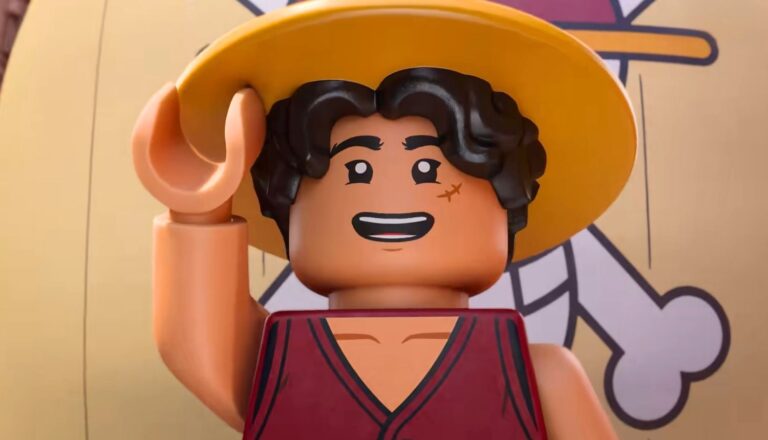
On its own, ‘Lego One Piece’ is blocky animation with some odd mystical elements. But the show could lead young viewers toward its more problematic inspiration.

The characters of Paramount+’s MobLand love their families. But the series itself isn’t anything resembling family friendliness.
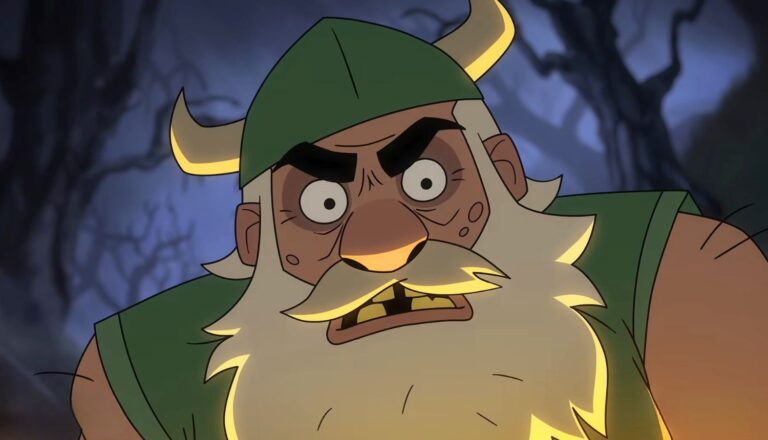
Paramount+ reboots the video game franchise ‘Golden Axe’ with a tired storyline and new content issues.